Open now — 24/7 commercial storm response St. Louis Metro & Metro East (314) 429-6000
John Beal Roofing rectangle logo in yellow and black Commercial Roofing STLBy John Beal Roofing

Green Roofs, at a glance

A green roof in St. Louis is a waterproof roof first and a garden second. Everything rides on the membrane, root barrier, flashings and drains under the growing media, and once soil and trays go down, that layer is a lot harder to reach. John Beal Roofing inspects existing vegetative roofs for free and checks the waterproofing, drainage and edges before anyone talks about plants. Call (314) 429-6000.

You'll find vegetated roofs downtown, on university and hospital buildings, on some newer apartment projects and on a handful of corporate offices out west. Most are extensive systems: three to six inches of engineered growing media planted with sedum, either in trays or built in place. Intensive roofs with deep soil, trees and walkways are rarer around here, and they're as much a structural project as a roofing one.

Here's what owners find out the hard way. When a green roof leaks, the plants are almost never the problem. It's a flashing at a curb, a drain that got buried, or a seam nicked by a shovel during planting. And getting to it means moving wet media that weighs far more than it did the day it was delivered.

What Holds It Together

The Layers Under The Plants

Root barrier and membrane

Roots go looking for water, and they'll find a lap seam. The waterproofing has to be root-resistant on its own or covered by a dedicated root barrier. Heat-welded PVC gets specified a lot for exactly that reason.

PVC roofing in St. Louis

Leak test before overburden

Flood testing or electronic leak detection belongs after the membrane's finished and before the drainage mat goes down. Skip it, and the first real test happens with six inches of soil on top.

Commercial leak detection

Weight on the deck

Saturated extensive media can add something like 15 to 35 pounds per square foot, depending on depth. Then add snow. That number belongs in front of a structural engineer before a single tray gets ordered.

Commercial roof deck types

Drains stay clear

Every drain needs an inspection chamber and a stone or paver border so media and roots can't choke it. A buried drain means water ponding under the plants, where you'll never see it.

Drain and scupper repair

Vegetation-free edges

Perimeters, curbs and penetrations get a strip of stone or pavers instead of plants. It's a fire break, ballast at the windy edge, and the place we actually inspect flashings.

Wind uplift and edge zones

Insulation stays dry

Whether the insulation sits above or below the membrane, condensation and trapped water show up years later as a scan anomaly. Getting the vapor retarder right on day one matters.

Vapor barriers on commercial roofs
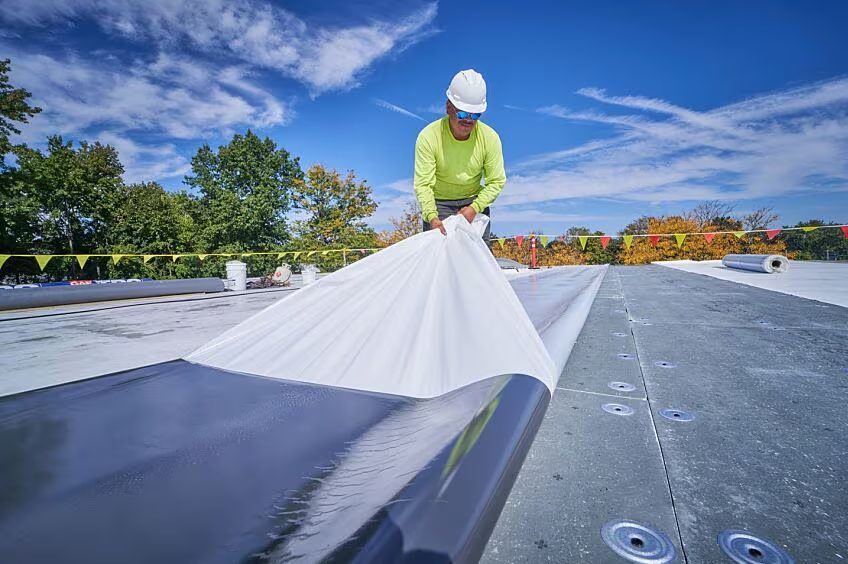
Roofer unrolling dark membrane over insulation board on a flat roof, commercial roofing St Louis
On The Roof

What A Green Roof Leak Call Looks Like

We start inside. Where's the stain, what's directly above it, and is there a drain, curb or wall nearby? Water under a green roof runs along the membrane until it finds a way down, so the stain is only a hint.

Up top, the vegetation-free zones come first. Curbs, parapet terminations, pipe boots and drain bodies are where most green roof leaks start, and they're the parts we can reach without disturbing a single plant.

If the leak's out in the field, trays come up and media gets moved in a small area. It's heavy and it's messy. We patch, test and put it back. Built-in-place systems are slower to open, and that's worth knowing before you choose one.

When the membrane reaches end of life, everything on top has to come off. That's a tear-off with extra steps. If a white reflective roof would meet the same goal for a lot less upkeep, we'll say so; see cool roofs and energy code.

Get A Free Evaluation

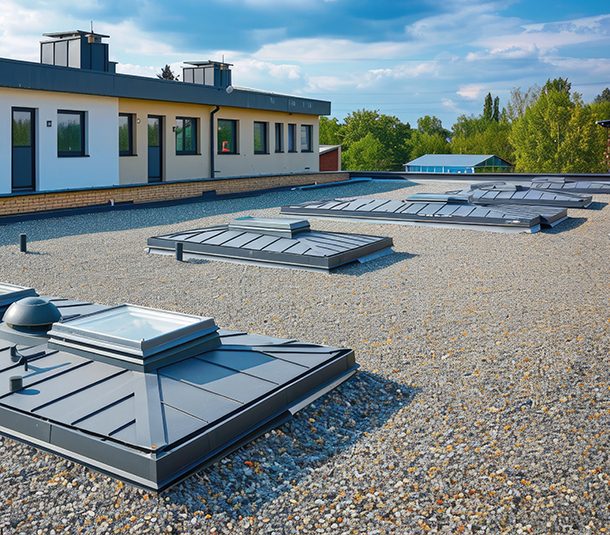
Gravel-ballasted flat roof with skylights, an overburden roof similar to a green roof, commercial roofing St Louis

Related: roof insulation and R-value in St. Louis — what still does the heavy lifting under the plants.

Common Questions

Do you install the plants?

Our side is the waterproofing: membrane, flashings, drains and edges. Plant layers are usually handled by a landscape or green roof installer. Get the line between the two written into the contract, especially who answers for a leak.

How often should a green roof be inspected?

Spring and fall at a minimum, same as any low-slope roof here. Clear the drain chambers, pull weeds and tree seedlings, and check the edge flashings. Volunteer maples will root into anything.

Can a green roof go on top of our existing roof?

Sometimes. It depends on what the deck can carry, how much life the membrane has left, and whether that membrane is root-resistant. Covering a ten-year-old sheet with soil usually means tearing it all back off in a few years.

Will a green roof cut our energy bill?

Some, mostly on summer cooling under the planted area, and it helps with stormwater. It won't make up for thin insulation, though. R-value under the membrane still does most of the work.

What warranty applies?

The membrane carries the manufacturer's coverage, and our lifetime workmanship warranty covers our installation. Plants and growing media fall under a separate warranty from whoever supplies and installs them.

Free Green Roof Inspection

Tell us about the building and a dispatcher will call to schedule.

No cost, no obligation. Water coming in now? Call (314) 429-6000 — the line is answered 24/7.

Water Coming Through The Ceiling?

Commercial leaks do not wait for business hours. A live dispatcher answers around the clock and we get crews moving the same night.

(314) 429-6000 Free Evaluation