
Climate Zone 4A
The whole metro, Missouri and Illinois sides both, falls in 4A. That puts us outside the IECC's mandatory reflectance rule but squarely inside its insulation tables.
St. Louis sits in IECC Climate Zone 4A. The IECC's minimum roof reflectance requirement applies to warmer zones, not 4A, so a white roof here is usually a choice rather than a mandate. What the energy code does push on a commercial reroof is insulation. John Beal Roofing checks which code edition your city has adopted and builds the assembly to it. Free inspections. Call (314) 429-6000.
We get asked this every spring, usually right after an owner gets one bid with a white TPO spec and a second with black EPDM. Which one does code require? In most of the St. Louis area, neither. Color's your call.
Insulation's a different story. Tear a roof down to the deck and the new assembly is generally expected to meet the R-value in the adopted code — R-30 continuous above the deck for Zone 4 under the 2015 through 2021 IECC. That's a little over five inches of polyiso, and on an old building with short curbs and a low door sill onto the roof, that number drives the whole design. St. Louis City, St. Louis County, the St. Charles County cities and the Illinois side don't all run the same edition, so we confirm with the building department on every permit.
The whole metro, Missouri and Illinois sides both, falls in 4A. That puts us outside the IECC's mandatory reflectance rule but squarely inside its insulation tables.
That's the usual target on a commercial tear-off here. We lay out tapered systems so the insulation counts where it's thinnest, at the drains.
Tapered insulationShort curbs, scuppers and door thresholds cap how thick you can go. The code generally accepts the most insulation that'll physically fit, and we document it for the inspector.
Roof insulation R-valueA brand-new white sheet reflects a lot of sun. Three years of dust, pollen and diesel soot later it reflects less. Rated products publish both numbers. Use the aged one for savings math.
A cold white roof over a humid building — a pool, a commercial kitchen, a cooler — can condense moisture under the membrane. Vapor retarder placement matters more than color.
Vapor barriersA silicone or acrylic coating over sound metal or mod bit turns a dark roof white without a tear-off. It doesn't add any R-value, though.
Silicone vs. acrylic coatings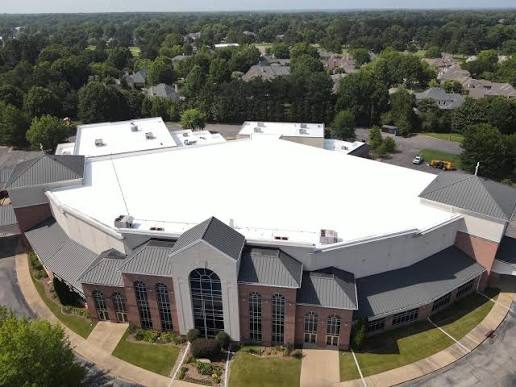
Summer's the expensive season for most commercial buildings in St. Louis. July and August run hot and sticky, and a dark membrane on a still afternoon can get well past 150 degrees while the rooftop units pull air across it. A white sheet runs a lot cooler.
The payoff's biggest on a one-story building with a lot of roof and not much insulation: a warehouse, a strip center, a gym. Once there's R-30 under the membrane, most of that heat never reaches the ceiling anyway. Color matters less.
Winter cuts the other way, but less than people expect. The sun's low and the days are short from December through February. And a roof under four inches of snow reflects the same no matter what's beneath it.
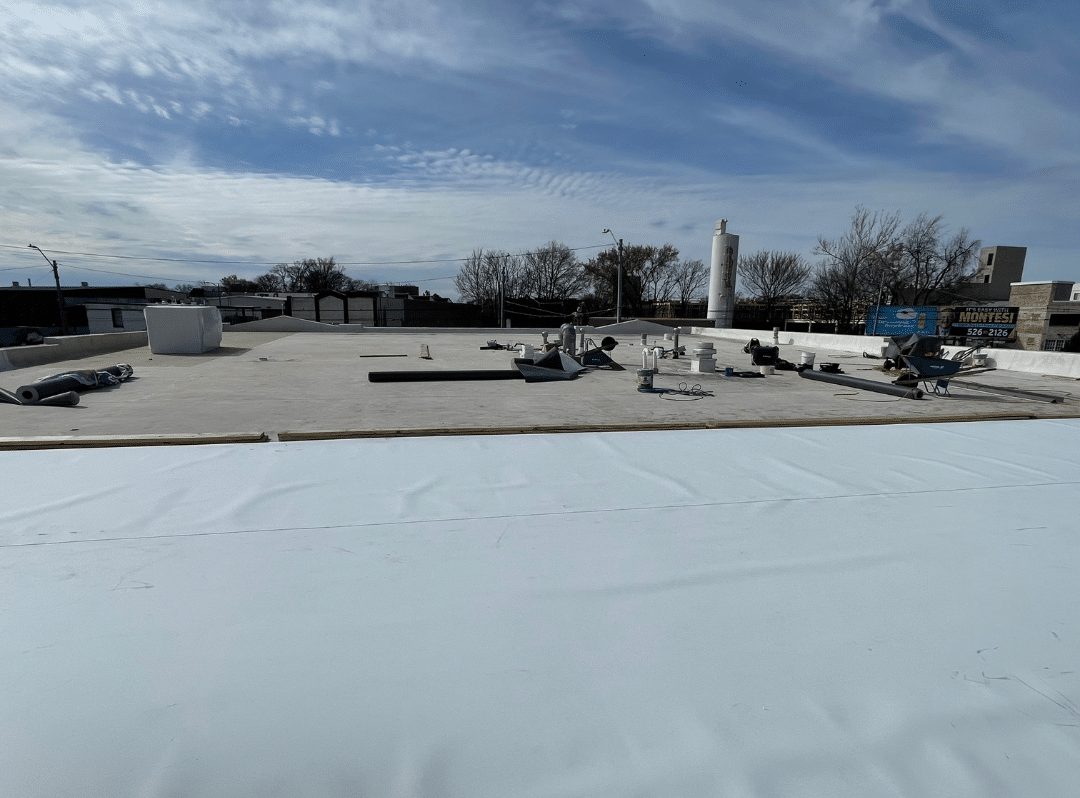
Then the practical side. White TPO and PVC show dirt and need a wash to stay bright; black EPDM hides it. Some owners want white for a sustainability report or a tenant lease, which is a perfectly good reason. We'll price it both ways — see TPO vs. EPDM vs. PVC — and show you the difference.
Under the IECC as typically adopted here, no. The roof reflectance requirement applies to Climate Zones 0 through 3, and St. Louis is 4A. A specific project can still require one — LEED, a tenant lease, a corporate standard — so check those.
On a tear-off where the insulation sits above the deck, generally yes, up to the adopted code's level or as much as fits where curbs, flashing heights and door thresholds limit it. A recover over an existing roof is treated differently. We confirm with the local building department before we bid.
Usually some, in summer. How much depends on the insulation underneath, how much roof you have compared to wall area, and how hard your rooftop units work. On a well-insulated roof, don't expect a big number.
Not without help. Expect it to dull within a few years. A gentle wash with a cleaner the manufacturer approves brings a lot of it back, and it's a good time to check the seams anyway.
Programs change year to year, so we don't promise any. Check with Ameren Missouri or Ameren Illinois before you sign; we'll hand you the product data sheets they ask for.
Tell us about the building and we'll check what your city's code asks for before you price a reroof.
Commercial leaks do not wait for business hours. A live dispatcher answers around the clock and we get crews moving the same night.