
Clamping ring and bolts
The membrane is pinched between the bowl and a clamping ring. Missing bolts, or a ring cranked down until it cracked, let water run straight under the roof.
Most flat-roof leaks we chase in St. Louis start at a drain or a scupper, not out in the open field. A loose clamping ring, a cracked cast-iron bowl, a scupper box pulled away from the wall, or a leader inside the building that's rusted through. John Beal Roofing traces the water from the roof down the pipe, repairs what failed, and checks that the roof has the overflow it needs. Free inspections. Call (314) 429-6000.
Drains get ignored until they don't. Leaves from the pin oaks in Kirkwood, cottonwood fluff down in the Missouri River bottoms, a pop can the HVAC tech left behind. Any of it can plug a strainer, and a plugged drain on a flat roof becomes a pond in about the length of one thunderstorm.
When the primary drain stops, the overflow has to take over. On a lot of older buildings there isn't one. Or there is, and it was set at the same height as the drain, which defeats the point. We look at both. For the gutter and downspout side of things, see commercial gutters and drainage.
The membrane is pinched between the bowl and a clamping ring. Missing bolts, or a ring cranked down until it cracked, let water run straight under the roof.
Old cast-iron bowls crack after decades of freeze-thaw. A retrofit insert seals inside the existing pipe when replacing the bowl would mean opening a ceiling.
A missing strainer lets debris into the leader, where it clogs somewhere you can't reach from the roof. Cheap part. Expensive thing to skip.
Through-wall scuppers leak at the box corners and where the flange meets the membrane. We rebuild the box flashing and tie it into the parapet.
Parapet wall flashing repairRoofs with parapets need secondary drainage. Overflows sit about two inches above the primary drain, so they only run when it's blocked.
A wet ceiling tile twenty feet from the drain is often the vertical pipe, not the roof. We check fittings below the deck before blaming the membrane.
Commercial roof leak detection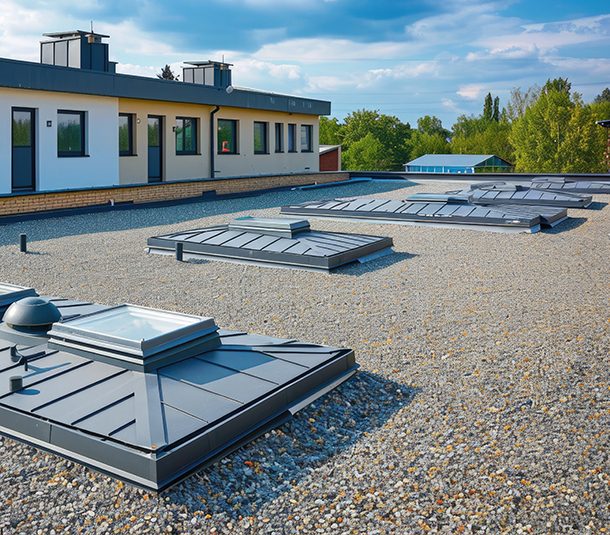
First we clear the drain and run water. Not a bucket. A hose, long enough to load the bowl the way a real storm does. If the ceiling below stays dry, the problem's somewhere else, and you just skipped a drain replacement you didn't need.
If it leaks, we pull the clamping ring. That's where the usual suspects turn up: a membrane flap that was never set in sealant, two bolts out of six, a lead flashing sheet that split years ago. On older built-up roofs the plies around the bowl are often brittle and have to come out in a square before new membrane goes in.
Scuppers get a different test. We wet the scupper box, then the wall above it, then the coping, one at a time. Water that shows up inside during the wall test isn't a scupper problem, and we'd rather know that before rebuilding the box. Our flat roof repair page covers the rest of the low-slope repair list.
Before we leave, every drain gets a strainer, a photo and a height note, so you know whether overflows exist and where they sit. Drain checks twice a year cost very little. They're the first line we'd write into any maintenance plan.
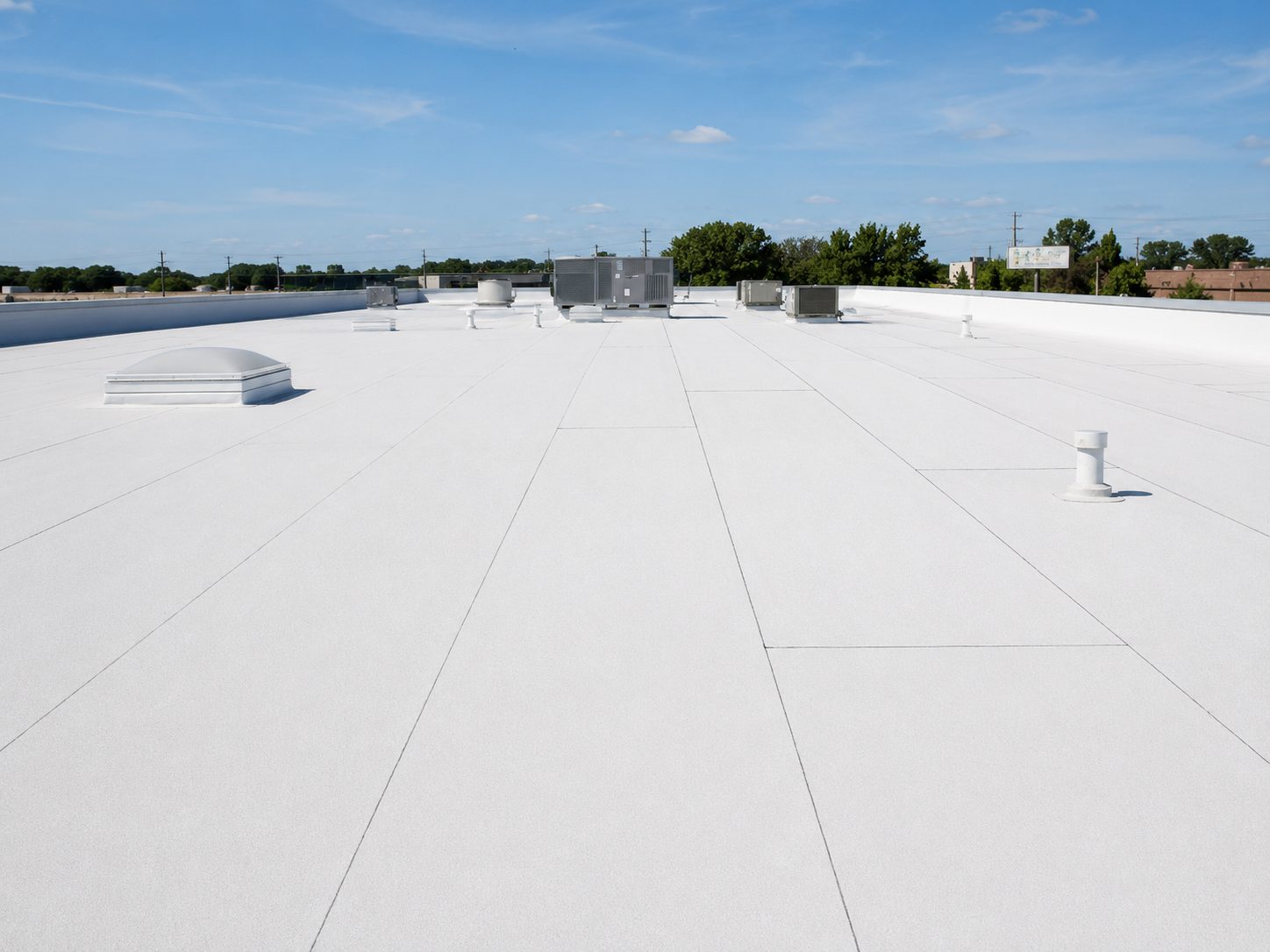
Retrofit drains deserve a straight answer. They work, and they keep the job on the roof, but the insert does shrink the inside diameter of the pipe a little. On a roof area that was already borderline for its drain size, we check the math before we recommend one, and sometimes the right call is a new bowl and a few ceiling tiles.
At least spring and fall, plus after big storms if the building sits under trees. Roofs near cottonwoods or with heavy rooftop traffic may need more.
Often, yes. A retrofit drain slides into the existing leader and seals inside it, so the work stays on the roof. It slightly reduces the pipe's inside diameter, which we check against the roof area it serves.
If your roof has parapets that can trap water, plumbing code calls for secondary drainage. Plenty of older St. Louis buildings went up before that was enforced. We'll tell you what you have and what adding one takes.
Usually the box corners or the flange are open, and water only reaches them when it backs up deep enough. Sometimes it's the wall above. We test each one separately.
Yes. Our line is answered 24/7. If a drain is plugged and water's rising on the roof, clearing it is the first thing we do.
Tell us where the water's showing up and a dispatcher will call to schedule.
Commercial leaks do not wait for business hours. A live dispatcher answers around the clock and we get crews moving the same night.