Open now — 24/7 commercial storm response St. Louis Metro & Metro East (314) 429-6000
John Beal Roofing rectangle logo in yellow and black Commercial Roofing STLBy John Beal Roofing

Roof Insulation & R-Value, at a glance

St. Louis sits in a cold-and-humid climate zone, so a commercial re-roof here usually has to add insulation to meet current energy code — commonly in the R-30 neighborhood above deck, verified against whichever code your local jurisdiction has adopted. John Beal Roofing spells out board type, thickness, layer count, attachment and cover board on every proposal. Free inspections. Call (314) 429-6000.

Here’s the thing owners find out late: if you tear a roof off in Missouri, you generally have to bring the insulation up to current code, and that can add three or four inches of board to an assembly that used to have one and a half. That changes edge heights, curb heights, door thresholds, drain heights and the price.

It’s also the single easiest place for a bid to hide money. Two proposals can both say “new insulation” and be six dollars a square foot apart because one is stacking polyiso in two staggered layers over a cover board and the other is putting down an inch of fanfold.

The Assembly

What Goes Above The Deck, In Order

Polyiso, and its cold derate

Polyiso is the workhorse — roughly R-5.7 an inch when it’s new and warm. It loses some of that as it ages, and it loses more as temperatures drop, which matters in January here. Rate the assembly on long-term values, not the label.

Two layers, staggered

One thick board leaves a straight joint line from deck to membrane. Two thinner layers with offset joints kill that thermal path. Any decent spec calls for it and cheap bids skip it.

Thermal bridging at fasteners

Thousands of steel screws through the insulation are thousands of little heat leaks. You can see them on a thermal scan as a grid of dots. Adhered top layers and longer plates cut that loss.

Infrared moisture scanning

Cover board

A half-inch of gypsum or HD board over the foam gives the membrane a hard surface, improves hail and foot-traffic performance, and helps the fire rating. Leaving it off is a real downgrade.

Tapered layouts

Where the deck is dead flat, tapered polyiso builds slope to the drains — typically a quarter inch per foot — with crickets between. It’s a drawn layout, not a guess, and it ends most ponding.

Fixing ponding water

Wet board is worth nothing

Saturated polyiso loses nearly all of its R-value and never fully dries out. Insulating over wet board buys you the thickness and none of the performance.

Wet insulation in a roof
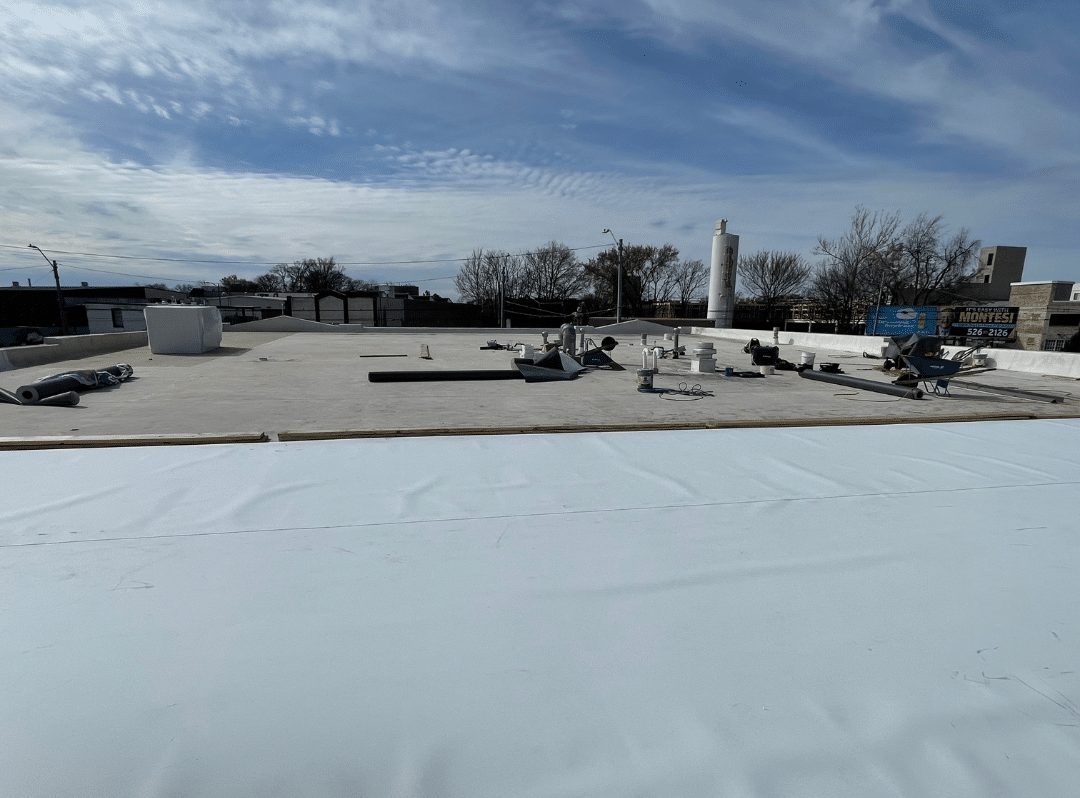
Insulation board and TPO membrane going down over steel deck, commercial roofing St Louis installation
On A Proposal

How To Read The Insulation Line

Ask for board type, thickness of each layer, total R-value, attachment method for each layer, and cover board type. If a proposal just says “code-compliant insulation,” you can’t compare it to anything.

Check what happens at the perimeter. Adding three inches raises the roof, so the edge metal, the counterflashing and sometimes the curbs and drains all have to come up with it. That work belongs in the bid, not in a change order in August.

Ask who confirmed the code requirement. Adoption isn’t uniform across St. Louis City, St. Louis County, St. Charles, Jefferson County and the Illinois side, and a recover is treated differently than a tear-off.

Then ask what the assembly is warranted as. A manufacturer only warrants a system it approved, and swapping in a cheaper board can quietly move you off that list.

Get A Free Evaluation

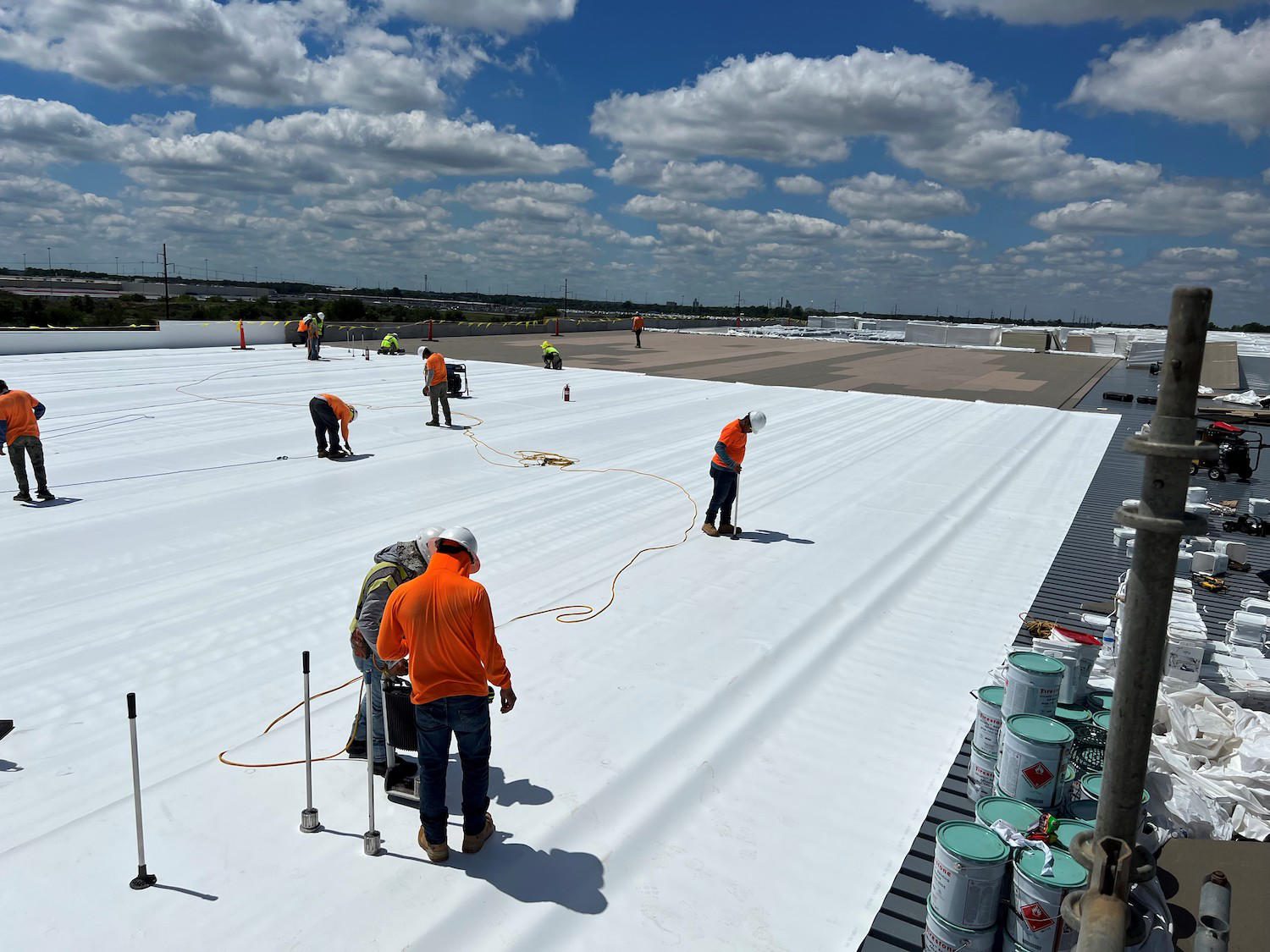
Crew rolling out membrane over a fresh insulation layer, commercial roofing St Louis project

Related: tear-off vs recover, cost per square foot and how to compare roofing bids.

Common Questions

What R-value does my St. Louis commercial roof need?

For insulation entirely above the deck in this climate zone, current energy code typically lands in the R-30 range, but adoption differs by jurisdiction and a recover is treated differently than a full tear-off. We confirm the requirement with the authority having jurisdiction before we write the spec.

Does adding insulation really lower our utility bill?

It lowers heating and cooling load, and on a large low-slope roof with a reflective membrane the summer difference is the one owners usually notice first. It also reduces condensation risk inside the assembly.

Can we just add insulation without replacing the membrane?

No. Insulation goes under the membrane, so adding it means a recover or a tear-off. Where the existing roof is sound, a recover with new board on top is often the cheaper route.

Polyiso, EPS or mineral wool?

Polyiso for most jobs on R-per-inch. EPS where cost and moisture tolerance matter more than thickness. Mineral wool where fire performance or a specific assembly listing drives it.

Do you do free inspections?

Yes. We'll walk the roof, take moisture readings, pull cores where it's warranted, and give you a photo report and a written scope at no cost.

Free Roof Assembly Review

Tell us about the property and a dispatcher will call to schedule. No cost, no obligation.

No cost, no obligation. Water coming in now? Call (314) 429-6000 — the line is answered 24/7.

Water Coming Through The Ceiling?

Commercial leaks do not wait for business hours. A live dispatcher answers around the clock and we get crews moving the same night.

(314) 429-6000 Free Evaluation