
Best suited to
small, cut-up roofs with lots of walls and transitions, and any deck that takes regular foot traffic.
Modified bitumen is asphalt sheet reinforced with polyester or fiberglass, installed in two or more plies. It is tough underfoot, forgiving on complicated roofs, and common on older St. Louis commercial buildings and church halls. John Beal Roofing installs and repairs mod-bit with free inspections. Call (314) 429-6000.
small, cut-up roofs with lots of walls and transitions, and any deck that takes regular foot traffic.
15 to 20 years for a two-ply system installed and flashed correctly.
The laps and the base flashing up the parapet — that is where an aging mod-bit roof starts letting go.
On small, cut-up or heavily trafficked roofs, a multi-ply asphalt system frequently outperforms a single sheet of membrane.
Modified bitumen is asphalt with polymer added to give it flexibility and a service temperature range straight asphalt does not have. It installs in plies, typically a base sheet and a granulated cap, which builds redundancy into the roof. A puncture through the cap does not put water into the building the way a puncture through a single-ply sheet can.
There are two polymer families and they behave differently. SBS is rubberized, stays flexible in cold and accommodates building movement well. APP is plastic-modified, handles heat better and is more often torch-applied. Which belongs on a building depends on deck movement, exposure and how the roof will be installed.
Application method matters as much as the material. Torch-applied is fast and bonds excellently, and it involves open flame on a roof, which means a fire watch and real care around parapets and wood blocking. Cold-adhesive and self-adhered systems remove the flame entirely, and on occupied buildings, schools, or anywhere with combustible construction we steer toward them.
The granulated cap surface is durable underfoot in a way membrane is not. On roofs where equipment gets serviced regularly, or where a path is worn between a hatch and an HVAC unit, that traffic tolerance is a practical advantage that compounds over years.
Small and complicated roofs are where this system genuinely shines. Many penetrations, tight parapets, odd geometry and multiple levels are straightforward to flash in a multi-ply asphalt system with well-established detailing, where the same roof in single-ply becomes a long series of fussy welded corners.
It is also frequently the correct repair material on an existing asphalt-based roof, simply because it is compatible with what is already up there.
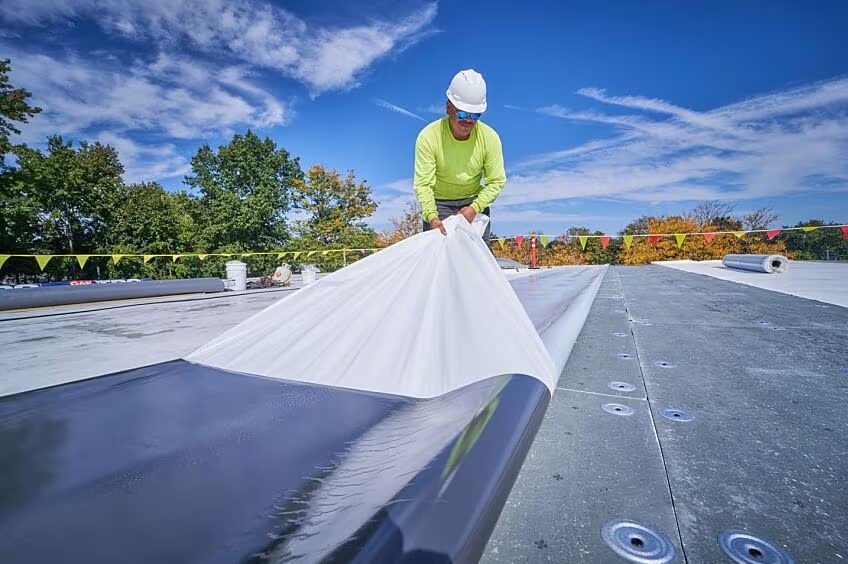
Membrane failures are almost never in the middle of the sheet. Failures begin where the details are, at curb flashing, pipe boots, wall terminations and drains.
So the time goes into the parts no one ever photographs. Welding a field seam is quick; rebuilding a curb right takes an afternoon and determines whether the roof lasts twenty years.
We register the manufacturer warranty to your building, so the coverage is on file under your address, not lost in a folder.
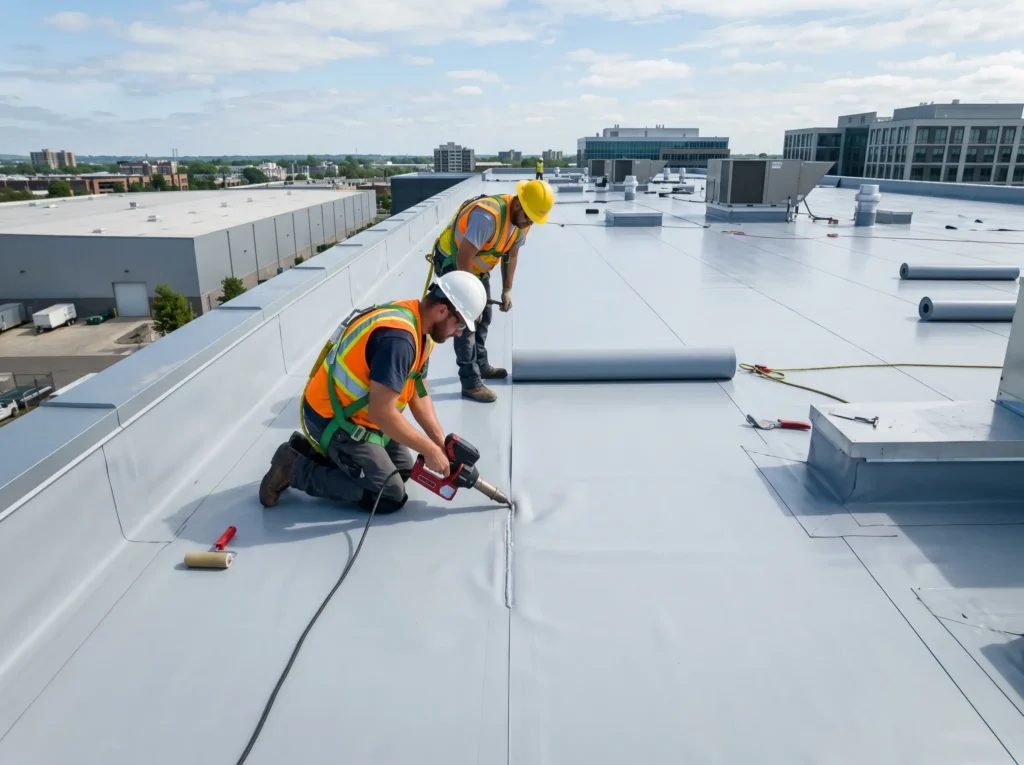
Twenty to thirty years, with the granulated cap sheet largely determining the top end. Roofs carrying regular foot traffic to equipment do better in this system than in single-ply.
Commonly yes, and it is one of this system's strengths. A modified bitumen cap can go over a sound existing asphalt roof it is chemically compatible with, provided the insulation below is dry and the layer count allows it.
Yes. Torch application in particular is not work to hand to an unfamiliar crew — it involves open flame near combustible construction — and our crews are trained and certified for the systems we install.
Repairs are straightforward and compatible materials are readily available, which keeps costs low. Replacement is indicated when the cap has lost its granules broadly and the plies beneath have begun taking ultraviolet exposure.
It depends entirely on application. Torch and hot-mopped work produce odor and require a fire watch. Self-adhered and cold-adhesive systems eliminate both, and on occupied buildings that is usually the specification we recommend.
Tell us about the building and a dispatcher will call to schedule.
Commercial leaks do not wait for business hours. A live dispatcher answers around the clock and we get crews moving the same night.