
Corrugated steel
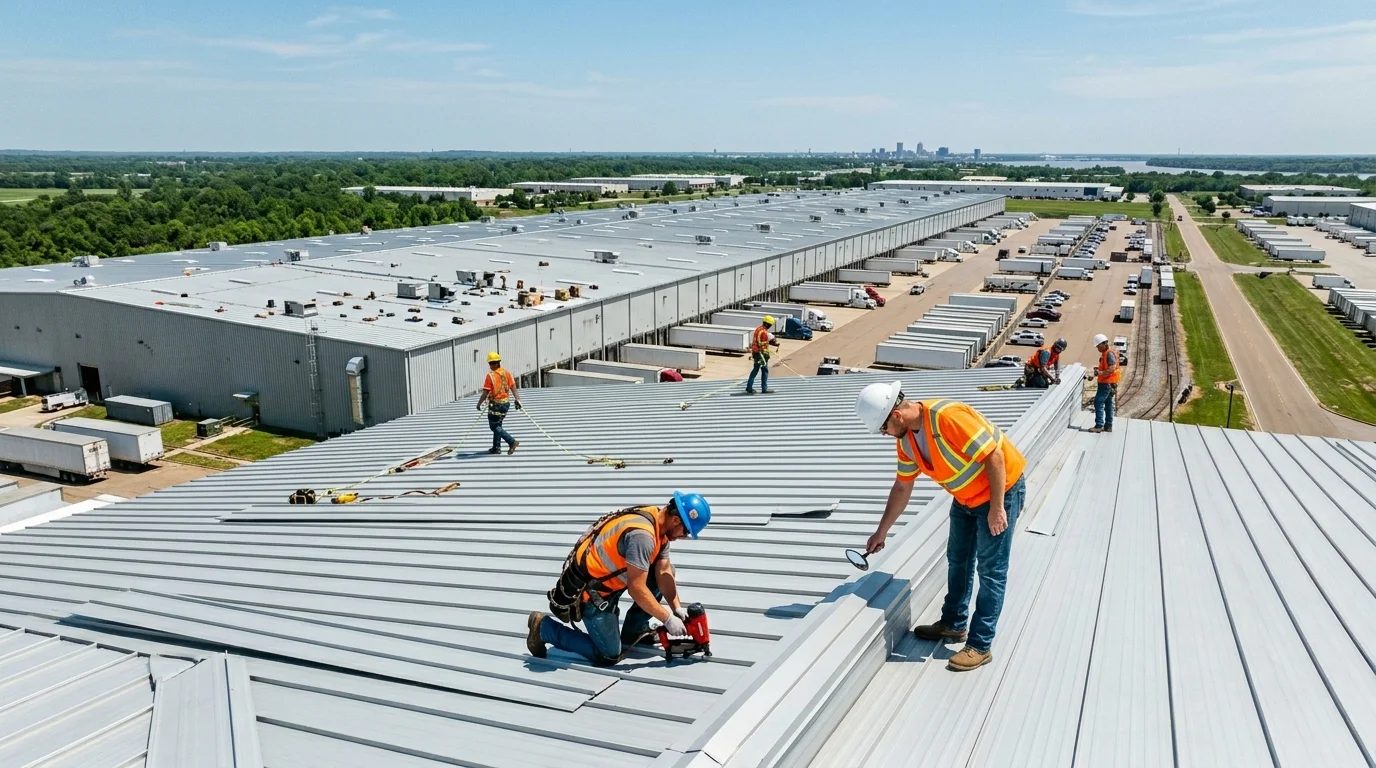
The most common deck on warehouses and strip centers built since the ’60s. Usually 22 gauge with 1-1/2 inch ribs. Rust starts in the low flutes near drains and under old ponding.
Warehouse roofingMost St. Louis commercial roofs sit on corrugated steel, wood plank or plywood, structural concrete, poured gypsum, or cementitious wood-fiber panels. The deck dictates how insulation and membrane get attached, which fastener pull-out values a manufacturer will accept, and how much replacement deck a tear-off budget has to carry. John Beal Roofing identifies the deck with core cuts during a free inspection. Call (314) 429-6000.
Nobody thinks about the deck until the tear-off crew is standing on it. Then it’s all anybody talks about. A warehouse in Earth City with rusted flutes along every drain line. A 1920s storefront on Cherokee Street with 1x6 plank that’s been wet off and on for decades. A school wing in North County where the “concrete” turns out to be poured gypsum that crumbles around a screw.
Every one of those changes the scope. Attachment method, fastener type, insulation thickness, sometimes even which membrane makes sense. So we find out what the deck is before we price the job. Not after the first square comes off.
The most common deck on warehouses and strip centers built since the ’60s. Usually 22 gauge with 1-1/2 inch ribs. Rust starts in the low flutes near drains and under old ponding.
Warehouse roofingOlder city buildings, churches and walk-ups. Sound plank takes ring-shank nails or screws fine. Soft spots get cut out and replaced at matching thickness.
Church roofingGarage tops, schools and mid-rise offices. Fasteners need pre-drilling, so most systems here go fully adhered or get set in low-rise foam adhesive.
School roofingCommon on ’50s through ’70s schools and churches, poured over formboard on bulb tees. It holds a fastener dry and lets go wet. Pull tests aren’t optional.
Core samplingCementitious fiber planks show up over gyms and pools. They’re quiet and they hate water. Swollen panels won’t hold a fastener and have to be swapped out.
Gym roofingPoured over slotted steel on some ’80s builds. It’s meant to vent, so a recover that seals moisture in can blister the new roof. Moisture testing comes first.
Wet insulation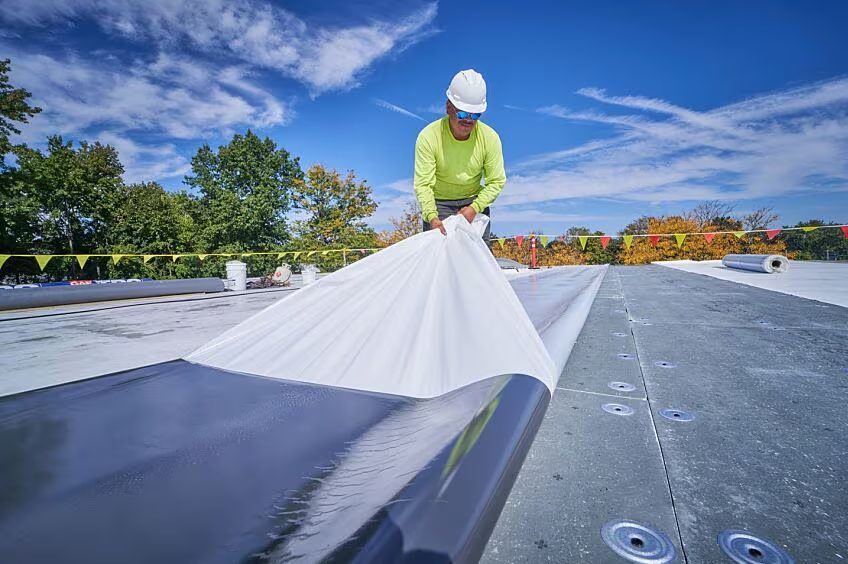
Core cuts come first. A two-inch core through the roof gives us the layer count, the insulation and usually the deck. If there’s any doubt, we open a 12-by-12 inspection hole and look at it from the top.
On steel we check gauge and corrosion. Surface rust is fine. Rust a screwdriver goes through isn’t, and that sheet gets cut out and replaced with new deck spanning at least three joists — not covered with a flat plate and forgotten.
On wood, gypsum and fiber decks we run fastener pull-out tests. Manufacturers publish a minimum withdrawal value for their warranty, and numbers that come in under it send us to an adhered system or a different fastener.
Then replacement deck goes into the proposal as a unit price per square foot with an allowance. Nobody likes a change-order phone call on day two. With a clear unit price you already know what an extra 200 square feet of rusted steel costs. It’s one of the big reasons tear-off vs. recover decisions come out the way they do.
Look up from inside if the ceiling’s open — ribbed steel and wood plank are easy to spot. Otherwise a core cut during a free inspection tells us without opening up the roof.
Yes. Concrete and gypsum usually need adhesive or special fasteners, and wet fiber panels have to be replaced. We list deck replacement as a per-square-foot unit price so you can budget for it.
Not safely if the rust has gone through. A recover hides the problem and drives screws into steel that won’t hold them. Rotted areas get cut out first, which means at least that part of the roof comes off.
Manufacturers tie wind-uplift ratings to specific decks and fasteners. If the deck can’t hold the fastener at the tested value, they won’t write the warranty as specified.
Corrugated steel on anything industrial or retail from the last sixty years. Wood plank in the city’s older buildings. Gypsum surprises a lot of school and church owners.
Tell us about the building and a dispatcher will call to schedule core cuts.
Commercial leaks do not wait for business hours. A live dispatcher answers around the clock and we get crews moving the same night.