
Field, perimeter, corner
Wind design splits a roof into zones. Corners take the most suction, so fastener rows tighten there or adhesive coverage goes up.
Adhered vs. mechanically attachedA wind uplift rating tells you how much suction a tested roof assembly held before it failed. FM Approvals ratings like 1-60, 1-90 and 1-120 refer to the pressure, in pounds per square foot, that the whole assembly passed: deck, insulation, fasteners or adhesive, and membrane together. St. Louis isn’t a hurricane market, but the corners and perimeter of a flat roof still see far more suction than the field. John Beal Roofing designs attachment by zone, confirms deck pull-out in the field, and matches the assembly to what your insurer or spec actually requires. Free inspections. Call (314) 429-6000.
Most owners first hear about FM ratings from a spec sheet or an insurance letter. A building insured through FM Global will usually be held to an FM Approved assembly listed in RoofNav, and plenty of lenders and architects borrow that language too. Either way, the number belongs to the whole stack. Not the membrane by itself.
Here’s what trips people up. A membrane can be FM Approved and the roof can still miss the requirement if the cover board, fastener spacing or deck don’t match a listed assembly. Swap in a cheaper board on bid day and the listing may no longer apply. We build the submittal from the listing first, then price it. A 1-90 rating means the assembly passed 90 psf in the test; with the usual safety factor of two, it’s good for about 45 psf of design pressure.
Wind design splits a roof into zones. Corners take the most suction, so fastener rows tighten there or adhesive coverage goes up.
Adhered vs. mechanically attachedOn steel, wood or gypsum we pull-test fasteners in your actual deck. Old poured gypsum and thin-gauge steel can surprise everybody.
Commercial roof deck typesDeck, board, fasteners and membrane are matched to a single listed assembly so the rating holds. No mixing parts from three listings.
Building code calls for low-slope roof edge metal tested to ANSI/SPRI ES-1. Most roofs that peel start at a loose fascia or coping.
Parapet and coping repairOn a recover, fasteners have to reach and hold in the deck, not in the old insulation. We check embedment before we trust a pattern.
Tear-off vs. recoverSubmittals list the exact assembly so your insurer, lender or architect can check it without a phone call.
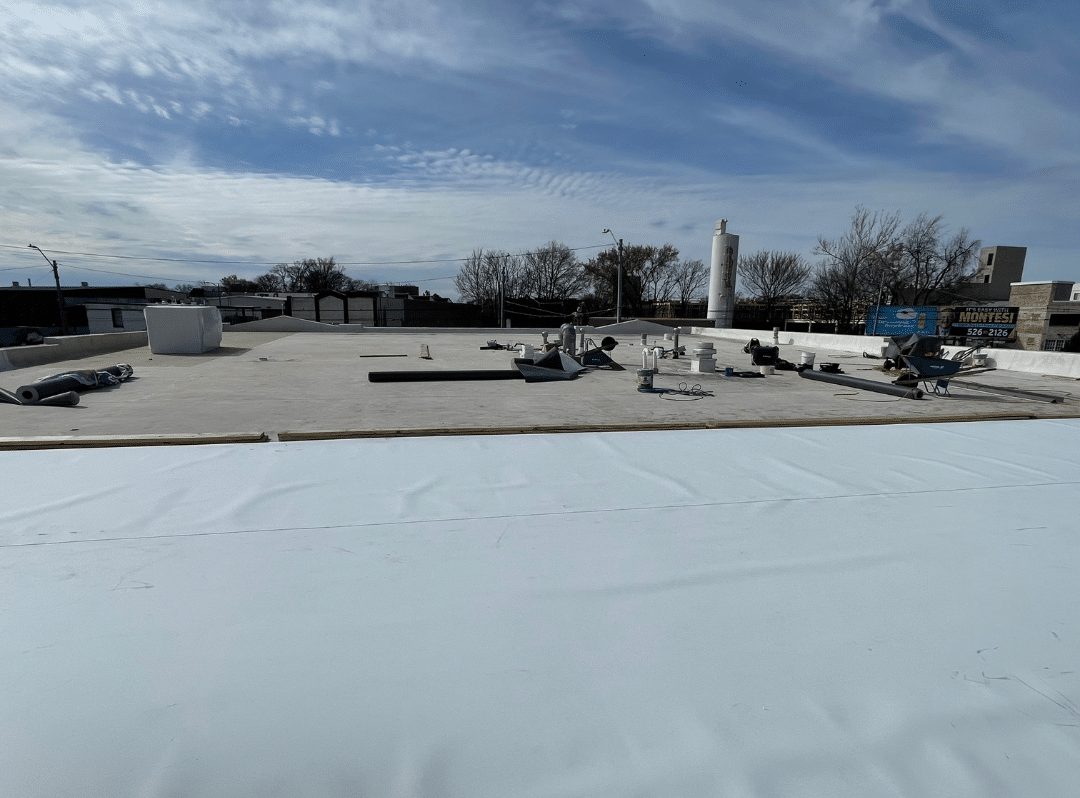
Wind doesn’t push a flat roof down. It pulls up. Air racing over the parapet drops the pressure above the membrane, and air inside the building pushes up from below, harder still when the overhead doors are open.
On a mechanically attached TPO, you’ll hear it before you see it. The sheet billows between fastener rows. Every lift flexes the membrane at the plates, and over years that can fatigue seams and work fasteners loose in a weak deck.
The spring squall lines and the occasional derecho that cross St. Charles County and the Metro East don’t need hurricane speeds to do damage. A corner fastened like the field, a coping joint with no cleat, an old gravel stop nailed into rotted wood blocking: that’s where a blow-off starts. We see it most on strip centers and warehouses built in the ’70s and ’80s.
On a replacement, the attachment plan is written down by zone and the pattern gets checked on the roof, not assumed. After a wind event, we photograph the lifted area, check the edge metal and pull a few fasteners to see what they’re holding before patching anything. If it turns into a claim, our storm damage and insurance page covers the documentation.
Not by law. Building code sets its own wind design requirements from location, height and exposure. Many specs and some carriers still ask for an FM rating because it’s a tested benchmark that’s easy to check. Read your policy and lease before you pay for more than you need.
It’s stronger. Whether you need it depends on the calculated design pressures for your building and what your insurer requires. Taller buildings, open ground near the river bottoms and wide perimeter zones push the number up.
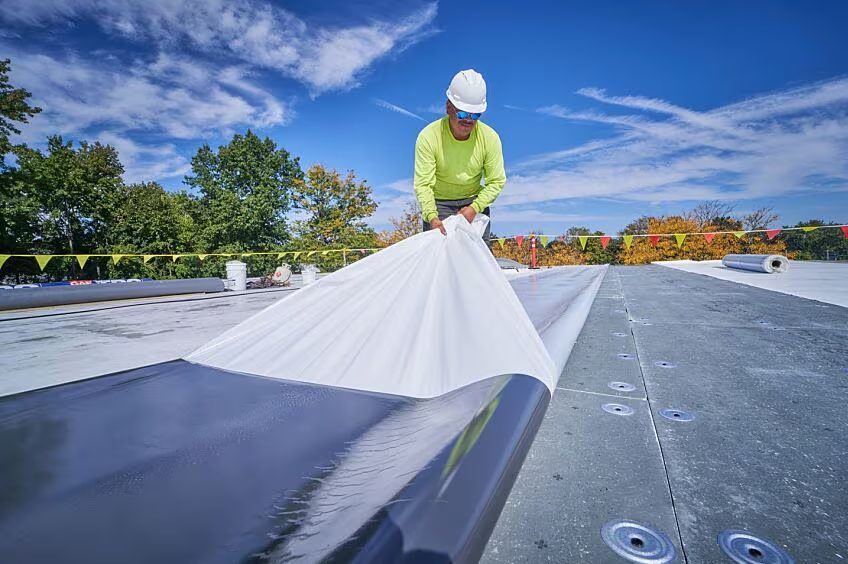
An adhered sheet spreads the load across the whole board instead of concentrating it at the plates, so it doesn’t billow. The insulation still has to be fastened or adhered to the deck correctly. Built to a listing, both can carry the same rating.
Sometimes. If the original submittal survives, we compare it with cores and a fastener check. If there’s no paperwork, we can describe what’s up there, but nobody can certify an assembly that was never documented.
Our lifetime workmanship warranty plus the manufacturer’s product warranty. Some manufacturer warranties are written to a specific wind speed, so we’ll show you that line before you sign.
Send us the spec or the insurance letter and a dispatcher will call to schedule.
Commercial leaks do not wait for business hours. A live dispatcher answers around the clock and we get crews moving the same night.