
How many layers are down
Code caps you at two roof systems. If there's already a recover over the original, you're tearing off. No debate, and no inspector's going to look the other way.
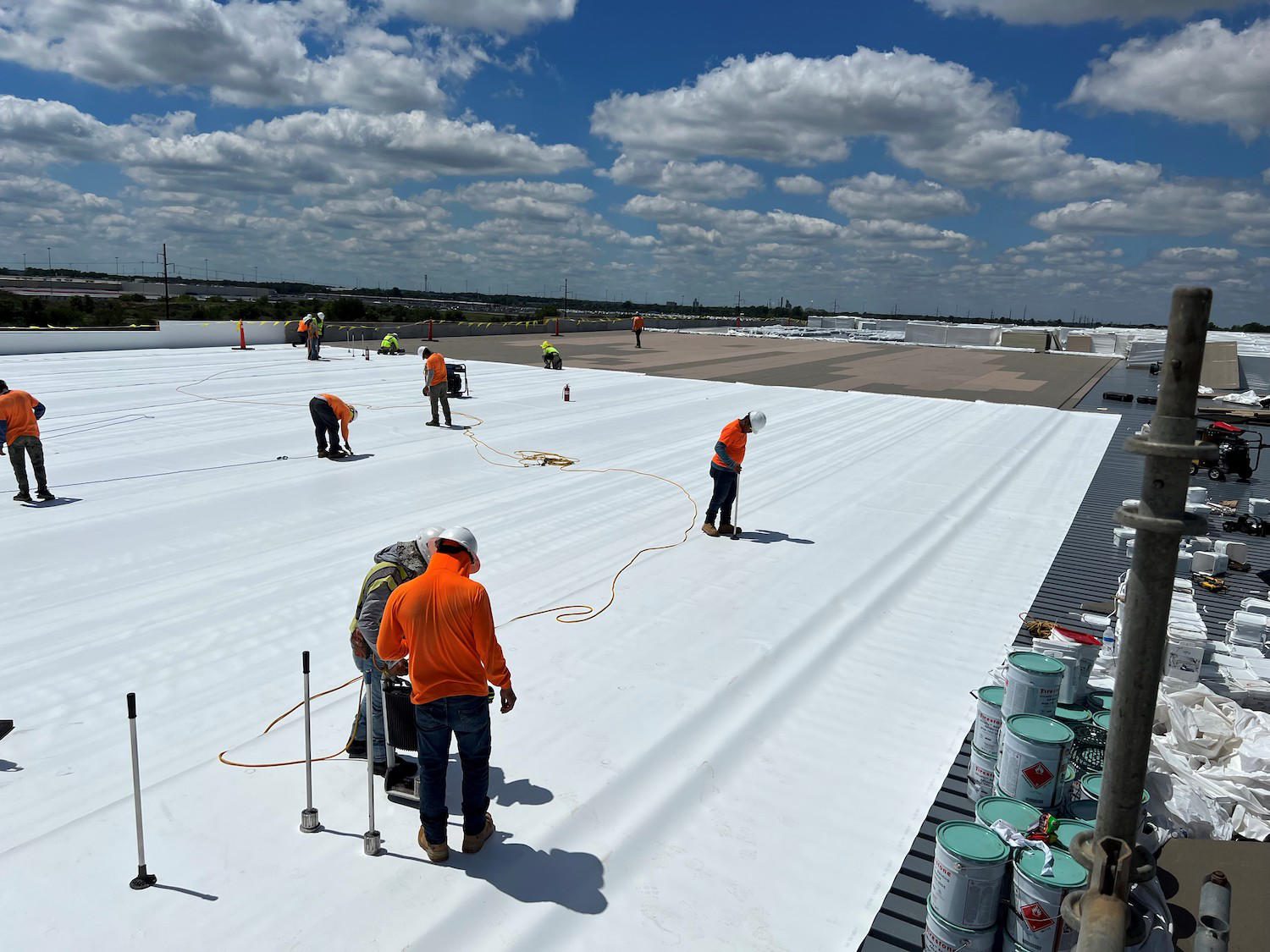
A recover leaves the existing roof in place and installs a new system over it. A tear-off strips everything to the deck and starts clean. Recover runs meaningfully cheaper and goes faster, but code allows only two total layers, and it only works if the existing insulation is dry and the deck is sound. John Beal Roofing takes cores before recommending either one, because the cores decide it — not the budget. Free inspections. Call (314) 429-6000.
Owners ask us for a recover price about twice as often as they ask for a tear-off price, and that makes sense. It's less money, less disruption and fewer dumpsters in the lot. Sometimes it's also the right answer. The problem is that a recover over a wet roof buys you a nice-looking membrane sitting on ruined insulation, and you'll pay for the tear-off anyway in about eight years.
So we don't guess. We cut cores, usually four to six on an average metro roof, more on anything over 40 squares. Each one tells us how many layers are down there, whether the insulation's holding water, and what the deck looks like. That's a couple hours of work that regularly saves people six figures.
Code caps you at two roof systems. If there's already a recover over the original, you're tearing off. No debate, and no inspector's going to look the other way.
Wet insulation never dries under a new membrane. It spreads, corrodes the deck and gives back nothing in R-value. Cores settle this in an afternoon.
Commercial roof inspectionRusted steel flutes or a spalling concrete deck have to be seen and repaired. You can't fix a deck through a roof you left in place.
A recover has to be fastened through the old system into the deck, and the fastener has to hold. On an old, chewed-up deck it often won't pull the numbers.
If the roof already holds water, a recover holds it in the same places. Tapered insulation during a tear-off is the honest fix.
Ponding water on flat roofsSelling in three years is a different math problem than holding for twenty-five. Both answers are legitimate; they just aren't the same answer.
Roof capital planning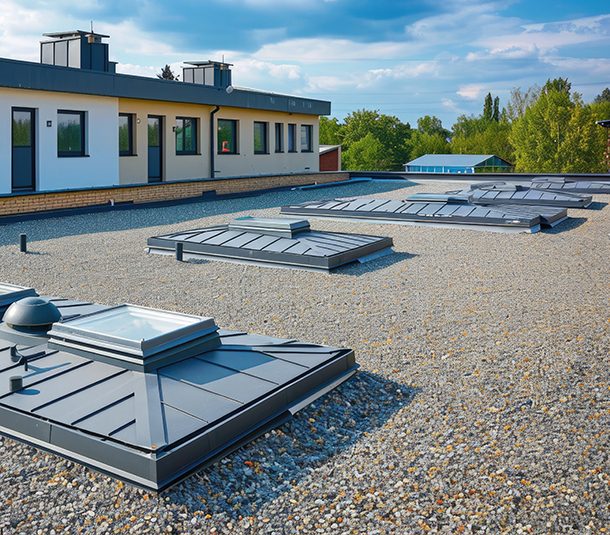
Recover typically lands somewhere around 25 to 35 percent cheaper than a tear-off on the same building, mostly because you're not paying for demolition, disposal or the labor to haul it. On a big warehouse roof that gap is real money.
It's also faster and far less disruptive. No open deck, no debris raining into the space below, and tenants barely notice. For an occupied medical building or a grocery store, that alone can decide it.
Tear-off buys you things a recover can't. You see the deck. You can add insulation to meet current energy code instead of working around what's there. You can build in slope. And your warranty options are better, because manufacturers get nervous about what's underneath a recover.
One more thing people forget: dead load. Adding a system adds weight to a structure that was engineered decades ago. On an older bar-joist building we'd rather remove weight than pile more on, especially with the snow loads we get some Januarys.
If the cores come back dry and you're leaning toward a new system, our roof replacement page walks through the install itself, and commercial roof cost covers the numbers in more detail. Not ready for either? A coating or restoration is a third path worth pricing when the membrane still has life in it.
Related: commercial roof insulation and R-value — what code makes you add when you strip to the deck.
Two total systems. If your building already has an original roof plus a recover, the next one has to be a tear-off. We verify layer count with cores before quoting, so nobody finds out on day one of the job.
Usually 25 to 35 percent less on the same building, and it varies with how much demolition and disposal you're avoiding. A gravel-surfaced built-up roof is expensive to remove, so the spread is wider there.
Yes, that's common and it's the right way to do it. We cut out the saturated areas, replace that insulation with matching material, then recover over the sound remainder. If more than roughly a quarter of the roof is wet, tear-off usually wins on cost anyway.
Not automatically, but manufacturers ask more questions and some limit the term or the NDL coverage over an existing system. We get the specifics in writing from the manufacturer before you sign, not after.
You do. Our job is to hand you the cores, the photos, both prices and a straight recommendation with the reasoning behind it. We've been doing this in St. Louis since 1947 and we'd rather lose a job than sell a recover that won't hold up.
Tell us about the property and a dispatcher will call to schedule. No cost, no obligation.
Commercial leaks do not wait for business hours. A live dispatcher answers around the clock and we get crews moving the same night.