
How mechanical attachment works
Plates and screws run along one edge of each sheet. The next sheet laps over, then gets welded or taped to cover them. Rows tighten up at corners and perimeter, where uplift is worst.
TPO roofing in St. LouisMechanically attached TPO, EPDM or PVC is screwed through plates along each seam into the deck. It goes down faster and usually costs less. Fully adhered membrane is glued to the insulation or cover board across the whole field. It's quieter in wind, handles odd shapes better and doesn't flutter. On St. Louis buildings the deck decides a lot: steel holds screws well, old gypsum and lightweight concrete often don't. Free inspections. Call (314) 429-6000.
Owners usually call asking TPO or EPDM. Fair question. But two TPO roofs on the same block can perform very differently because one's screwed and one's glued, and nobody explained that line on the bid.
Here's how we decide, the way we'd explain it standing on your roof in Earth City or Sauget with a core sample in hand. Short version? Wind exposure, deck condition, budget and the calendar all push in different directions, and the right answer is wherever they land on your building.
Plates and screws run along one edge of each sheet. The next sheet laps over, then gets welded or taped to cover them. Rows tighten up at corners and perimeter, where uplift is worst.
TPO roofing in St. LouisBonding adhesive goes on the board and the back of the sheet, or the membrane sets into low-rise foam. Fleece-back sheets bond best and ride over rough boards.
EPDM roofing in St. LouisWind across a screwed roof lifts the sheet between rows. Years of that flexing tire the seams and tug on every fastener. A glued sheet just sits there.
Steel deck in decent shape holds screws. Old poured gypsum and lightweight insulating concrete may not. We pull-test before we write a spec.
Commercial roof deck typesBonding adhesives carry a minimum application temperature on the data sheet, often somewhere around 40°F. A January tear-off tends to point toward mechanical or induction-welded attachment.
Solvent adhesive smells, and rooftop intakes pull it inside. Over a restaurant, clinic or busy office we switch to low-VOC adhesive or foam, or go mechanical.
PVC roofing in St. Louis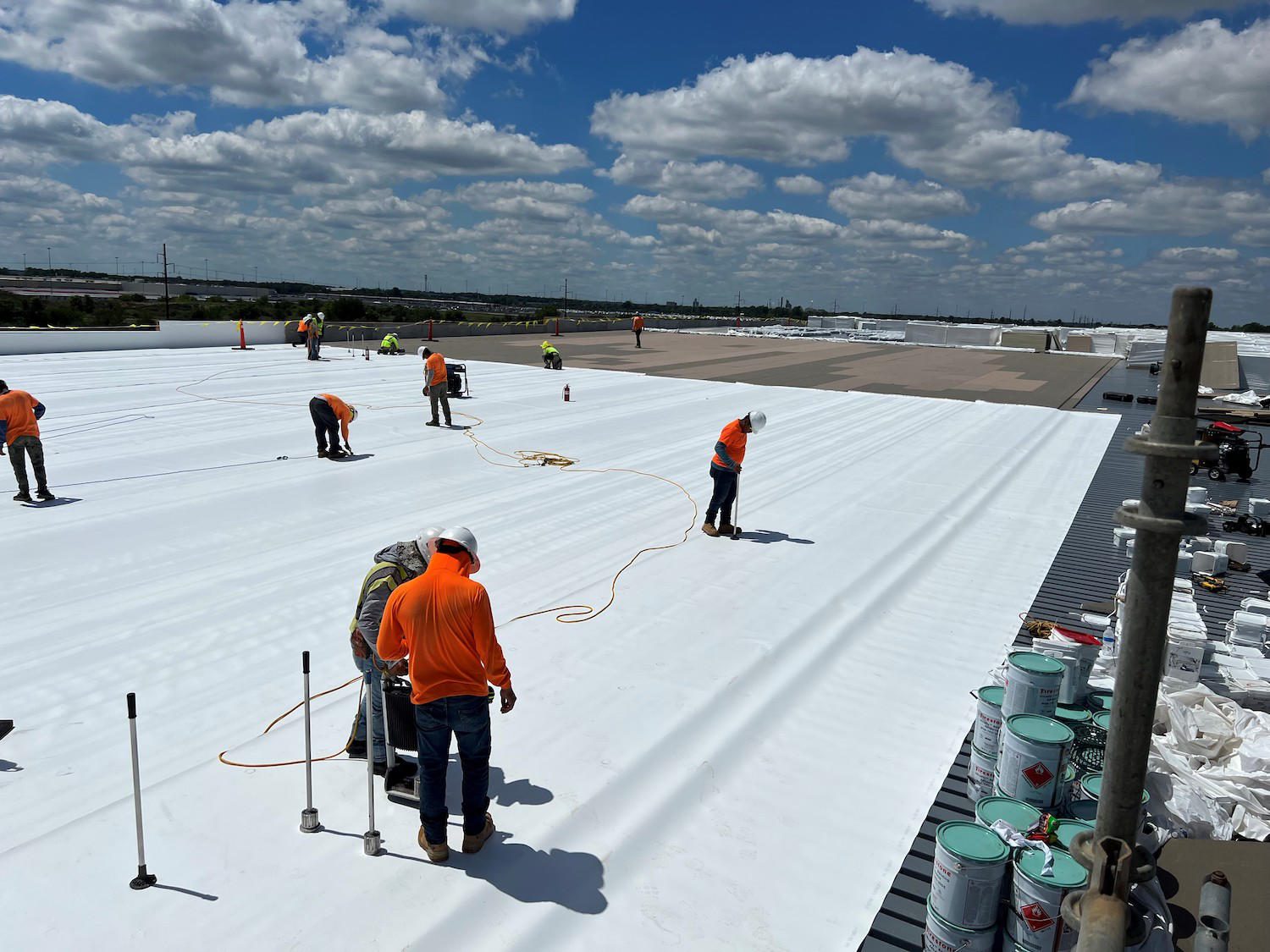
Start with wind. A two-story office out in the open in Chesterfield Valley sees a lot more of it than a warehouse tucked between buildings in Maryland Heights. Tall parapets help. Open perimeters don't. On exposed roofs we either tighten fastener rows well beyond field spacing at the corners and edges or move the whole field to full adhesion.
Then the deck. Steel that's rusted through at the flutes won't hold a screw no matter how many you drive, and lightweight concrete over an old school can crumble around a fastener. A pull-out test takes about twenty minutes and settles the argument. If the numbers come back bad, a mechanically fastened cover board with adhered membrane on top is a common fix.
Then money and weather. Mechanically attached goes down quicker, with less labor per square and no adhesive flash time, which matters when you're racing a wet week in April. Adhered costs more up front. You get a smoother, quieter roof that's easier to walk and easier to inspect for punctures.
Induction welding sits between the two. Plates get screwed down under the membrane, then the sheet is heat-bonded to them from above, so there's no fastener row in the seams and the hold spreads across the field. On big roofs in cold months it's often our first suggestion.
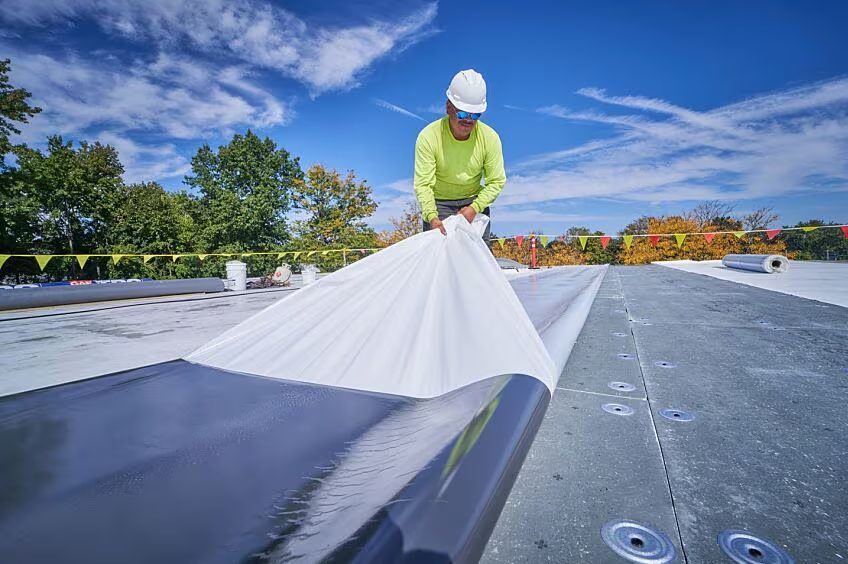
With the same membrane thickness and good workmanship, both can reach full service life. Adhered roofs tend to age more evenly because the sheet isn't flexing in the wind. Screwed roofs usually show trouble first at perimeter seams where fastener spacing was skimpy.
On a recover, yes, if the existing roof is dry and the deck holds fasteners. We screw down a cover board first, then adhere the new membrane to that board.
Yes. Uplift ratings belong to the whole assembly: deck, insulation, fastener spacing and adhesive coverage. Change one piece and the rating can change. We put the proposed assembly in writing so you can see it.
On buildings that can carry the weight, yes. Stone ballast over loose-laid EPDM is still common around St. Louis. It needs real structural capacity and stone that stays put at the corners.
The manufacturer's coverage on materials plus our lifetime workmanship warranty. Inspections are free and the phone is answered live 24/7.
Tell us about the roof and a dispatcher will call to set up a look, core sample included.
Commercial leaks do not wait for business hours. A live dispatcher answers around the clock and we get crews moving the same night.