
Quarter inch per foot
Building code sets 1/4 inch of slope per foot as the minimum for most new membrane roofs. On a flat deck, tapered board is how a replacement gets there.
Tapered insulation is polyiso board cut with a built-in slope and laid over a flat deck so water runs to the drains instead of sitting on the membrane. On a St. Louis tear-off it's usually the cheapest permanent fix for ponding, because the slope gets built into insulation you'd be installing anyway. John Beal Roofing designs the layout from a field survey of the deck and drains. Free inspections. Call (314) 429-6000.
Plenty of roofs around here were framed dead flat. Bar joists sag a little over forty years, a drain ends up sitting half an inch high, and now there's a birdbath the size of a living room that freezes solid every January. Ponding isn't just ugly. It ages the membrane faster, it hides seam failures, and the weight is real: about five pounds per square foot for every inch of standing water.
Tapered board fixes geometry. It doesn't fix a clogged drain or a rotted deck, and we'll tell you which problem you've actually got before we price slope. Our page on ponding water on flat roofs covers the diagnosis side.
Building code sets 1/4 inch of slope per foot as the minimum for most new membrane roofs. On a flat deck, tapered board is how a replacement gets there.
Wedges of tapered board behind curbs and between drains split the water and push it where it belongs. Skip them and a curb ends up standing in a puddle.
Commercial roof replacementCode looks at average R-value. Condensation doesn't care about averages. We size the flat base layer so the low side near the drain isn't a cold spot.
Roof insulation and R-valueWe shoot elevations across the deck and at every drain. A taper drawn off a 1985 plan without a level is a guess.
Two layers with offset joints, then a cover board under the membrane. Fewer thermal gaps, and the top takes foot traffic and hail better.
Building up four or five inches on the high side raises everything. Curbs, door sills, counterflashing and scupper openings get checked against that before the board is ordered.
Gutters and roof drainage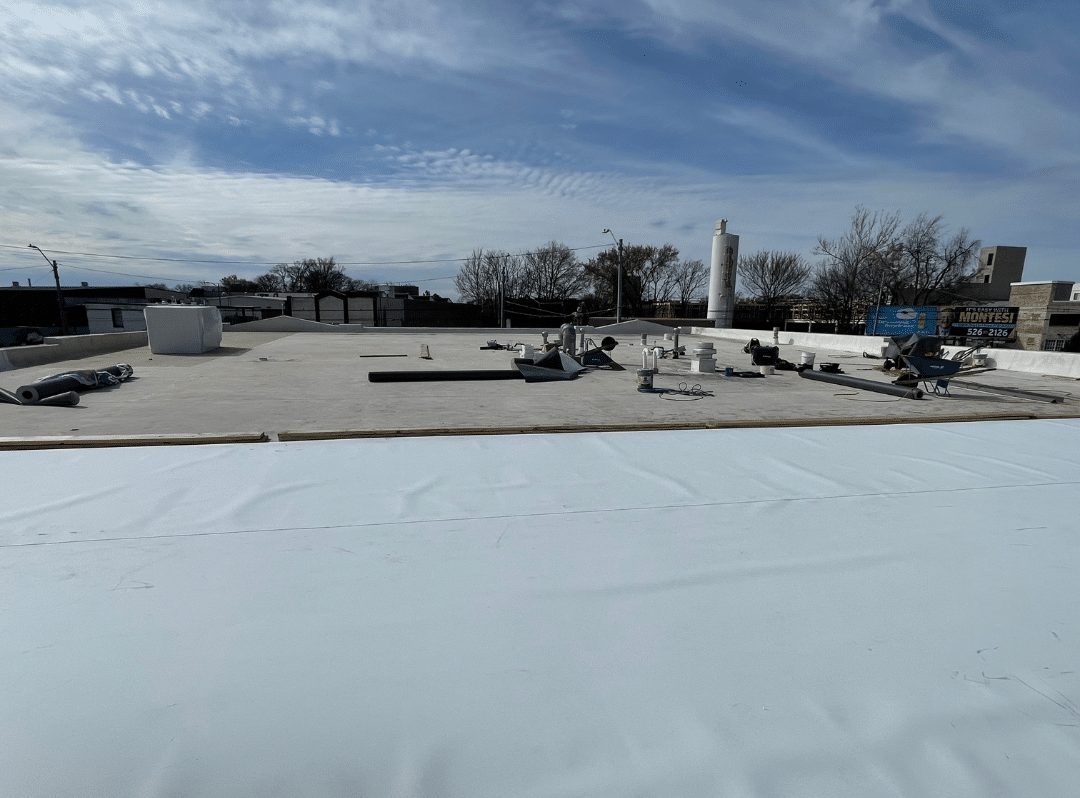
A tapered layout starts on paper and gets corrected on the roof. We grid the deck, take readings, and mark where the low points really are versus where somebody put the drains.
Then it's a choice between two-way and four-way slope. Two-way is cheaper and works on long, narrow buildings that drain to a gutter edge. Four-way, with valleys running into each drain, handles a big box with interior drains, which is what most warehouses in Earth City and the Hazelwood industrial parks are.
Board comes in lettered panels, each a little thicker than the last, laid in a pattern like floor tile. Get the sequence wrong and you've built a dam. Our foreman dry-lays a run against the shop drawing before a single plate goes down.
Last is the drain sump. We cut the insulation down around each drain so the membrane drops into the bowl instead of meeting it at a lip. Those last eighteen inches matter more than the rest of the roof.
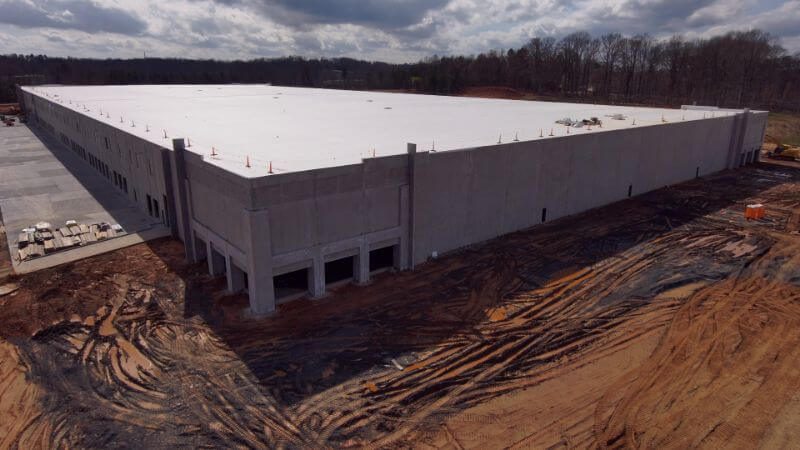
One more thing that catches owners off guard. Long runs between drains build height fast at a quarter inch per foot. Sixty feet of run means fifteen inches at the high side, and sometimes adding a drain is cheaper than buying that much foam. We'll price it both ways when the numbers are close.
Sometimes, on a recover, if the existing roof is dry and code allows another layer. Most of the time tapered goes in during a full tear-off, when the deck is open and we can see what we're building on.
It costs more per square than flat board of the same average thickness, mostly in design and cutting. It's usually far less than chasing ponding leaks for another twenty years.
It fixes ponding caused by flat or sagging geometry. Plugged drains, undersized leaders or a damaged deck need their own repair, and we'll call that out separately in the report.
That depends on drain spacing. At a quarter inch per foot, long runs build height quickly, which is why we sometimes recommend adding a drain instead of more taper.
When it's part of a manufacturer system, the insulation can ride under the manufacturer's coverage, and our lifetime workmanship warranty covers the install on qualifying work.
Tell us where the water sits and a dispatcher will call to schedule.
Commercial leaks do not wait for business hours. A live dispatcher answers around the clock and we get crews moving the same night.