
The physics is simple
Water has high thermal mass. Insulation that’s soaked absorbs solar load all day and radiates it back long after the dry board has cooled. That temperature difference is what the camera sees.
An infrared moisture scan finds wet insulation by reading heat. Wet board holds the day’s solar heat longer than dry board, so after sundown the saturated areas glow warm on a thermal camera. John Beal Roofing scans on a clear evening, marks every anomaly on the deck, verifies with core samples, and hands you a plan showing exactly how much of the roof is wet. Call (314) 429-6000.
Owners get two numbers from a roofing contractor: the price to replace everything, and the price to fix a leak. An infrared survey gives you the number in between — how much of the roof is actually bad. Sometimes that’s eight percent and you repair. Sometimes it’s forty and the tear-off conversation was inevitable.
It also settles arguments. If you’re in a hail claim or a dispute with a previous contractor, a dated moisture map with core photos is evidence. A verbal opinion isn’t.
Water has high thermal mass. Insulation that’s soaked absorbs solar load all day and radiates it back long after the dry board has cooled. That temperature difference is what the camera sees.
We need a sunny day, then a scan starting roughly an hour after sunset into the middle of the night. Wind under about 15 mph, no rain in the previous 24 hours, no heavy dew yet. Miss the window and the whole roof reads flat.
A drone pass covers a big warehouse roof fast and shows the pattern. A walk-on scan gets close enough to separate a wet seam from a warm condensate line. On anything larger than about 30,000 feet we usually run both.
Commercial roof inspectionAnomalies get outlined in marking paint right there on the roof, then photographed with the thermal and visual images side by side. That paint is what the tear-off crew cuts to later.
Infrared shows an anomaly, not proof of water. A 2-inch core through membrane and insulation tells you whether it’s wet, how many layers there are, what the deck is, and whether the fasteners are rusting.
Commercial leak detectionThe deliverable is a roof plan with the wet areas shaded and totaled. That number drives the repair-versus-replace decision and it belongs in your capital plan.
Roof capital planning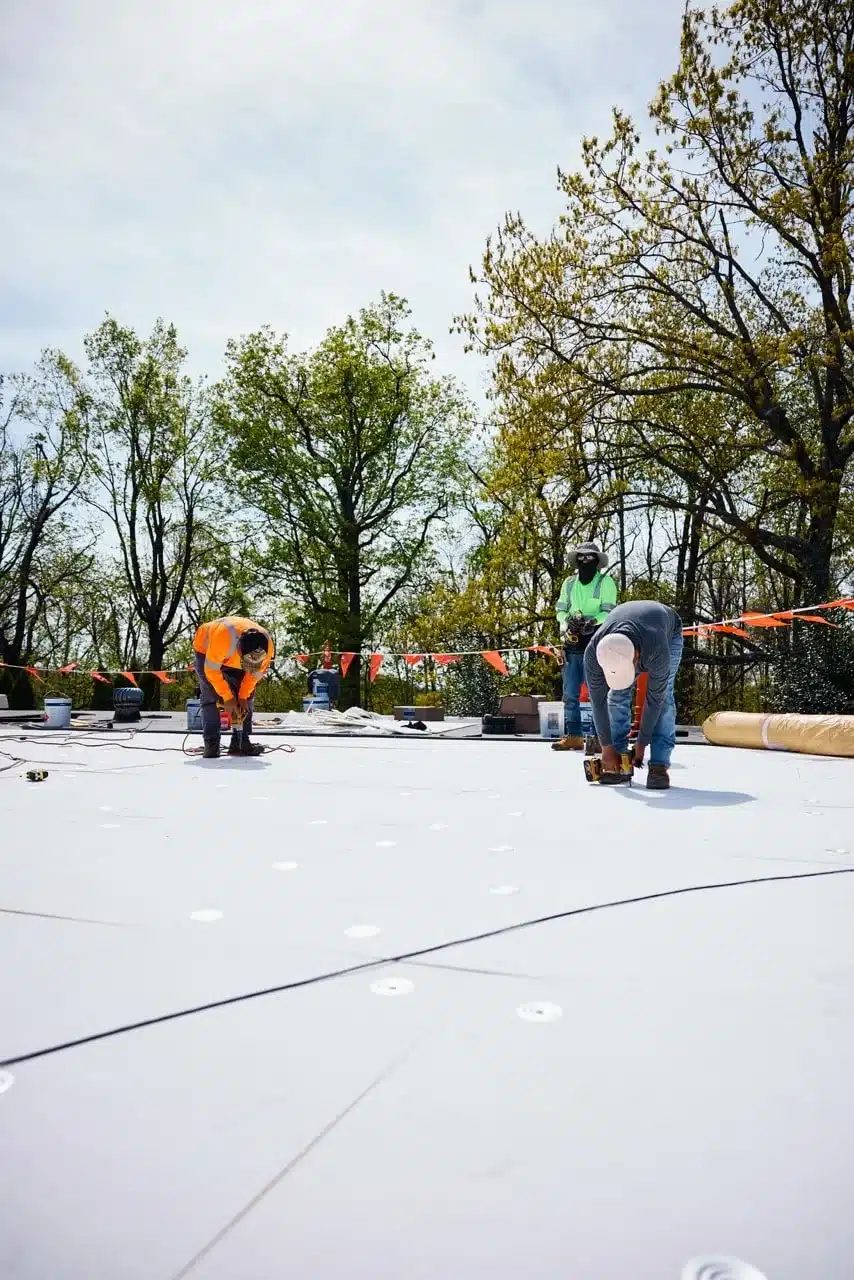
Ballasted roofs are the big one. You can’t scan through several inches of river rock — the stone masks the signal completely. Same story with a heavily gravelled built-up roof. For those we go to core sampling on a grid, or we vacuum a test area clear.
Wet-day scans are worthless. Rain in the last 24 hours leaves surface water that reads warm everywhere, and a roof under a heavy dew does the same thing. We’ll reschedule rather than hand you a survey we don’t believe.
And thermal cameras find plenty of things that aren’t water. A warm gas line, a condensate discharge, a skylight bleeding heat, a section of deck over a boiler room — all of it glows. Someone who knows a St. Louis roof has to read the image, or you get a map full of false positives.
Standing water on the surface also blinds a scan. If the roof ponds, we let it drain or we scan the areas we can and note the rest. Better an honest gap than a guess.

Before you buy a building — a scan during due diligence has changed a lot of purchase prices. Before a recover, because roofing over wet board is the single most expensive mistake in low-slope work and code won’t allow it anyway. After a hail event, so you have dated documentation before the adjuster arrives. And on any roof where the leaks have moved around and nobody can find a pattern.
A scan is a small fraction of what a replacement costs, and on most buildings it either saves you the replacement entirely or it tells you which third of the roof to phase first. On a maintenance-plan property we’ll fold a periodic scan into the program so you’re tracking change over time instead of taking one snapshot.
Our freeze-thaw cycle is what turns a small amount of trapped water into a big problem. Water in the insulation freezes, expands, delaminates the facer from the foam, and the board loses its R-value and its compressive strength. Come spring the roof is softer underfoot and drains worse than it did in the fall. Finding that water in October is a repair. Finding it in April is often a section replacement.
Related: commercial leak detection, tear-off vs recover and roof inspections.
Related: wet insulation in a commercial roof — what the scan is actually finding, and what it costs you.
It finds wet insulation, which is usually near the entry point but not always at it. We pair the scan with interior mapping and, when it’s needed, controlled water testing to pin the exact hole.
The roof has to have soaked up a day of sun and then started cooling. During the day everything is hot and the wet areas don’t stand out.
No, not reliably. Ballast blocks the thermal signal. We’d core sample on a grid instead, or clear test areas.
We core enough of them to confirm the pattern and calibrate the survey — and every core gets patched properly the same day, not left open.
Yes. You get dated thermal and visual images, a marked roof plan and core photos. That documentation is what adjusters ask for.
Tell us about the property and a dispatcher will call to schedule. No cost, no obligation.
Commercial leaks do not wait for business hours. A live dispatcher answers around the clock and we get crews moving the same night.