
Who issues the permit
Inside city limits it's the City of St. Louis. Unincorporated areas go through St. Louis County, and many small towns contract with the county. Others run their own office. Metro East towns each have theirs.
Most commercial roof replacements around St. Louis need a building permit. The City of St. Louis, St. Louis County and municipalities with their own building departments each run their own process, but nearly all of them work from an edition of the International Building Code and Energy Conservation Code. Two rules shape most bids: limits on recovering over existing roofs, and insulation upgrades when a roof is replaced. Free inspections. Call (314) 429-6000.
Permits aren't the exciting part of a roof job. They're the part that can stop one. We've watched owners sit on a bid for weeks, sign it, then learn the low number never included the insulation the inspector was going to ask for.
This page covers what we check before we price a commercial roof here. Editions change and local amendments differ, so the building department where your property sits has the final word. Still, it'll help you read a bid and ask better questions.
Inside city limits it's the City of St. Louis. Unincorporated areas go through St. Louis County, and many small towns contract with the county. Others run their own office. Metro East towns each have theirs.
Code generally allows one recover over a single existing roof. Two roofs already up there, wet insulation or a damaged deck means tear-off.
Tear-off vs. recoverWhen a replacement exposes the insulation or deck, the energy code usually requires bringing insulation up to current levels. It's often the biggest line item nobody mentions.
Cool roofs and the energy codeMore insulation raises the roof surface. Curbs, door thresholds, through-wall scuppers and parapet flashing heights may all have to come up with it.
Insulation and R-valueInspectors and insurers look at the assembly's listings. Changing how the membrane attaches or what insulation goes under it can change the rating.
Adhered vs. mechanically attachedSome departments inspect mid-job at the deck or insulation stage. We schedule around those so a crew never sits idle next to an open roof.
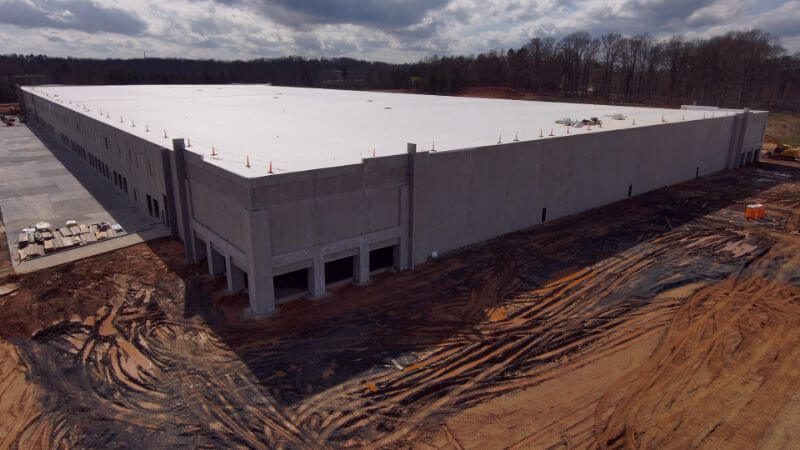
We pull the permit. An owner shouldn't have to learn a building department portal to get a roof replaced. Our office submits the application, scope and product data sheets, then tracks it until it's issued and posted on site.
The insulation question gets answered on the bid, in writing. If a tear-off will trigger an upgrade, the bid shows thickness, R-value and the tapered layout, plus what it does to curb heights and edge metal. A low bid that skips all that isn't really low. It's a change order waiting for the inspector.
Historic districts add a step. Parts of Soulard, Lafayette Square and the Central West End have review standards for visible exterior work. A flat roof hidden behind a parapet rarely draws questions. A new metal mansard facing the street might, so we raise it early.
Illinois runs differently. The state licenses roofing contractors, and each Metro East city handles its own permits and inspections. Our Illinois license number is listed at the bottom of this page.
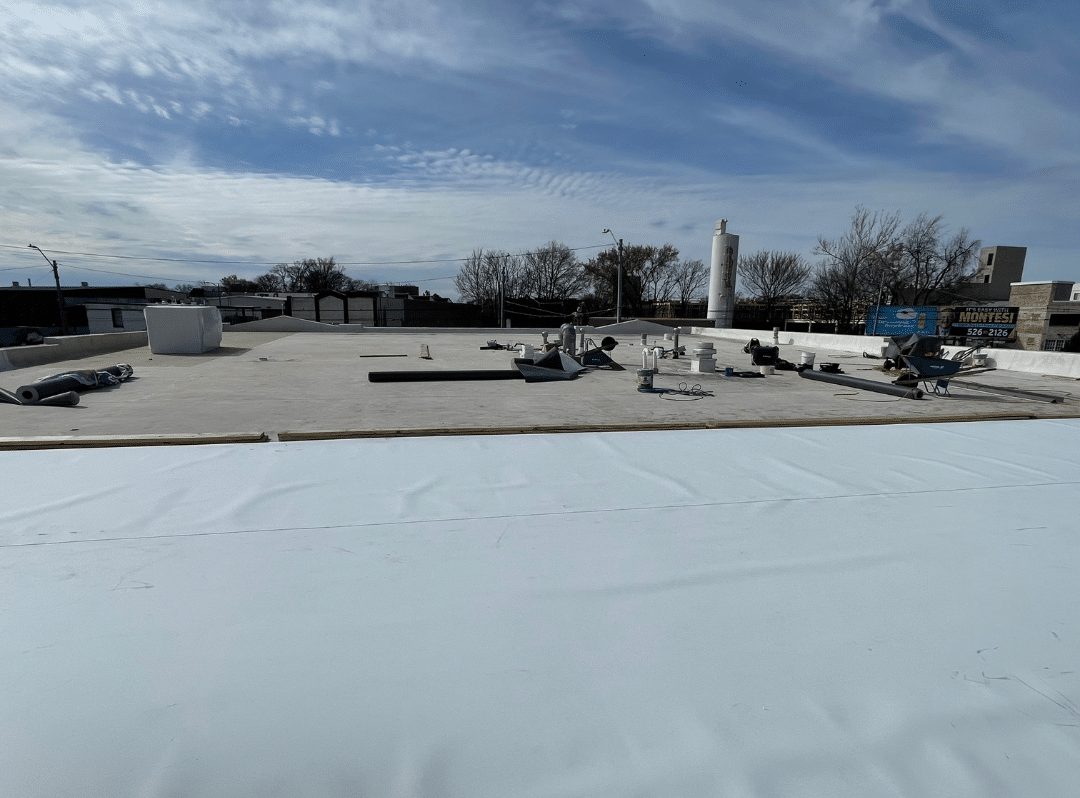
Small repairs often don't, but the threshold varies by jurisdiction and by how much roof gets replaced. Replacing a large section usually crosses the line. We check before work starts.
It depends on the department and the time of year. A straightforward reroof can move quickly. Structural changes or historic review take longer. We submit as soon as a contract is signed.
The permit holder. On our jobs that's us, so we're on the roof for inspections and we correct anything flagged within our scope.
Often, because the existing insulation stays in place. That's one reason recovers cost less. A recover still needs dry insulation and a sound deck, and some departments read the rule differently.
It can help. A documented assembly with current wind and fire listings gives your carrier something concrete to rate. We hand over product data and permit records when the job closes out.
Tell us the property address and a dispatcher will call to schedule. We'll flag permit and code items in the written scope.
Commercial leaks do not wait for business hours. A live dispatcher answers around the clock and we get crews moving the same night.