
Layer count and the code limit
Two existing roofs is the ceiling. Find a second one in the core and recover comes off the table — it’s a tear-off, and the bid has to say so.
Tear-off vs recoverA core sample is a small cut straight through the roof assembly down to the deck. It shows how many roofs are up there, what insulation was used, whether that insulation is wet, and what the deck is made of. John Beal Roofing cuts cores as part of a free inspection and patches every one the same day. (314) 429-6000.
You can learn a lot standing on a roof. You can’t learn what’s underneath it. Two buildings look identical from above and have nothing in common below the surface — one a single ply over the original built-up, the other three layers deep with a soaked fiberboard sandwich sitting on rusted steel deck.
So we cut. Usually a four to six inch square, all the way down until steel, concrete or wood shows. Then you read the stack the way you’d read tree rings.
Two existing roofs is the ceiling. Find a second one in the core and recover comes off the table — it’s a tear-off, and the bid has to say so.
Tear-off vs recoverPerlite, fiberboard, polyiso, EPS. Thickness sets today’s R-value, and today’s R-value sets how much energy code will make you add.
We squeeze it, weigh it, and dry a piece when the answer isn’t obvious. Wet insulation doesn’t dry out under a new membrane. It stays wet and works on the deck.
Infrared moisture scanningSteel B-deck, structural concrete, gypsum, tectum or wood plank. Deck type decides fastening, and fastening decides a big share of the bid.
Commercial roof replacementOne per roof section as a floor, more wherever a scan flags something. Always clear of a seam, and never through a live conduit or sprinkler line.
Every core gets refilled with matching insulation and a welded or adhered target patch. A core left open is a leak we made.
Commercial roof repair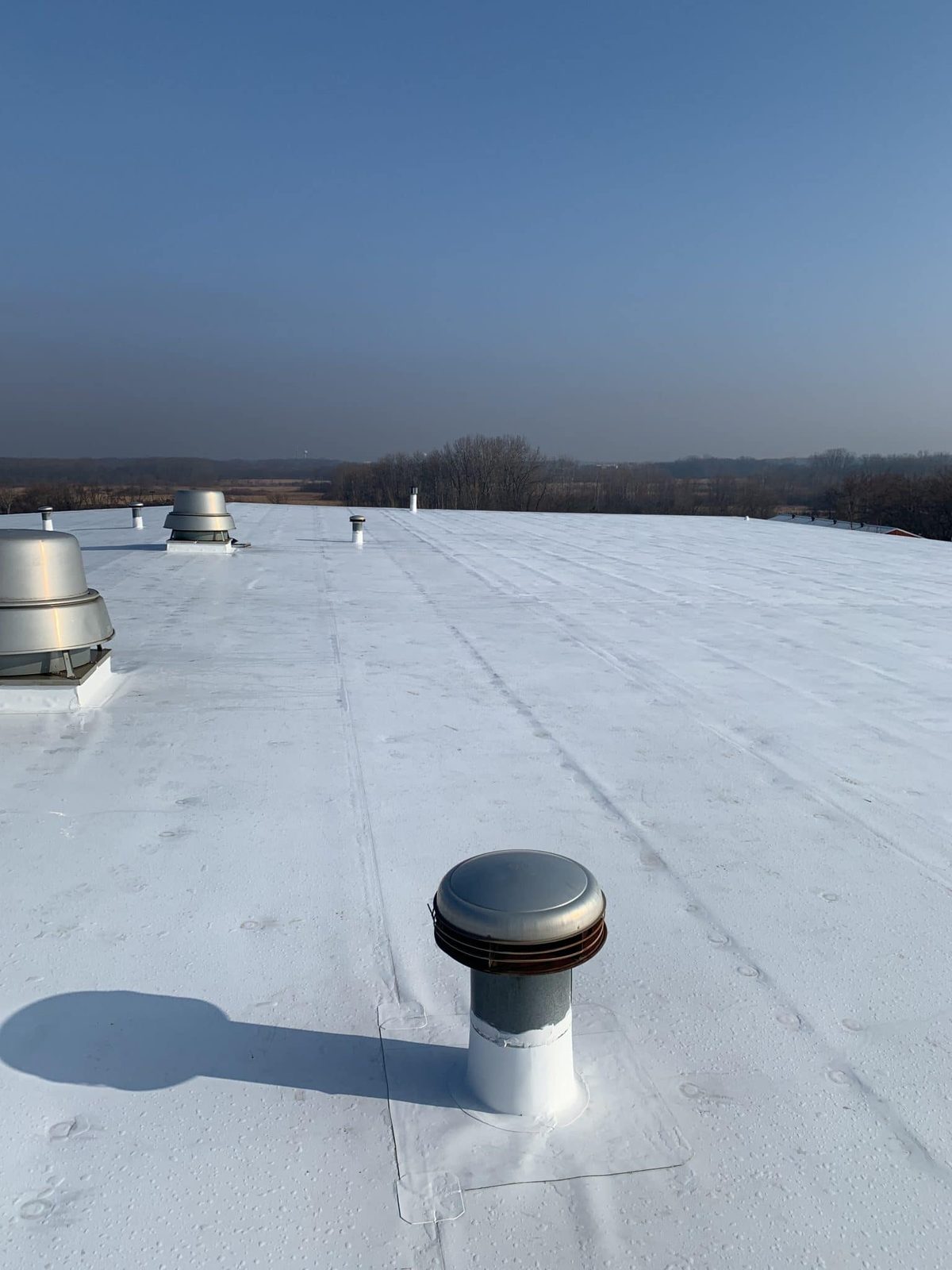
An infrared sweep or a capacitance meter finds where the wet is. Neither one tells you what’s wet, how deep it runs, or what the deck looks like under it. A core does.
So the order is scan first, mark the anomalies, then core the marks. Every flagged area gets verified before it lands on a bid as square footage somebody is tearing out.
That matters on insurance work. An adjuster will argue with a colorful thermal image all afternoon. It’s harder to argue with a dripping chunk of fiberboard on the tailgate next to a photo of the hole it came out of — see storm damage and insurance claims.
It matters on bids too. If one contractor cored the roof and two didn’t, only one of those numbers has deck condition behind it. The other two find it later, and you pay for it as a change order.
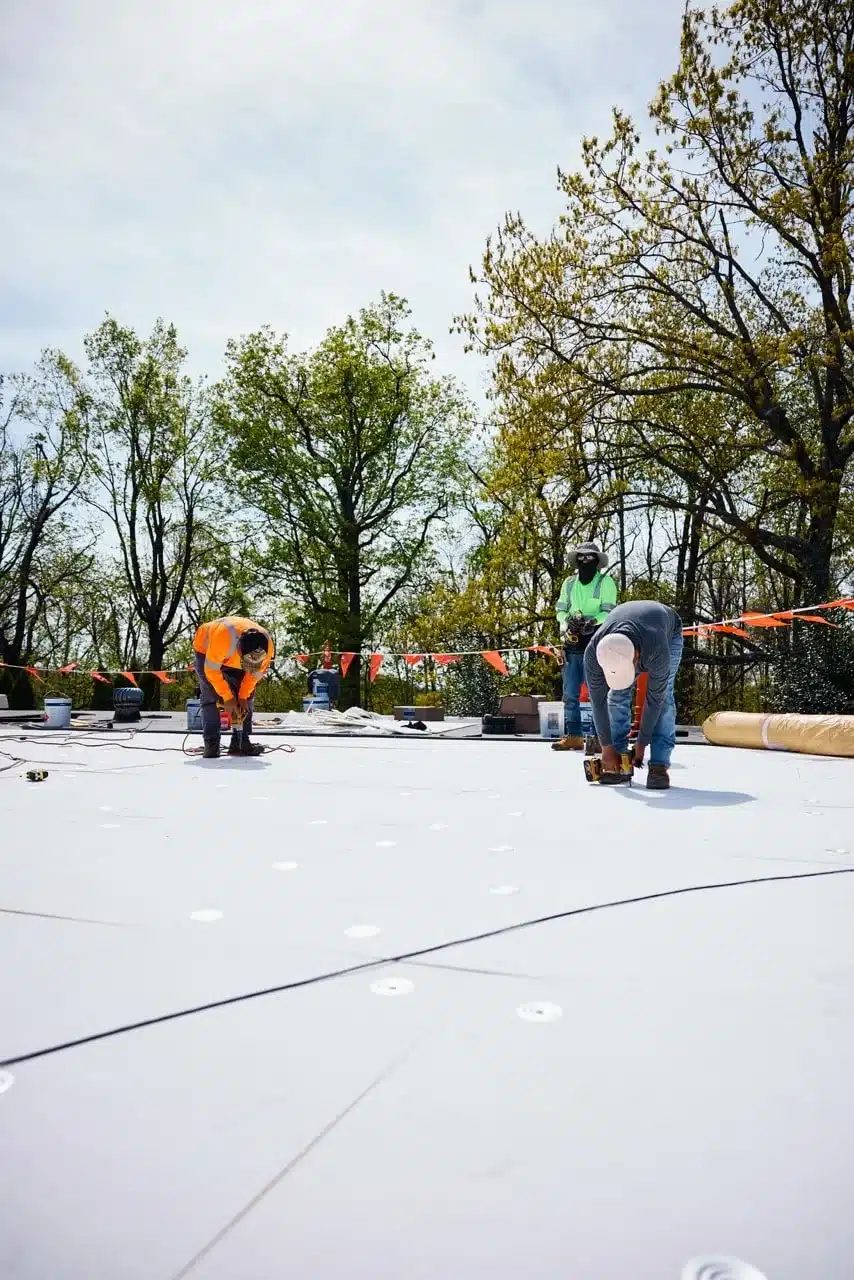
Related: commercial roof inspections in St. Louis and leak detection — cores are usually step three of both.
Not when they’re closed properly. Each one is refilled with matching insulation and sealed with a target patch the same day, welded or adhered to match the system it’s in.
One per roof section at minimum, plus one for every area a moisture scan flags. On a big cut-up roof that might be a dozen. On a small single-section building it’s often two.
Not if it’s cut and patched correctly. On a roof still inside its warranty term we notify the manufacturer first. That’s our call to make, not something you have to chase down.
We do pull ceiling tile and look. But you can’t see insulation or the top side of the deck from below, and that’s usually where the answer is sitting.
They’re part of a free inspection on work we’re bidding. Standalone forensic testing for a lender, a buyer or an attorney is a separate scope and gets quoted on its own.
Tell us about the property and a dispatcher will call to schedule. No cost, no obligation.
Commercial leaks do not wait for business hours. A live dispatcher answers around the clock and we get crews moving the same night.