
TPO
Roughly 15 to 25 years. Thickness matters: 60 and 80 mil outlast 45 mil, especially under hail and foot traffic.
TPO roofingMost commercial roofs in St. Louis last somewhere between 15 and 30 years, and standing seam metal can run longer. Where yours lands inside that range depends on the system, the membrane thickness, drainage, foot traffic, and how many hailstorms and freeze-thaw winters it's been through. John Beal Roofing gives owners a remaining-life estimate backed by cores and photos. Free inspections. Call (314) 429-6000.
Ask ten roofers how long a TPO roof lasts and you'll get ten numbers. Nobody's lying, exactly. A 45-mil sheet on a building with ponding in the corners and a kitchen exhaust dropping grease on it lives a very different life from an 80-mil sheet on a well-drained warehouse that nobody walks on.
So treat the ranges below as typical, not promises. They're what we see on St. Louis buildings that were installed right and maintained at least somewhat. For a capital plan, the bigger question isn't the average. It's where your roof sits today.
Roughly 15 to 25 years. Thickness matters: 60 and 80 mil outlast 45 mil, especially under hail and foot traffic.
TPO roofingOften 20 to 30 years. Perimeter shrinkage and seam failure are what usually end it.
EPDM roofingAbout 20 to 30 years. It holds up to grease and chemicals, which is why it gets specified on restaurants.
PVC roofingAround 15 to 25 years for modified bitumen, 20 to 30 for a good gravel-surfaced built-up roof. Both tend to fail slowly, which is a mercy.
Modified bitumen roofingStanding seam can go 40 years or more. Screw-down panels need fasteners and sealant redone long before the steel gives out.
Commercial metal roofingA silicone or acrylic coating on a sound, dry roof typically adds 10 to 15 years per application, matched to the warranty term you buy.
Roof coatings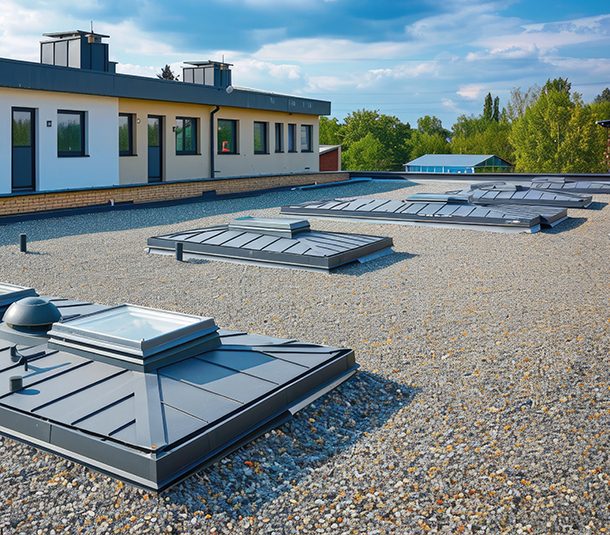
Hail's the big one. Missouri gets plenty of it, and a single storm can end the useful life of a thin membrane or an aged mod bit roof in one afternoon. We look for fractured membrane and crushed insulation, not just dented gutters. See storm damage and insurance.
Standing water comes next. Ponding that sits more than 48 hours speeds aging and finds every weak seam. Freeze-thaw does the rest: water gets into a crack, freezes, opens it a little wider, and does it again every cold snap from November to March.
Then foot traffic. HVAC techs, cable installers and sign crews walk the same path to the same units for years. Walkway pads are cheap. Punctures aren't.
The surest predictor of a short roof life is no maintenance at all. Spring and fall inspections plus clean drains catch most of what kills a roof early — that's what a maintenance plan is for. Near the end, the signs are wet insulation on a scan, repeat leaks at seams, and a repair bill that grows every year. That's when it belongs in your capital plan.
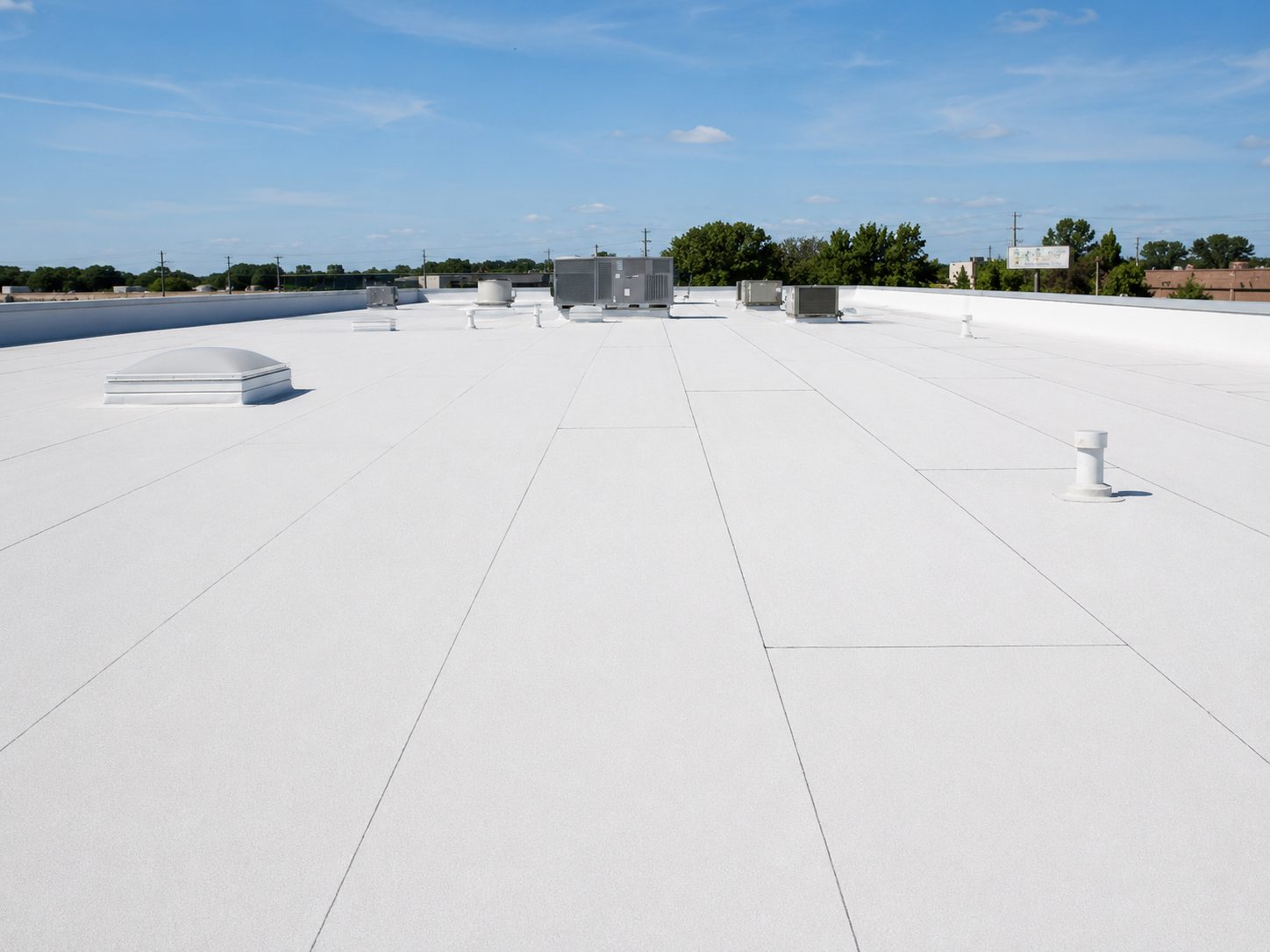
Typically 15 to 30 years depending on the system and how it's been treated. Single-ply and mod bit roofs tend toward the lower half of that range without maintenance and the upper half with it.
Yes. Seam and flashing repairs, drain cleaning, walkway pads and, on a roof with dry insulation, a restoration coating can all push replacement out. Wet insulation is the limit. You can't coat over it.
We walk the roof, cut cores to see the layers and the insulation condition, and run an infrared scan on larger roofs to map wet areas. You get photos and a written estimate of remaining years, not a guess from the parking lot.
It gives you a new roof surface, but the roof underneath has to be dry and sound. And code won't allow a new layer where two roofs are already on the deck, so after one recover the next roof is a full tear-off.
Manufacturer coverage on the materials, including NDL coverage on qualifying systems, plus our lifetime workmanship warranty.
Tell us about the building and we'll schedule a walk, cores and a written remaining-life estimate.
Commercial leaks do not wait for business hours. A live dispatcher answers around the clock and we get crews moving the same night.