
Best suited to
wide, open decks with few penetrations — retail boxes, warehouses, and the flat sections on apartment buildings.
TPO is a white, heat-welded single-ply membrane and the most common commercial roof going on St. Louis buildings today. It reflects summer heat, its welded seams are stronger than the sheet itself, and it suits wide open decks like retail, warehouse and apartment low-slope sections. John Beal Roofing installs it with free inspections and manufacturer warranties. Call (314) 429-6000.
wide, open decks with few penetrations — retail boxes, warehouses, and the flat sections on apartment buildings.
20 to 30 years depending on membrane thickness and how the details were done.
Seams. a hot-air weld done right outlasts the sheet; a weld done cold or dirty fails in a couple of seasons.
TPO is the most-installed commercial membrane in the country, and the install quality varies considerably more than the material does.
The seam is the whole system. TPO sheets are joined with a hot-air weld that fuses them into a single piece of material, and a correct weld is genuinely stronger than the membrane on either side of it. A cold weld, made with the machine running too fast or too cool, looks identical from six feet away and pulls apart within a year or two. We probe seams with a hook while the crew is still on the roof, because that is when a bad weld is cheap to fix.
Thickness is specified in mils, commonly 45, 60 or 80, and the difference is not marketing. It is puncture resistance and weathering reserve, and it determines how much material is left to lose before the reinforcing scrim is exposed. On a roof with regular foot traffic for equipment service, moving up a thickness costs far less than the repairs the thinner sheet will eventually need.
Attachment follows the building. Mechanically attached fastens in rows and is the faster, more economical option. Fully adhered is bonded across the entire surface, performs better under wind, and gives a smoother finished surface because it does not flutter. Wind exposure, deck type and building height drive that choice far more than preference does.
The reflective white surface is a real advantage in our summers, cutting roof surface temperature substantially against a dark membrane and easing the cooling load below it. It is also why TPO shows dirt, and why a roof that is never cleaned gradually loses some of the reflectivity it was specified for.
Where TPO is the wrong answer is sustained grease or chemical exhaust, which degrades it. That is the situation PVC exists to solve, and we would rather say so before the bid than warranty around it afterward.
Cold-weather welding needs adjusted machine settings and more test welds through the day. Our shoulder seasons swing enough that a setting dialed in at nine in the morning is not necessarily correct by mid-afternoon.
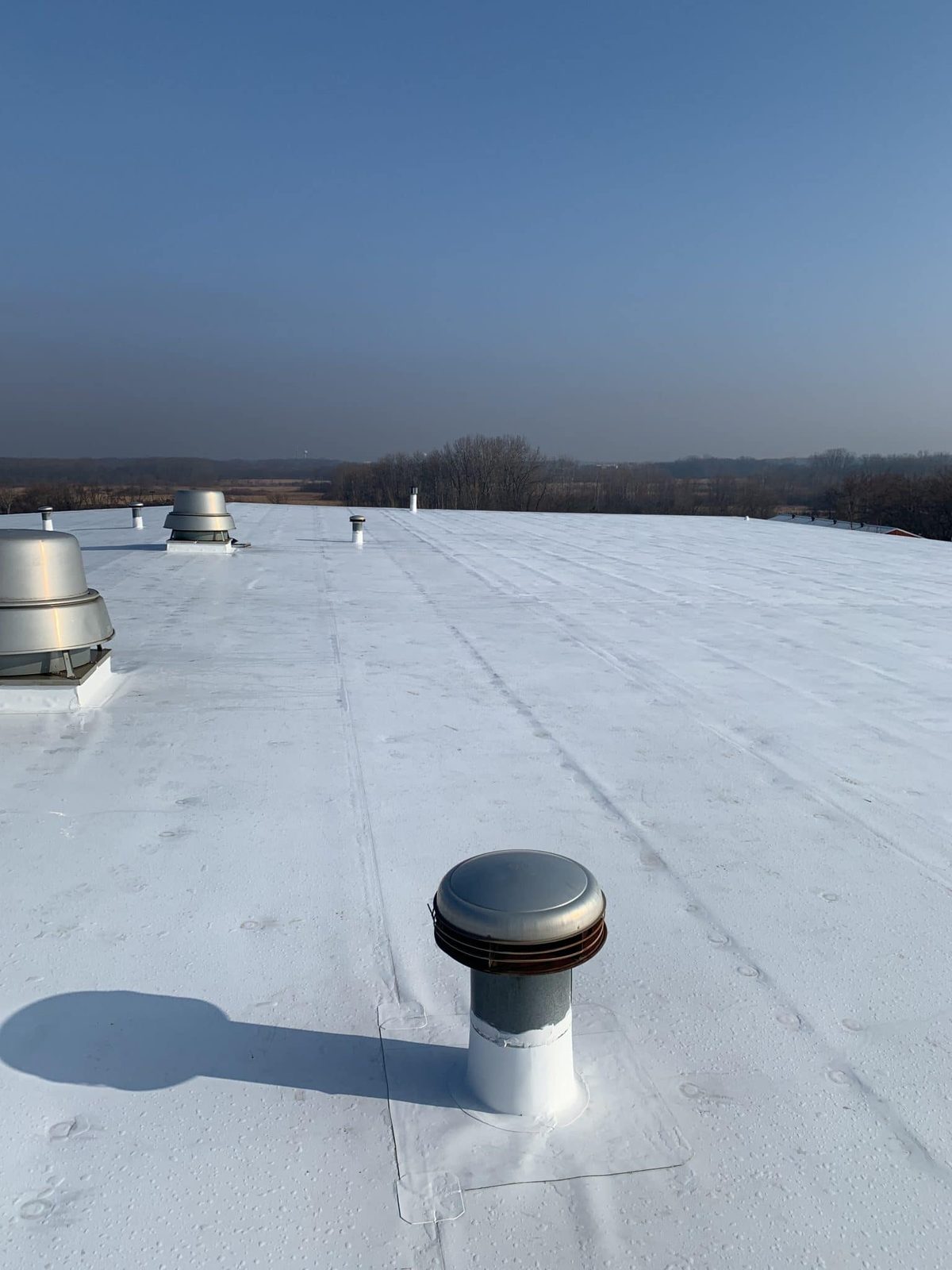
Membrane failures are almost never in the middle of the sheet. The trouble starts at the details, meaning curb flashing, pipe boots, wall terminations and drains.
So the time goes into the parts no one ever photographs. The field seam is minutes of work; the curb is an afternoon, and it decides whether you get twenty years.
Registration of the manufacturer warranty is part of the job, putting coverage on record under your address instead of in a drawer.
Related: TPO vs EPDM vs PVC compared
Twenty to thirty years is realistic in this climate for 60 mil or heavier, installed correctly and cleaned periodically. Thin sheet on a high-traffic roof that never gets maintained is the version that falls short.
Frequently yes. TPO recovers well over an existing roof once a moisture scan confirms the insulation underneath is dry, usually with a cover board between the old surface and the new membrane. Wet insulation has to come out first.
Yes, our own crews, and we carry the manufacturer certifications required to issue a system warranty on TPO. Hot-air welding is a learned skill, and the certification matters here because the seam quality effectively is the roof.
Localized weld and flashing repairs are inexpensive, because TPO heat-welds to itself indefinitely. Replacement becomes the better value once the sheet has weathered down toward the reinforcing scrim across entire slopes.
Mechanically attached TPO is fastened through the deck, so there is audible drilling below and we schedule that around occupancy. There is no solvent odor with hot-air welding, which is one reason TPO suits occupied buildings.
Tell us about the building and a dispatcher will call to schedule.
Commercial leaks do not wait for business hours. A live dispatcher answers around the clock and we get crews moving the same night.