
Best suited to
roofs with a sound, dry substrate and mostly surface-level aging — not roofs with saturated insulation.
A coating is a fluid-applied membrane rolled or sprayed over a roof that still has a sound deck and dry insulation. Done on the right roof it buys ten years and avoids a tear-off. Done on a wet roof it seals the water in and wastes the money. John Beal Roofing tests the roof first and says which one it is. Call (314) 429-6000.
roofs with a sound, dry substrate and mostly surface-level aging — not roofs with saturated insulation.
10 to 20 years depending on the coating and the mil thickness applied.
Moisture in the insulation. if the scan shows wet areas, they get cut out and replaced before anything gets coated.
A coating adds real service life to the right roof and is wasted money on the wrong one. The difference is what sits underneath it.
A fluid-applied coating is a seamless membrane rolled or sprayed over an existing roof, sealing seams and penetrations and laying a new reflective surface over an aged one. On a structurally sound, dry roof it is a legitimate way to extend service life substantially for a fraction of a replacement, avoiding tear-off, disposal and disruption entirely.
It solves nothing where the insulation is wet. Coating over saturated insulation seals moisture into the assembly, and the roof then deteriorates from underneath where nobody can see it until the deck is compromised. This is the most common way owners waste money on a coating, and it is entirely preventable with a moisture survey and core cuts before anyone writes a number.
Silicone and acrylic behave differently and the choice is not cosmetic. Silicone tolerates ponding water, which matters enormously on the dead-level decks common in older commercial construction, and it holds up where water sits for days. Acrylic costs less and performs well on roofs that drain properly, but it is the wrong product where water stands.
Preparation is most of the labor and it is where corners get cut. The existing roof must be cleaned thoroughly, usually power-washed, then allowed to dry completely, with failed seams, open laps and bad flashings repaired first. A coating applied over a dirty or damp surface fails at the bond, and it fails in sheets rather than in spots.
Coating is generally inappropriate on a roof at the end of its structural life, on an assembly with multiple layers concealing unknown conditions, or where the deck itself has deteriorated. We will tell you when that is the situation rather than sell a cheaper job that has to be redone.
Warranties on coating systems are typically shorter than on a new membrane and are usually conditional on the manufacturer inspecting and approving the substrate first.
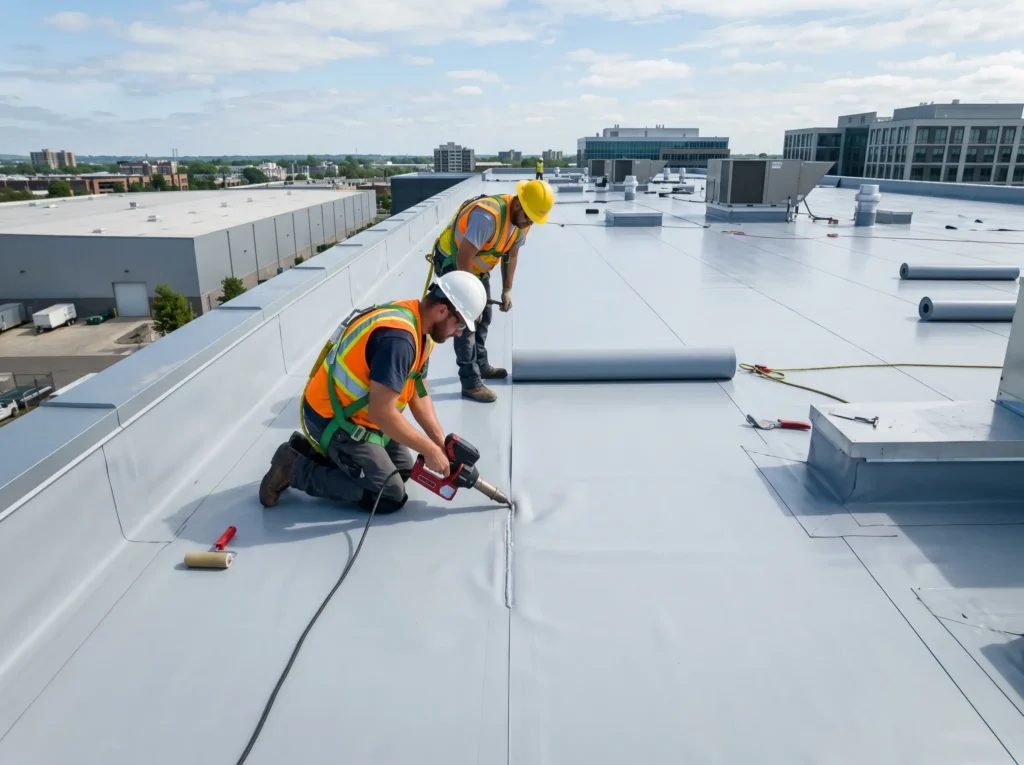
Membrane failures are almost never in the middle of the sheet. The trouble starts at the details, meaning curb flashing, pipe boots, wall terminations and drains.
Which is why the unglamorous details get most of our attention. A field seam takes minutes, but a properly rebuilt curb takes an afternoon, and that curb decides whether the roof reaches twenty years.
We file the manufacturer warranty registration for your building, so the coverage is documented under your address.
Related: Self-storage facility roofing
Related: silicone vs acrylic roof coatings — which system fits a St. Louis roof and why.
Ten to twenty years depending on the chemistry and the mil thickness applied, and coatings are renewable — a silicone roof can be washed and recoated at the end of its term rather than torn off.
A coating is a form of recover, and it is the least invasive one available. The qualifying condition is the same as for any recover: the insulation must test dry and the deck must be sound.
Yes. Coating work is mostly preparation, and preparation is exactly what gets skipped by crews paid to move fast, so we keep it in-house and document the wash and prime stages.
Coating exists precisely to answer this question: it typically runs a fraction of replacement on a roof still structurally sound. On a roof with wet insulation it is not the cheaper option, it is money wasted.
This is the least disruptive option we offer. No tear-off, no dumpsters, no deck fastening noise, and on most buildings operations below continue normally throughout.
Tell us about the building and a dispatcher will call to schedule.
Commercial leaks do not wait for business hours. A live dispatcher answers around the clock and we get crews moving the same night.