
Best suited to
buildings with heavy rooftop equipment and lots of penetrations, and owners who want a proven, repairable system.
EPDM is black synthetic rubber sheet, seamed with tape or adhesive, and it has the longest field record of any low-slope system in the Midwest. It handles temperature swings and foot traffic well and is a practical choice for older buildings with a lot of penetrations. John Beal Roofing installs and repairs it across St. Louis. Call (314) 429-6000.
buildings with heavy rooftop equipment and lots of penetrations, and owners who want a proven, repairable system.
20 to 25 years, and it patches cleanly for years past that.
The seams and the flashing at curbs, which is where an epdm roof gives up long before the field sheet does.
Rubber roofing has the longest real-world track record in low-slope commercial work, and its failure modes are thoroughly understood.
EPDM is a synthetic rubber sheet, traditionally black, and its strength is weathering. It tolerates ultraviolet exposure and ozone about as well as anything on the market, and it stays flexible in cold considerably better than most membranes, which matters on a January service call with a technician walking the roof.
Seams separate an old EPDM roof from a modern one. Early systems were seamed with a liquid adhesive that degraded, and that is why EPDM earned a leaky reputation in some markets. Current work uses factory-applied seam tape, which performs dramatically better. When we are called to an aging rubber roof, it is nearly always the seams failing rather than the field.
Three attachment approaches exist. Fully adhered bonds the sheet down for the cleanest appearance and the best wind performance. Mechanically attached fastens in rows and installs faster. Ballasted lays the membrane loose beneath stone, which is economical and makes future leak location genuinely difficult, because water travels under the ballast before surfacing anywhere useful.
Shrinkage across decades is EPDM's characteristic aging pattern. The sheet draws very slightly toward its center over many years, and that stress appears at the perimeter and at penetration flashings rather than out in the middle. Those details are the first place we inspect on an older rubber roof.
Black absorbs heat, a liability in July and an asset in February. White EPDM exists and costs more. On a conditioned building carrying significant summer cooling load we will talk through whether the reflective option, or a different membrane entirely, makes better economic sense.
Punctures are the common in-service failure, usually from dropped tools or debris during equipment service, and they patch cleanly and permanently. That is one of EPDM's genuine practical advantages.
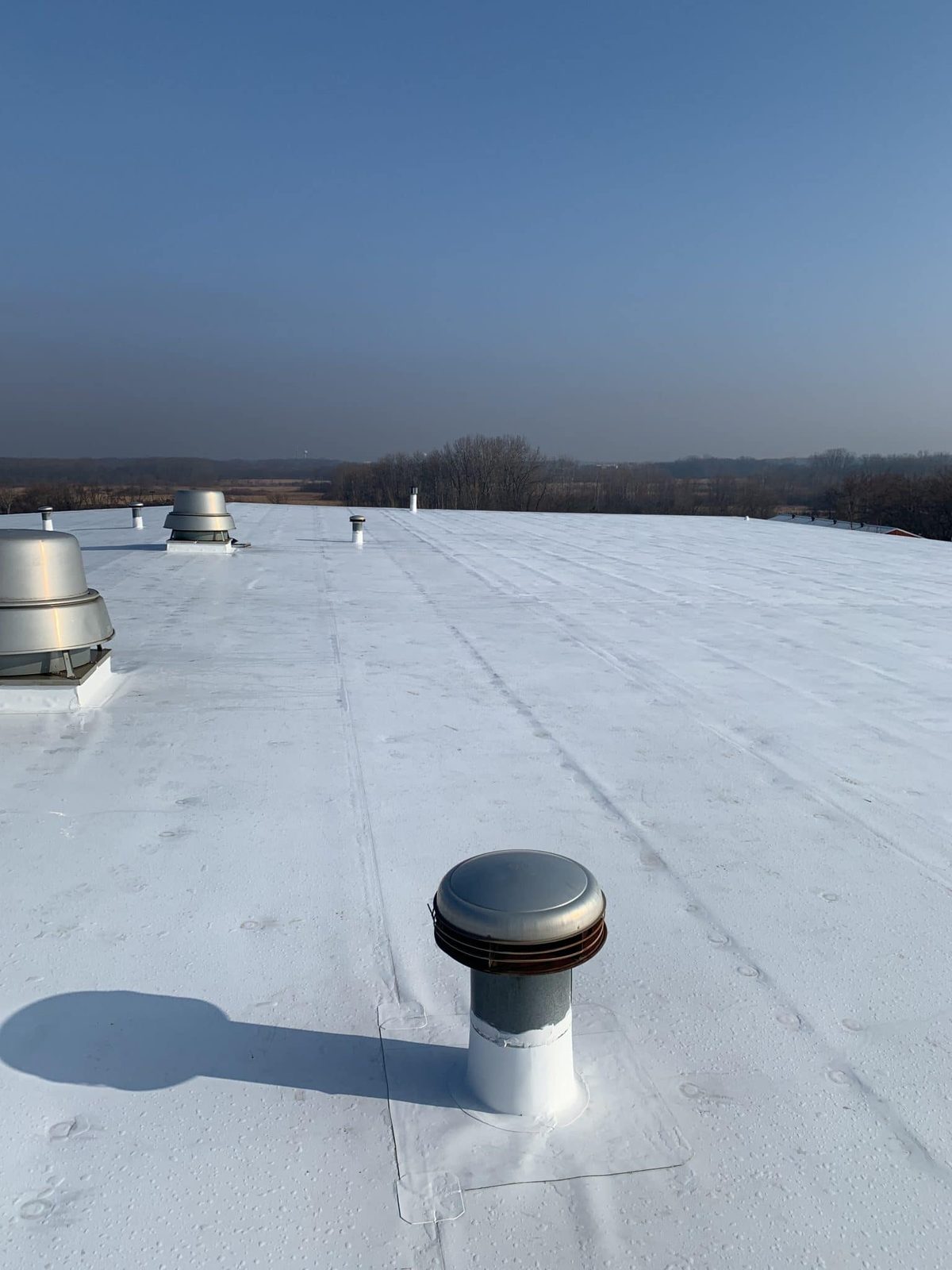
Membrane failures are almost never in the middle of the sheet. They begin at the details: curb flashing, pipe boots, wall terminations and drains.
Which is why the unglamorous details get most of our attention. A field seam takes minutes, but a properly rebuilt curb takes an afternoon, and that curb decides whether the roof reaches twenty years.
The manufacturer warranty gets registered under your building address, so the coverage exists in writing where it counts.
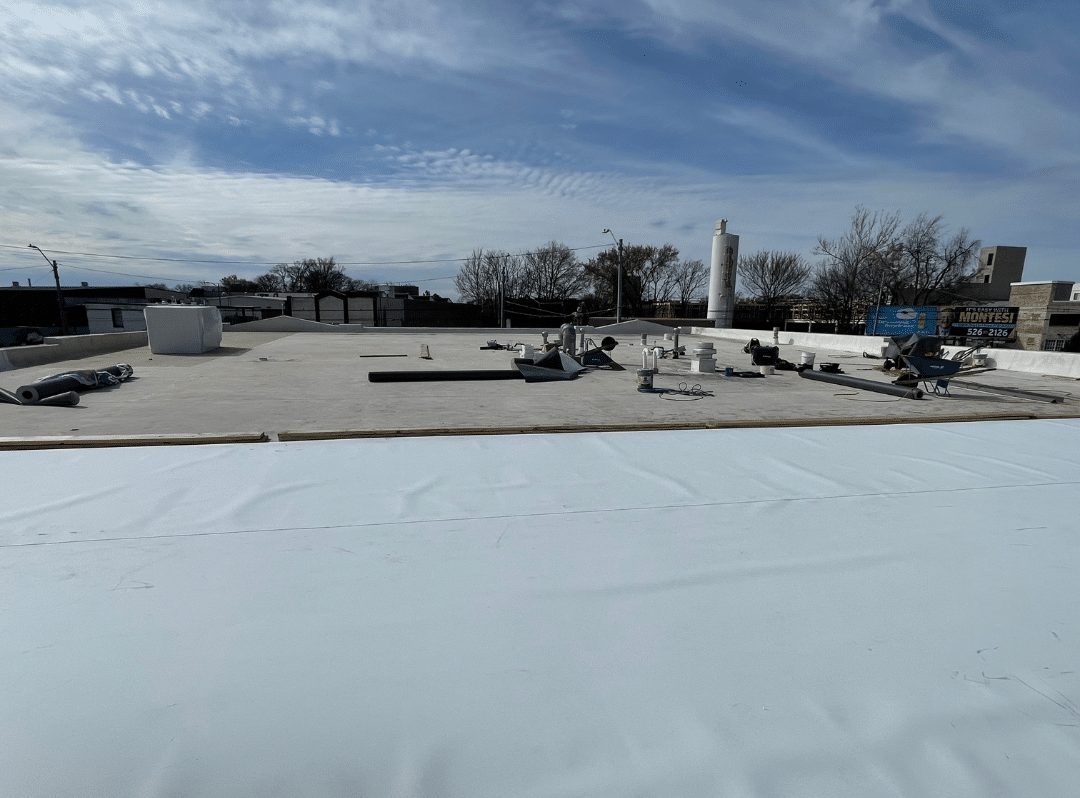
Related: TPO vs EPDM vs PVC compared
Twenty-five to thirty years is well documented for EPDM, and the roofs that reach the top of that range are the ones where perimeter and penetration flashings were inspected periodically rather than ignored.
Often a good candidate. EPDM is light, which helps where structural capacity is a question, but the existing insulation still has to be dry and the deck sound before we recover anything.
Yes, our own crews. EPDM is seamed with tape and primer rather than welded, and surface preparation is where it is won or lost, so the crew habits matter more than any tool on the roof.
Punctures and seam repairs on EPDM are quick and permanent. Replacement is the right call once the sheet has shrunk enough to pull at the perimeter, because that stress keeps reopening flashings no matter how often they are patched.
Adhered EPDM uses bonding adhesive, which carries an odor while it flashes off, so rooftop air intakes near the work get shut down or rerouted. Mechanically attached systems trade that odor for fastener noise.
Tell us about the building and a dispatcher will call to schedule.
Related: ballasted EPDM roofing in St. Louis — what stone ballast hides, what it weighs, and when converting pays.
Commercial leaks do not wait for business hours. A live dispatcher answers around the clock and we get crews moving the same night.