
Vapor control before membrane
On a high-humidity building the vapor retarder matters more than the top ply. We check what’s there, where it stops, and whether the insulation above it is already soaked.
Infrared moisture scanningA brewery roof takes it from both sides — Missouri hail and freeze-thaw above, warm wet air off the kettles below. John Beal Roofing details the vapor side first, then the membrane, and sequences tear-off around brew days and packaging runs. Free inspections. Call (314) 429-6000.
Most of the brewery work we do around St. Louis sits in old buildings. Soulard, Benton Park, the Grove, north-side warehouses that were something else entirely for eighty years before somebody rolled tanks in. Wood plank deck. Three or four layers of hot tar and gravel on top. A mechanical unit bolted on every time the taproom grew.
That stack holds up fine until the brewhouse fires. Warm humid air rises through every gap in a plank deck, hits the cold underside of tired built-up in January, and condenses. Owners call it a leak. It usually isn’t. There’s no hole to find, and a crew that goes hunting for one will patch for a year and never fix a thing.
On a high-humidity building the vapor retarder matters more than the top ply. We check what’s there, where it stops, and whether the insulation above it is already soaked.
Infrared moisture scanningOld plank and light-gauge steel sag under new equipment loads. We cut cores and look instead of guessing from the floor.
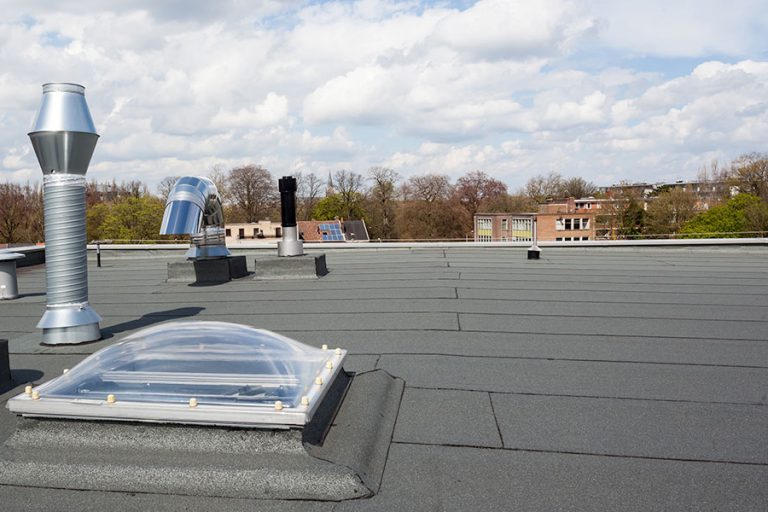
Roof core samplingSteam stacks, clean-in-place exhaust and dust collectors each get their own curb, their own flashing height and their own clamp. Cheap pipe boots cook off.
Chillers concentrate load onto a handful of sleepers. Rails, pads and pipe supports keep steel and copper off the membrane.
Commercial roof repairSpent-grain haul, dust and pallet wrap plug drains fast. A plugged drain on a flat Missouri roof means standing water by the next storm.
Ponding water on flat roofsTear-off gets sequenced around brew days, packaging runs and taproom hours, and every section we open is dried in before the crew leaves.
Commercial roof replacement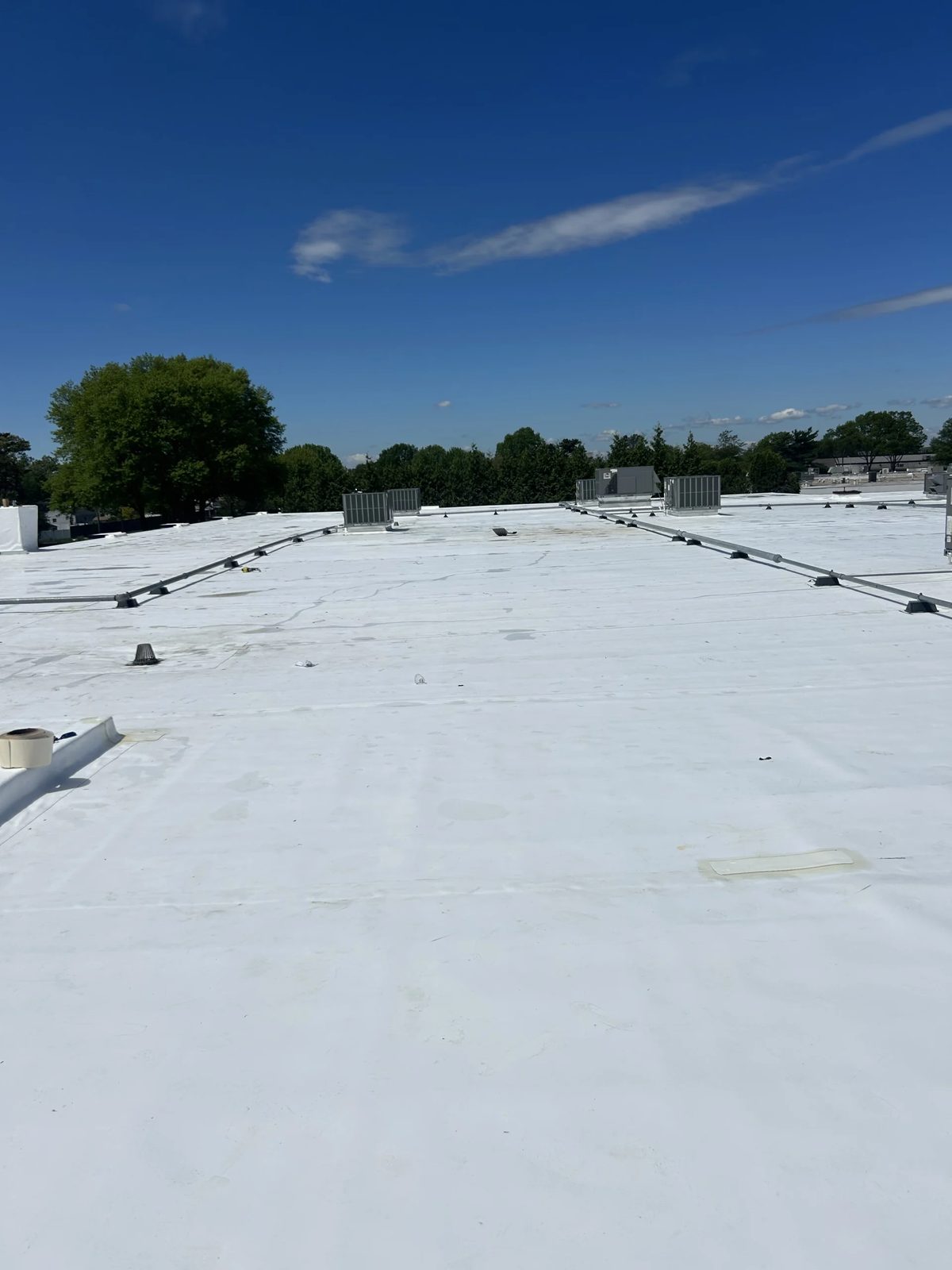
PVC is usually the call where grease, yeast or chemical exhaust reaches the roof. It handles that air. TPO is fine over the warehouse and cold side of the building where the exhaust never lands.
Thickness matters more here than on an office building. We spec 60 or 80 mil anywhere people actually walk, because refrigeration techs, dust-collector service and keg equipment put boots on that deck most weeks.
Insulation goes down in two staggered layers, joints offset, mechanically attached to the deck with the second layer adhered where the deck allows it. One thick layer telegraphs every joint and hands vapor a straight path up.
And where the deck can’t take fasteners — old concrete plank, cracked gypsum, rotted nailer — we say so in the bid, not after we’ve opened it. That surprise is what blows up brewery jobs.
Related: restaurant roofing in St. Louis — the same grease and exhaust details on a smaller roof, and industrial roofing for the production side of the building.
Often it’s condensation, not a leak. Warm humid air off the kettles hits cold deck and rains back down. We run a moisture scan and cut cores before anybody sells you a new roof.
Yes. We stage one section at a time, keep stacks and make-up air clear, and dry in everything we open before the crew leaves. Loud tear-off gets scheduled around taproom hours.
We keep tear-off away from open-vessel areas and coordinate with your cellar crew on which vents shut down and when. Anything above open tanks gets covered from below by your people before we start above it.
Usually PVC where exhaust, grease or chemical vapor reaches the roof, and TPO on the clean warehouse side. Both at 60 mil or better anywhere there’s foot traffic.
Yes. We run crews out of Edwardsville as well as Maryland Heights, Chesterfield and Festus, so Metro East breweries get the same response times.
Tell us about the property and a dispatcher will call to schedule. No cost, no obligation.
Related: vapor barriers on a commercial roof — brewhouse steam is the textbook case for the layer.
Commercial leaks do not wait for business hours. A live dispatcher answers around the clock and we get crews moving the same night.