
Kennel exhaust curbs
Those fans run around the clock and the curbs vibrate. We check counterflashing, curb corners and the hood gasket, then re-flash to a full 8-inch height where the old work sits low.
HVAC curb leak repairVeterinary clinic roofs in St. Louis carry more penetrations per square than most small commercial buildings — kennel exhaust fans, dedicated units for surgery and isolation, anesthesia scavenging vents and laundry dryer exhausts. John Beal Roofing flashes every one of them to the membrane, schedules noisy tear-off around surgery days and boarding peaks, and answers leak calls live 24/7. Free inspections. Call (314) 429-6000.
Most clinics we see around St. Louis started life as something else. A converted bank on Manchester Road. A strip-center end cap in St. Charles County with a boarding wing bolted onto the back. A purpose-built animal hospital from the ’90s whose mod bit roof is on its second coat of aluminum paint. Each one has a low-slope section doing a lot more work than it was ever drawn for.
The water problems follow the equipment. Kennels need big air changes, so there’s usually a row of exhaust fans on curbs above the runs, and every curb is four more corners to flash. Surgery and imaging rooms get their own rooftop units. When something drips, it drips on a sterile field or an X-ray table, and that’s a different conversation than a stained ceiling tile in the lobby. We handle the same kind of occupied, equipment-heavy roof on medical facilities across St. Louis.
Those fans run around the clock and the curbs vibrate. We check counterflashing, curb corners and the hood gasket, then re-flash to a full 8-inch height where the old work sits low.
HVAC curb leak repairWe map the rooms underneath before anything gets opened. Sections over surgery, ICU and radiology get dried in first and are never left open overnight.
Exhaust discharge leaves a film around the fans. Over time it softens and stains single-ply sheet, so we look hard at a ten-foot circle around every exhaust.
TPO roofing in St. LouisTear-off spades and fastener guns above a kennel wing mean hours of barking. Loud work gets scheduled around surgery days and the holiday boarding rush.
Old bank and retail shells often have two roofs stacked on the deck already. Core cuts tell us whether a recover is even allowed or it’s a full tear-off.
Tear-off vs. recoverBoarding wings tied onto the original building leave valleys and low spots where water sits for days. Tapered crickets get it moving to the drain or scupper.
Fixing ponding water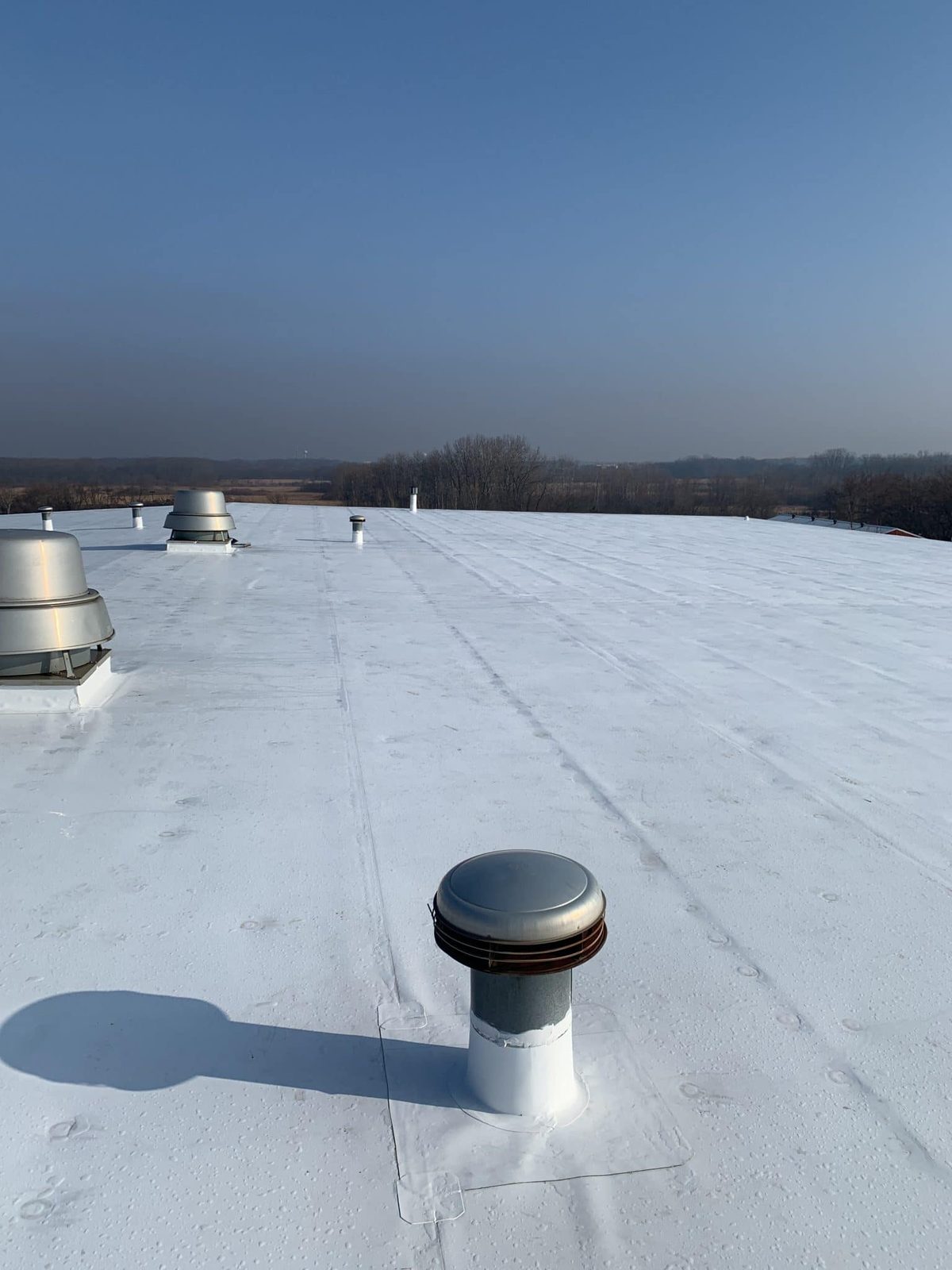
We start with a walk-through with the practice manager, not just the roof. Where are the surgery suites? Which wall do the dog runs share? Where’s the oxygen manifold, and does anything vent near it? That map drives the whole schedule.
Tear-off moves in small sections, usually starting over the lobby and offices where a delay costs the least. Each section is torn off, checked at the deck, insulated and covered the same day. Rotted plank or rusted steel deck gets replaced before anything goes back on top.
The equipment gets the most attention. Every fan curb and unit gets new base flashing, new counterflashing and fresh sealant at the hood. Abandoned curbs from an old floor plan come out and get decked over instead of capped and forgotten.
Clients keep coming in the whole time. We keep the front walk clear, park the dumpster away from the door, and magnet-sweep the lot every evening so nobody’s dog finds a roofing nail.
Yes. Almost every clinic we roof stays open. We sequence the sections so surgery and treatment rooms are never under an open deck, and we move the loudest work to the slower days you pick.
Usually not. Fan curb leaks mostly come down to low flashing, failed counterflashing or a cracked hood gasket. We water-test the curb, fix what’s actually failing, and tell you straight if the field membrane is worn out too.
Most low-slope clinic roofs here end up in TPO or EPDM over new insulation. PVC is worth pricing where exhaust carries grease or chemical residue, because it holds up better to that kind of contamination.
Our phone is answered live 24/7. A crew is dispatched to tarp or temporarily seal the leak so you can keep the room in service, and the permanent repair follows.
Yes. We walk the roof, photograph every curb and penetration, and hand you a written report you can pass to the practice owner or the landlord.
Tell us about the clinic and a dispatcher will call to schedule.
Commercial leaks do not wait for business hours. A live dispatcher answers around the clock and we get crews moving the same night.