
Corners first
Curb corners are where flashing gets folded, cut and patched. Missing or shrunken corner boots are the most common leak we find.
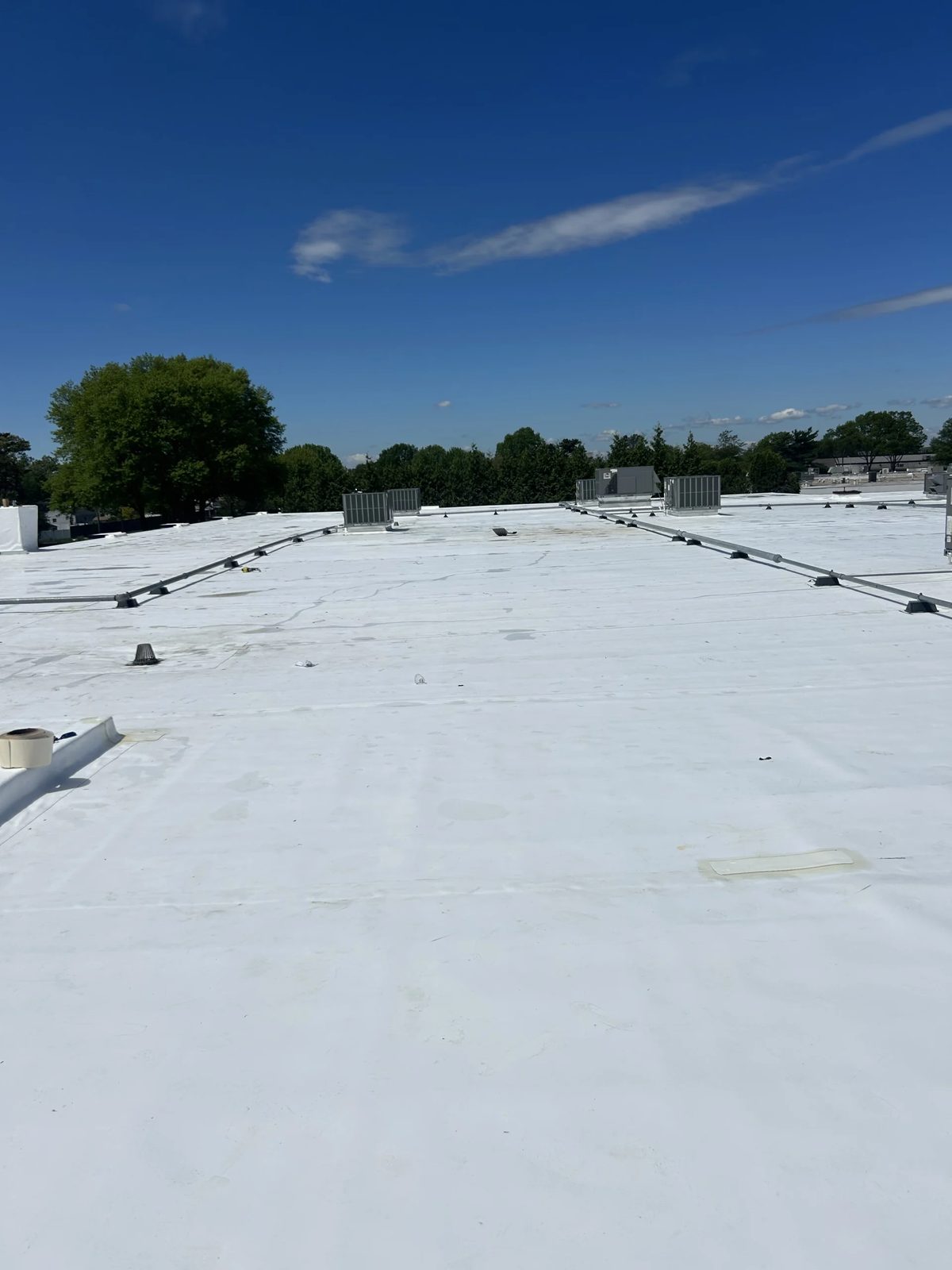
Most flat-roof leaks near a rooftop unit come from the curb flashing, the counterflashing above it, or the unit itself — rarely from the open field. John Beal Roofing water-tests the curb in stages, checks the unit's condensate and panels, and rebuilds the flashing so it stands at least 8 inches above the finished membrane. Free inspections. Call (314) 429-6000.
Ceiling tile stained right under the RTU? The roof gets blamed every time. Sometimes it deserves it. Just as often it's a plugged condensate drain, a missing access-panel screw, or a duct seam inside the curb that's been sweating since the unit was set.
That's why we don't start by smearing mastic around the base. We pull the counterflashing, look at the membrane flashing behind it, and run water at the curb in stages — base and corners first, then the unit — so we know which one is leaking before we fix anything.
Curb corners are where flashing gets folded, cut and patched. Missing or shrunken corner boots are the most common leak we find.
Base flashing should run at least 8 inches above the finished roof. Recovers and added insulation eat that height, sometimes down to two or three inches.
Tapered insulationSheet metal over the top of the flashing sheds water off the curb. A loose screw or a missing cap lets water run straight down behind the membrane.
A wide curb set across the slope dams water on its high side. A cricket sends it around. No cricket usually means a stain line on the upslope wall.
Ponding water on flat roofsCondensate lines dumping onto the membrane, cracked drain pans and a failed gasket between unit and curb all leak inside and look exactly like a roof leak.
Curbs from units that were pulled years ago get capped with plywood and forgotten. They should come out and the deck should be patched.
Commercial roof leak detection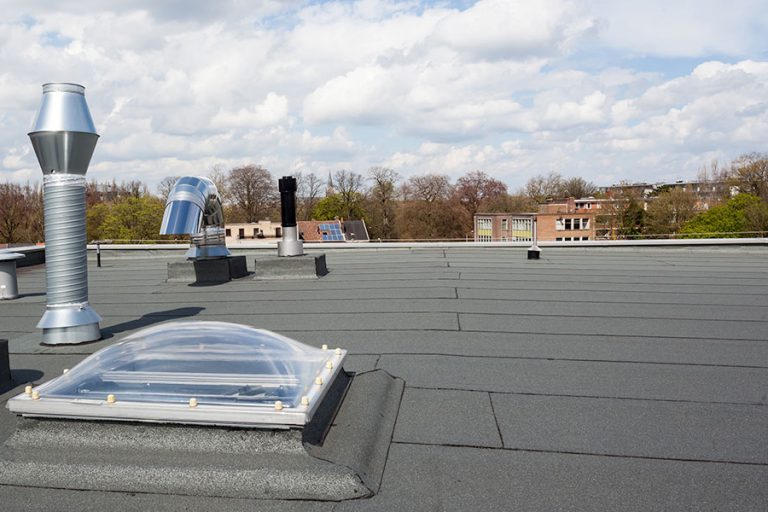
First, the HVAC contractor is in the loop. We don't open a unit, and nobody wants to find a disturbed gas line after the roofer's gone. If the curb has to be raised, the unit gets rigged off and set back on a taller curb or an adapter.
On TPO or PVC the repair is usually new base flashing heat-welded to the field, prefabricated or field-built corners, and termination bar under new counterflashing. EPDM gets cleaned, primed and flashed with cured or uncured flashing and seam tape. Modified bitumen gets a torched or cold-applied cap sheet flashing, depending on whether the building allows open flame.
If the insulation around the curb has been wet for a season, it's soft and crushed underfoot. We cut it out, check the deck for rust, and replace the board before re-flashing. Flashing over wet board just traps the problem in.
The last step is a water test in the same order as the first one. Then we photograph the finished curb and put it in the report, so the next person on that roof knows what was done. Curbs are only one source, though — if the stain follows an exterior wall, read our flat roof repair page next.
Related: roof drain and scupper repair — the other spot where water finds its way in on a flat roof.
Water test in stages. If the stain only appears when the unit runs in humid weather, it's usually condensate. If it shows up during rain with the unit off, it's usually the flashing.
Mastic around the base lasts a season or two and makes the proper repair harder later. We'd rather fix the flashing once.
It depends on the membrane, whether the curb has to be raised, and how much wet insulation surrounds it. After the inspection you get a written price for each curb.
If the new insulation drops the flashing height under 8 inches, yes. Raising curbs during a replacement costs far less than doing it afterward.
Yes. The phone is answered live 24/7. We'll dry in a leaking curb that night and come back for the permanent repair.
Tell us where the water's showing up and a dispatcher will call to schedule.
Commercial leaks do not wait for business hours. A live dispatcher answers around the clock and we get crews moving the same night.