
Built to the summer window
Scoped and staged so the work finishes before teachers return, not around students.
School roofing in St. Louis is summer work with a hard deadline. John Beal Roofing scopes campus roofs by section, sequences tear-off so classrooms stay dry and secure, and finishes before staff return. Free inspections and written scopes for districts and private schools. Call (314) 429-6000.
We work with facilities directors, business managers and school boards across the St. Louis metro and Metro East Illinois. The recurring problem is not the roof itself — it is a fixed summer window, board approval cycles, and buildings that must be secure every single night.
That is why the scope is built around how you really purchase the work. Condition reports, line-item prices and schedule slots are separate for each building or section, so approval can be all, some, or just the ones that cannot wait another winter.
Scoped and staged so the work finishes before teachers return, not around students.
Material committed early, because a summer project bid in spring is usually next summer's project.
How to compare roofing bidsGym, auditorium and cafeteria decks planned first since they are hardest to phase in session.
Roof capital planningSchool work is defined by a short window, a strict safety environment and a public procurement process.
Summer is the window and it is shorter than it appears. Between the last day of classes, custodial and maintenance programs, summer school, athletics and staff returning ahead of opening, the genuinely clear period on most campuses is measured in weeks. Projects get scoped to finish inside it, with weather contingency built in rather than assumed away.
Where work continues with students in the building, everything changes. Crews are separated from student areas entirely, staging and debris routes are kept off circulation paths, and noisy operations are scheduled against the bell schedule rather than crew convenience. Testing windows in particular are worth knowing well in advance.
Personnel screening and site rules are a baseline expectation on a campus rather than an add-on, and districts are right to insist on them. So are daily sign-in, identifiable crews and a named site contact who is actually on site.
Odor and fume control drives material selection more than people expect. Hot asphalt and solvent-based adhesives produce odors that migrate into a building through rooftop intakes, and in an occupied school that is a genuine problem. Self-adhered and low-odor systems exist for exactly this reason, and intakes near active work get shut down or temporarily rerouted.
Public districts generally procure through formal bidding, with prevailing wage, bonding and insurance requirements and specifications written by an architect or consultant. Those documents govern, and a bid needs to answer them precisely rather than substitute an equivalent nobody approved.
Gymnasiums, auditoriums and connected additions frequently carry different roof systems and different ages from the main building, and they are worth assessing separately rather than rolled into one campus-wide number.
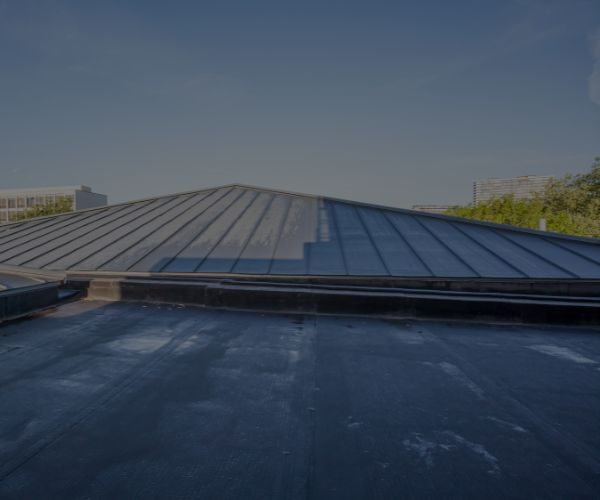
Crews stage on one building at a time. Nothing gets delivered a week early to clog the lot; materials arrive the day they are used.
We only tear off what can be dried in before the crew goes home. No tenant ever spends a night under an open deck.
Daily close-out means a magnet sweep, debris removal, and a clear heads-up on the next day of work.
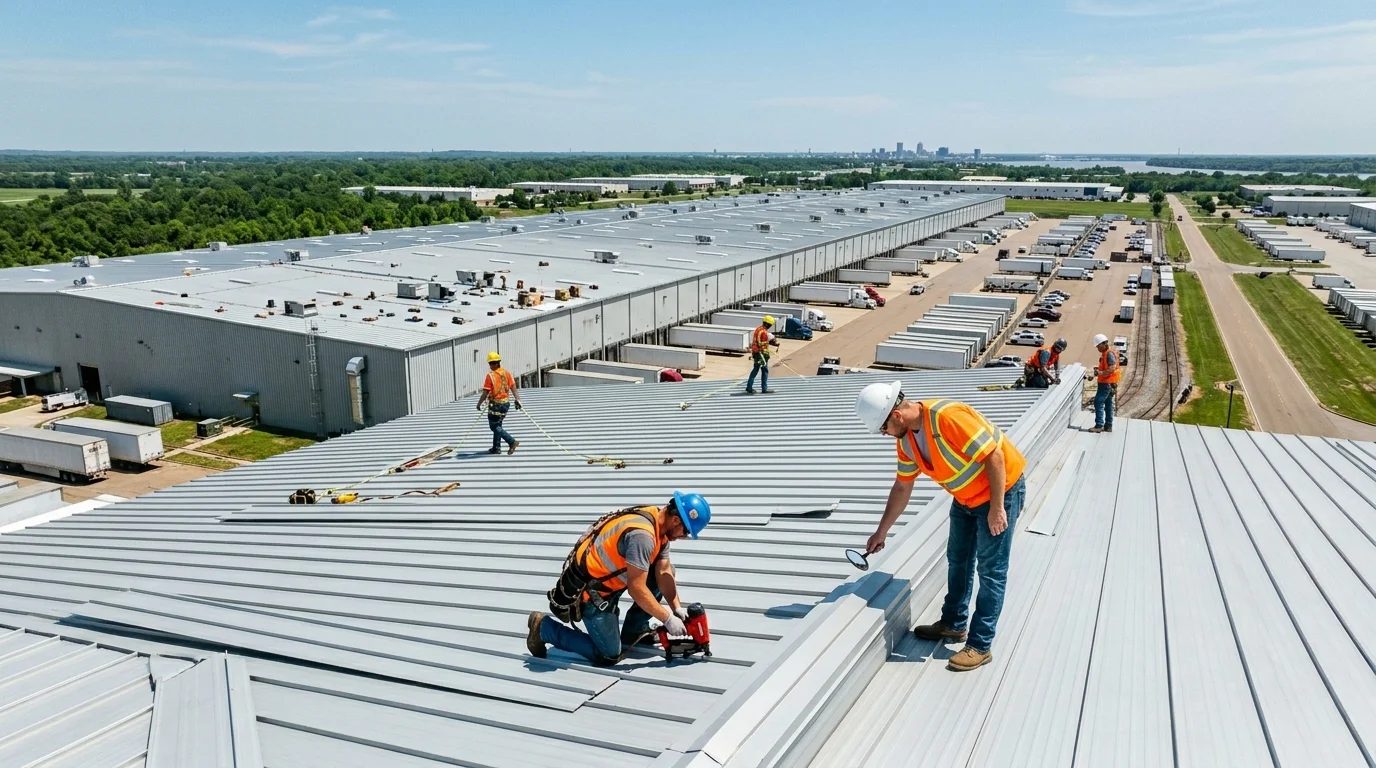
With students in the building, crews stay entirely separated from student areas, staging and debris routes stay off circulation paths, and noisy work is scheduled against the bell and testing schedule.
Yes. Gymnasiums, auditoriums and connected additions usually carry different systems and ages than the main building, and districts generally need them priced and bid separately.
Manufacturer coverage on the materials plus our workmanship warranty, issued to the district with the documentation public procurement and bonding requirements call for.
We mobilize for temporary dry-in as soon as conditions allow. During the school year that frequently means working after dismissal so classrooms are usable the next morning.
Yes. Illinois districts are served by our Edwardsville crews, working to Illinois bidding and prevailing wage requirements.
Tell us about the building and a dispatcher will call to schedule.
Commercial leaks do not wait for business hours. A live dispatcher answers around the clock and we get crews moving the same night.