
Condition reports for budgets
Section-by-section photos, cores and a remaining-life estimate, written so a council member who's never stood on a roof can follow it.
Roof asset managementMunicipal roofing in St. Louis means public bid rules, prevailing wage and bonding requirements, and buildings that can't shut down — firehouses, police stations, public works garages and city halls. John Beal Roofing prices to the architect's spec, phases tear-off around 24-hour operations, and writes condition reports a department can take into a budget request. Free inspections. Call (314) 429-6000.
A city roof doesn't get replaced when it fails. It gets replaced when the money's appropriated, and in most St. Louis County municipalities that means a condition report lands on the public works director's desk, gets folded into the capital improvement plan, and waits for a council vote. That can take eighteen months. The roof keeps leaking over the records room the whole time.
So the first thing we usually hand a city or a fire district isn't a bid. It's a written condition report with photos, core results and a repair-or-replace call for each roof section — the document a department head needs to defend a line item. When the job does go out to bid, we price what the spec says. Not our version of it.
Section-by-section photos, cores and a remaining-life estimate, written so a council member who's never stood on a roof can follow it.
Roof asset managementMissouri public work runs on sealed bids and prevailing wage. We bid the specified system, mil and attachment, and send an RFI before bid day when the drawings and the spec disagree.
How to compare roofing bidsFirehouses, 911 dispatch and police stations run around the clock. Tear-off is sequenced so the bay and the dispatch floor are never open at the same time.
Long-span bays with exhaust stacks, exhaust fans and big overhead-door headers. Those penetrations leak far more often than the open field does.
Truck washes and mechanic bays push road salt and moisture into the deck from below. We look at the underside of the steel for rust before we trust a single fastener.
Industrial roofingA lot of older city halls pair a slate or tile front with a flat built-up roof hidden behind the parapet. Both get scoped. The parapet usually needs the most help.
Parapet wall flashing repair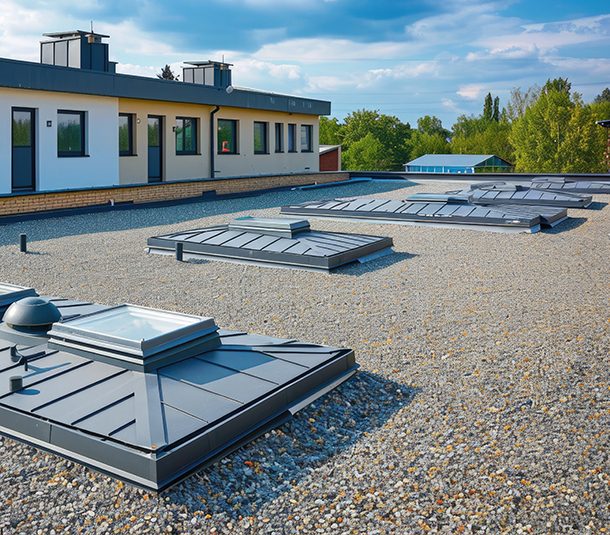
Paperwork, mostly. Certified payroll goes in weekly on prevailing-wage jobs, the submittal package has to match the spec down to the fastener plate, and nothing changes in the field without a signed change order. It's slower than private work. It should be.
Then there's the public. A community center or city hall has residents walking in all day, so the hoist area gets fenced, the dumpster goes somewhere other than the front entrance, and the walk to the door stays clear. When a spec calls for hot asphalt or torch work, it happens away from the intake vents so the council chamber doesn't smell like a parking lot during a meeting.
Critical facilities get their own plan. On a firehouse we talk to the station captain before we mobilize. Apparatus has to roll out of those bay doors at any hour, so staging never blocks the apron, and the crew clears the drive the second the tones drop.
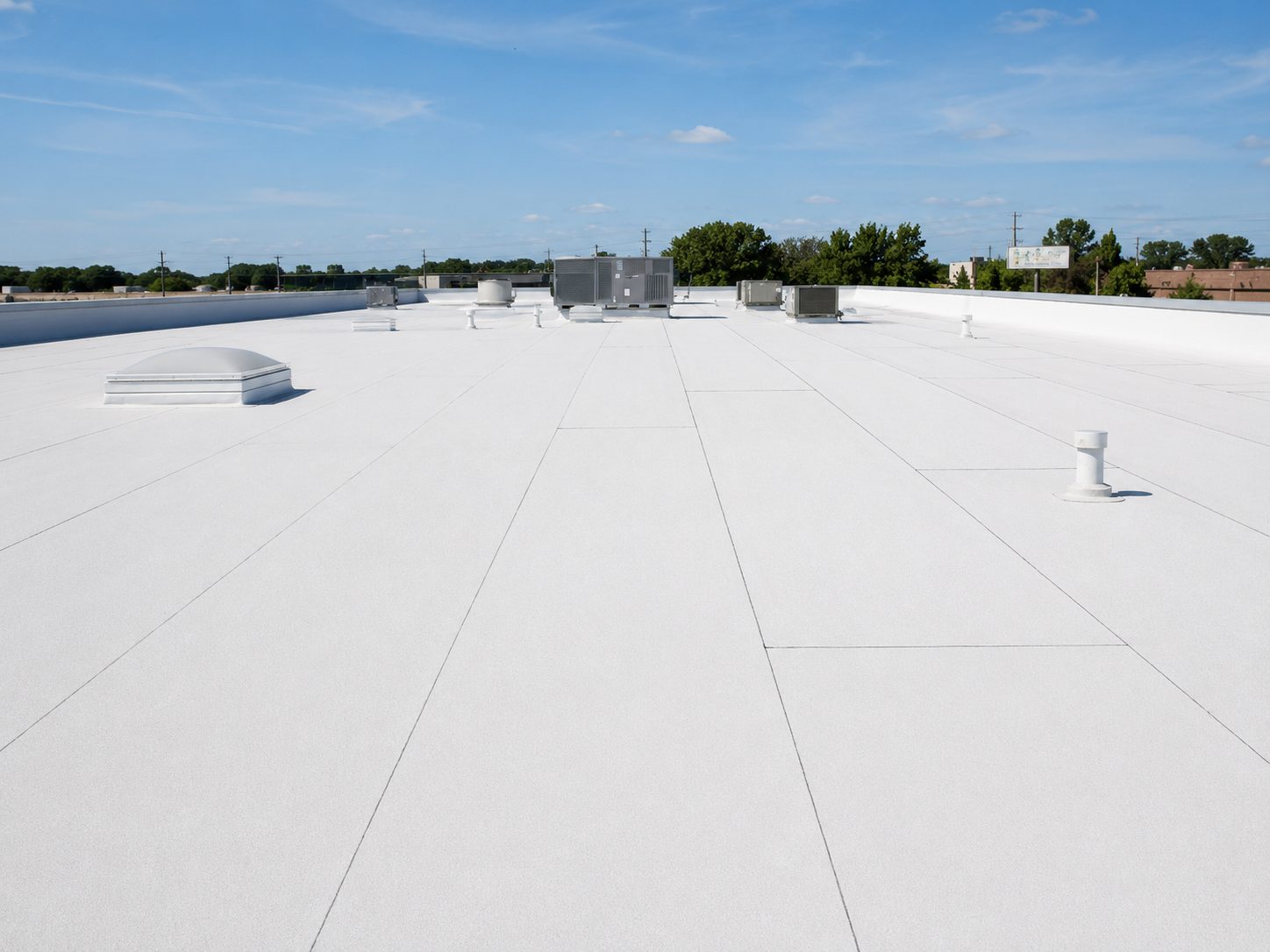
Most municipal roofs we're called to around here are gravel-surfaced built-up roofs from the '70s and '80s, or first-generation EPDM pulling away at the edges. Plenty of them can take one recover instead of a full tear-off — if the core samples show dry insulation. That one finding can move a project from next year's budget into this one.
Related: school roofing in St. Louis — the other public building that gets roofed on a fiscal-year calendar.
Yes. A free inspection gives you photos, core results and a section-by-section estimate you can drop into a capital improvement request. It isn't a bid, and the report says so.
Yes. We price to the wage order for the county the building sits in, and payroll gets documented the way the contract spells out.
Staging stays off the apron and out of the bay door path, we never open more roof than we can dry in that shift, and the crew clears the drive whenever apparatus goes out.
Call (314) 429-6000 at any hour. We'll stop the water with a temporary repair and document it with photos, and that report becomes part of the case for funding the replacement.
Yes. Our Edwardsville office covers Illinois cities, villages and fire protection districts on that side of the river.
Tell us about the building and a dispatcher will call to schedule.
Commercial leaks do not wait for business hours. A live dispatcher answers around the clock and we get crews moving the same night.