
A condition report per curb
We photograph and grade every curb, pitch pan and line set, not just the field membrane. That list is what your maintenance budget actually needs.
Commercial roof inspectionGrocery roofs in St. Louis carry more equipment per square foot than almost anything else we work on — refrigeration racks, condensers, make-up air, hood exhaust — and the store underneath can’t close. John Beal Roofing phases the work section by section, keeps every unit running, and dries in each night. Free inspections. Call (314) 429-6000.
Count the curbs on a full-size grocery roof sometime. Sixty. Eighty. Past a hundred once you add every condenser, every exhaust fan and every refrigerant line penetration somebody cut during a remodel. Each one is a spot water can get in.
Which is why grocery roofs don’t usually fail out in the field. They fail at the details. A rack gets swapped, the tech sets it back down on the same tired curb, and flashing that was already done gets one more season it was never going to survive.
We photograph and grade every curb, pitch pan and line set, not just the field membrane. That list is what your maintenance budget actually needs.
Commercial roof inspectionLines laid flat on the membrane wear a groove into it over a few summers. They come up onto pipe supports with slip sheets under every foot.
Cardboard, pallet wrap and leaf litter plug a grocery drain within weeks. Strainers, clean-outs and a scheduled drain check keep water moving.
Ponding water on flat roofsMissouri hail bends condenser fin stock and bruises membrane the same night. We document both so the claim covers both.
Storm damage & insuranceSections above the sales floor and prep areas get dried in before the crew leaves. Every day. No overnight open deck, ever.
Loud tear-off runs before doors open where the lease and the municipality allow it. The rest gets sequenced aisle by aisle.
Commercial roof replacement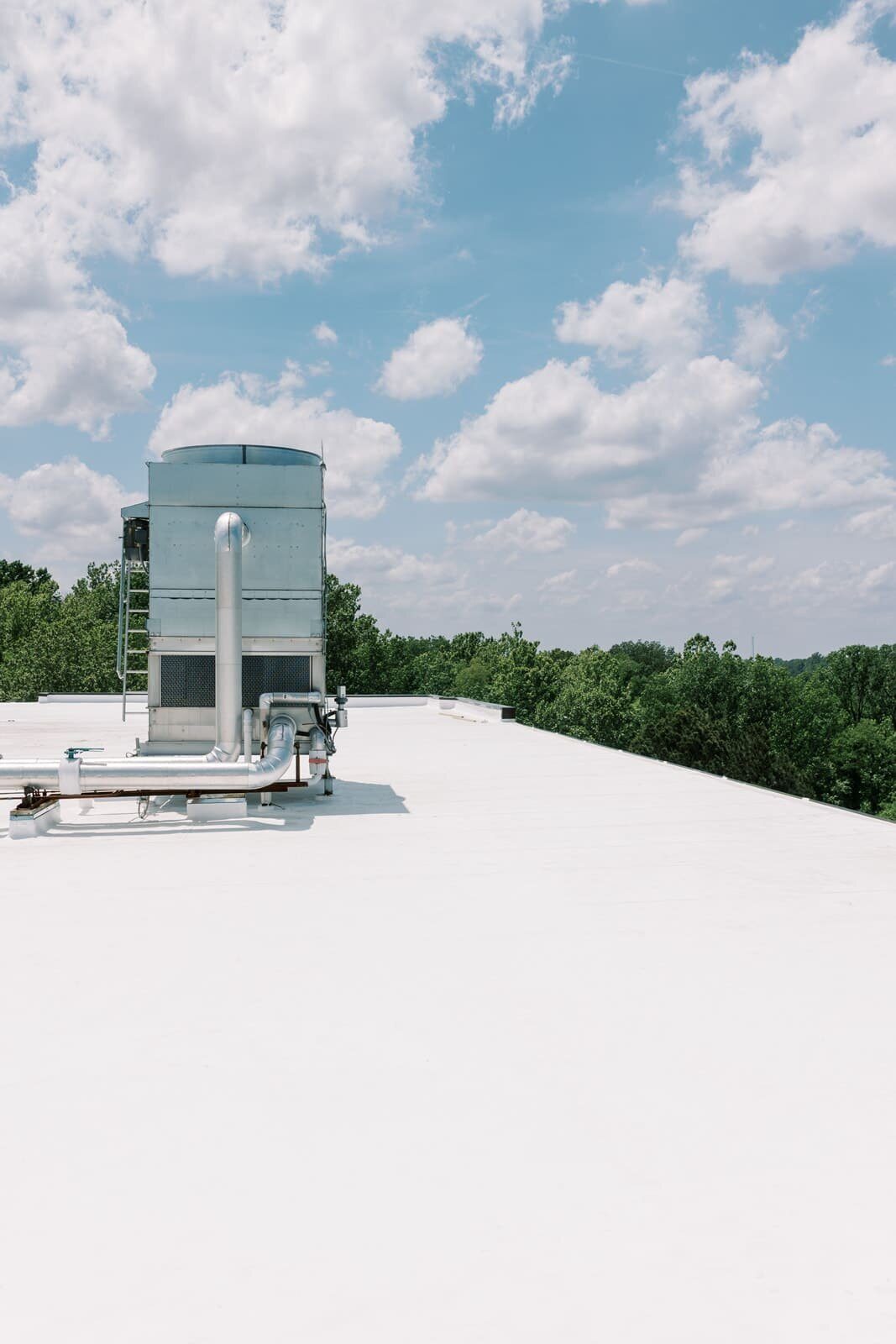
White TPO is the default here and it earns it. A grocery roof runs hot off all that condenser discharge, and a reflective membrane keeps deck temperature — and rack head pressure — down.
Where deli fryer or bakery hood exhaust lands, we switch that zone to PVC. Grease eats TPO. It’s slow, and it’s certain.
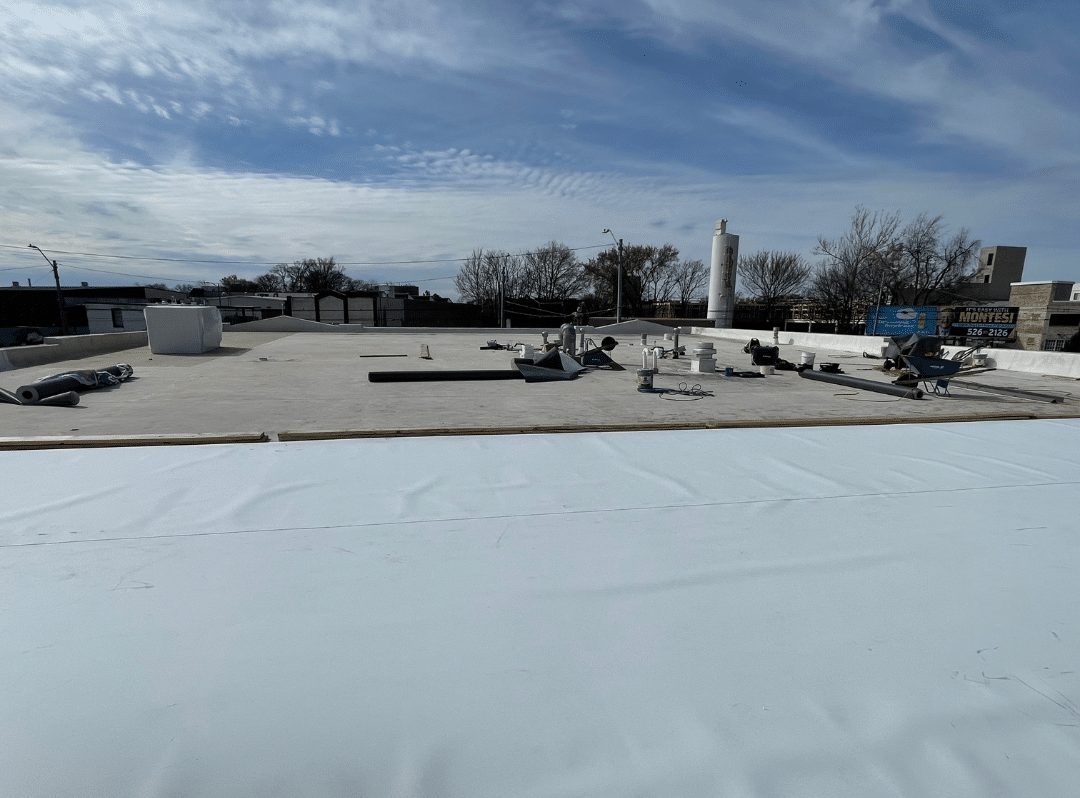
Insulation goes back to current energy code, which on most St. Louis reroofs means more R-value than what’s up there now. Tapered fill goes in at drains and behind curbs so water leaves instead of parking.
Walk pad runs from every hatch and ladder to every unit. Refrigeration techs live on that roof, and pad is a lot cheaper than the punctures it prevents.
Related: retail roofing in St. Louis for strip-center and big-box work, and restaurant roofing for the hood-exhaust details.
That’s the normal way we do it. Work runs section by section with staging kept off customer parking and away from the entrance, and the loud parts get scheduled before doors open.
Nobody moves it. We flash around it and raise what has to be raised, working with your refrigeration contractor when a unit genuinely has to come off a curb. We don’t touch refrigerant lines — your tech does, and we schedule around him.
Areas over food prep and open cases are dried in daily and never left open. If a section has to sit past close, it gets tarped and monitored, and your manager hears about it before it happens.
White TPO across the field, PVC in any zone where fryer or bakery exhaust settles. Grease degrades TPO over time and it’s not worth saving the difference.
It depends on square footage and how cut up the roof is. A full-size store runs in weeks, not days, and you get a section-by-section calendar before we start so deliveries and remodel work can be planned around it.
Tell us about the property and a dispatcher will call to schedule. No cost, no obligation.
Commercial leaks do not wait for business hours. A live dispatcher answers around the clock and we get crews moving the same night.