
Drainage, not just membrane
Long spans mean shallow slope and deflection between joists. If the existing roof ponds, a recover just re-creates the pond. Tapered crickets between drains and new sumps fix it for good.
Ponding water on flat roofsDistribution center roofing in St. Louis means very large low-slope areas, long drainage runs, racking and ESFR sprinkler piping right under the deck, and product that can’t get wet. John Beal Roofing prices DC roofs by section, corrects drainage instead of just re-covering it, and phases work bay by bay around your inbound schedule. Free inspections. Call (314) 429-6000.
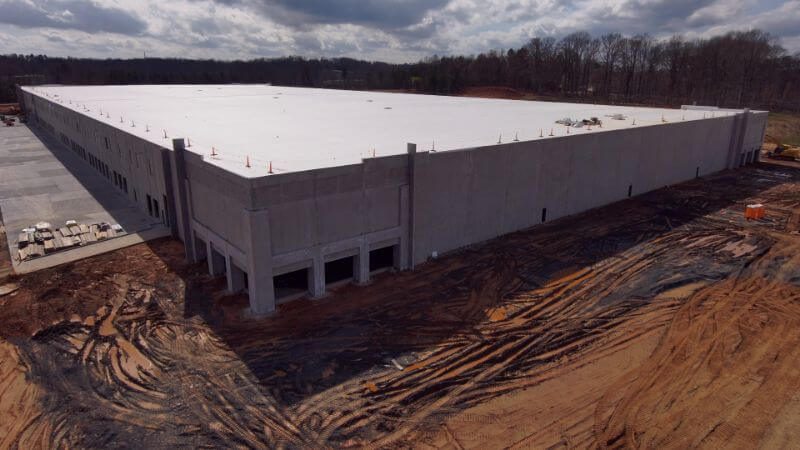
St. Louis sits on the freight map for a reason, and the buildings show it — Earth City, Hazelwood, Edwardsville, the I-255 spine and the newer boxes out past Wentzville. A lot of them went up between 1995 and 2010 with a 60-mil mechanically attached membrane and R-15 or so above deck. Those roofs are now at the end of a service life that was always going to end.
The difference between a DC roof and a small commercial roof isn’t just acreage. It’s that water has to travel two hundred feet to reach a drain, the deck flexes, and there’s a hundred thousand dollars of cardboard directly underneath every square you open up.
Long spans mean shallow slope and deflection between joists. If the existing roof ponds, a recover just re-creates the pond. Tapered crickets between drains and new sumps fix it for good.
Ponding water on flat roofsCorners and perimeters see far more suction than the field. On a building this wide that’s a lot of enhanced fastening, and it’s the line item cheap bids quietly leave out.
ESFR heads and mains hang right off the deck. Screws, hot work and dropped tools are all real risks, so fastener lengths get checked against deck gauge and the crew works to a drop-free protocol.
A reflective TPO or PVC surface takes real load off rooftop units over that much square footage. It also shows every ponding ring, which makes maintenance inspections honest.
TPO membrane roofingTwo layers is the code ceiling, and wet insulation kills a recover outright. We core the roof before we take a position, then show you both numbers.
Tear-off vs recoverLoads land where they don’t block a dock. Cranes get set early, debris trailers get pulled before first shift, and drive aisles get swept every day.
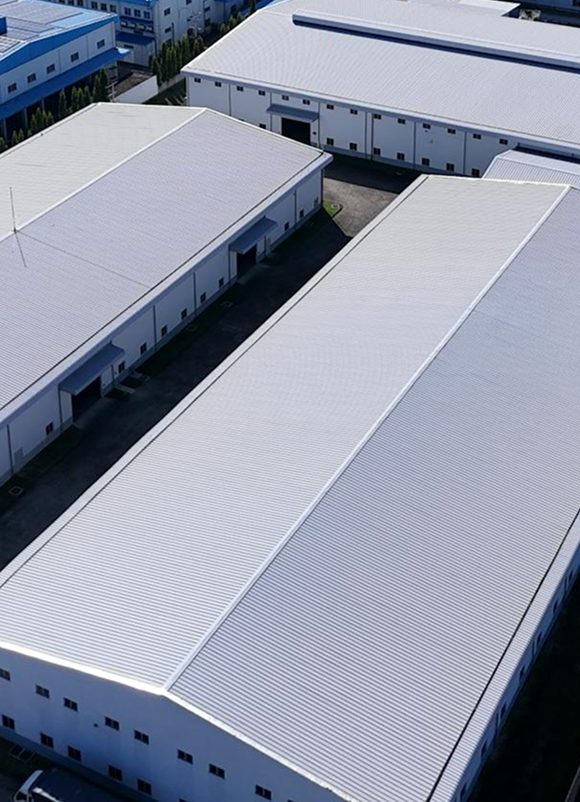
We break the roof into sections that match your building bays and your operation — inbound, outbound, high-value storage, the office block up front. Each section is priced separately so you can fund it in pieces or do it all in one season.
Daily tear-off is limited to what the crew can dry in before they leave. That number gets smaller when rain is forecast, and we’d rather move slower than gamble on a Missouri afternoon.
Under the section being opened, product moves or gets covered. We walk that with your ops manager the week before, not the morning of.
Weather holds get communicated the night before so your people aren’t moving pallets for nothing. You get a look-ahead every Friday for the coming week.
Related: warehouse roofing in St. Louis, self-storage roofing and commercial roof replacement.
Plan on a season, not a month. Crew size, phasing limits and weather set the pace. We give you a bay-by-bay schedule with a look-ahead so your ops group can plan around it.
Yes. Most of our DC work happens over live operations. Loud deck work and crane picks get scheduled into shift-change windows.
Sometimes a lot. It depends on layer count, how much of the insulation is wet, and whether the drainage works. We core first, then price both ways side by side.
Every open section is dried in before the crew leaves, so a storm hits a watertight roof. If weather moves in during the day we stop tearing and secure what's open.
Yes. We run crews out of Edwardsville as well as Maryland Heights, Chesterfield and Festus, so Metro East properties get the same response times.
Tell us about the property and a dispatcher will call to schedule. No cost, no obligation.
Commercial leaks do not wait for business hours. A live dispatcher answers around the clock and we get crews moving the same night.