
Open roof hatches
An open hatch is a hole in the roof. A hatch rail with a self-closing gate lets someone climb out without standing next to the drop.
Everyone who goes on your roof, from your maintenance tech to the HVAC contractor to the roofer, is covered by OSHA fall protection rules, and your building’s hatches, ladders, skylights and edges decide how hard those rules are to follow. On a low-slope roof, general industry rules require fall protection for work within 6 feet of an unprotected edge and restrict work between 6 and 15 feet. John Beal Roofing notes access hazards in every free inspection and can add hatch rails, skylight screens and walkway pads when we roof. Call (314) 429-6000. General information, not legal advice.
Owners tend to think roof safety is the contractor’s problem. Partly true. Each employer answers for its own people. But the building supplies the conditions: a hatch with no rail, a skylight with no screen, a ladder that stops two feet short of the parapet. Those are the details that put people in the hospital.
Older buildings downtown and in Midtown are the hardest. Low or missing parapets, hatches over stairwells, wired-glass skylights that look like solid roof under a dusting of snow. The newer tilt-up warehouses in Earth City and Fenton have a different problem: acres of roof, one ladder and a long walk to every unit.
An open hatch is a hole in the roof. A hatch rail with a self-closing gate lets someone climb out without standing next to the drop.
Skylights count as holes too. A screen or rail over each dome keeps a foot, or a person, from going through.
What our inspections coverFixed ladders over 24 feet installed since November 2018 need a ladder safety system or fall arrest. Older ones have until November 2036.
Equipment set within 6 feet of an unguarded edge turns every service call into a fall protection job. We note it, and the fix.
Pads mark the route from hatch to units, protect the membrane and keep techs away from the edge.
Roof maintenance plansA log at the hatch tells you who was up there when the leak started. Cheap, and it settles a lot of arguments.
Landlord vs. tenant roof duties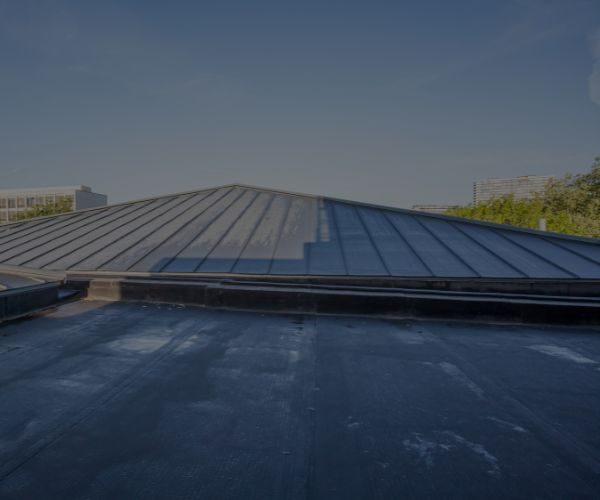
A replacement is the cheapest moment to fix access. The membrane’s already coming up, so bases for hatch rails, guardrail posts and tie-off anchors can be set and flashed into the new roof instead of bolted through a finished one.
Think about where people actually walk. Most service traffic goes hatch to rooftop unit and back. Put the walkway pads on that line, keep it well off the edge, and the HVAC tech has no reason to cut along the parapet.
Anchors are worth a conversation if units sit near the edge or the roof gets serviced every week. They have to be engineered, installed to the maker’s instructions and inspected on a schedule afterward. Rails need none of that, which is why we usually suggest them first.
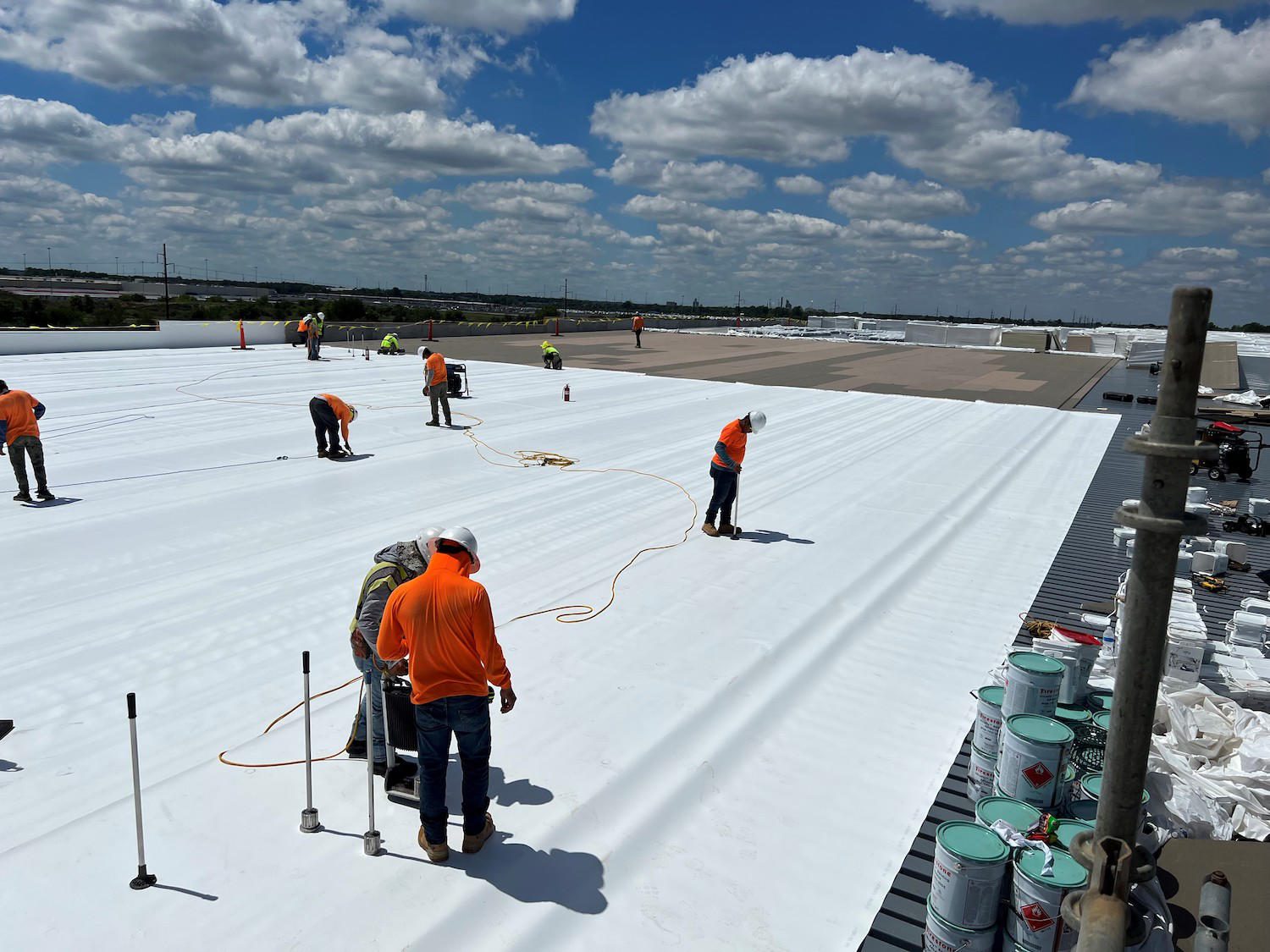
On our jobs, crews work under OSHA’s construction rules: guardrails, warning lines, harnesses or a safety monitor depending on the roof, with the drop zone below kept clear. Ask any roofer you’re comparing for their fall protection plan on your building. Our guide to vetting a commercial roofer lists the other questions worth asking.
Each contractor answers to OSHA for its own workers, but owners can still face liability for known hazards they didn’t fix or warn about. Talk with your insurer or attorney about your situation. What we can do is find the hazards and price the fixes.
Usually not. Rails at the hatch, near units close to the edge and around skylights cover the routine trips. Full perimeter rail makes sense on roofs that get constant traffic.
For now, on ladders installed before November 2018. After November 18, 2036, cages and wells stop counting as fall protection on fixed ladders over 24 feet, and any new or replaced ladder needs a ladder safety system or personal fall arrest.
In most cases, yes. Screens mount to the curb and don’t need a new skylight. If the domes are crazed or the curbs are rotted, replacing them during a reroof usually makes more sense.
We note hatches, ladders, skylights and edge clearances, with photos, in every free inspection report. We’re roofers, not safety consultants, so for a formal fall protection audit we’ll tell you to bring one in.
Tell us about the building and a dispatcher will call to schedule.
Commercial leaks do not wait for business hours. A live dispatcher answers around the clock and we get crews moving the same night.