
Insurance, verified
Get the certificate sent straight from the agent, showing general liability and workers' comp, with your company as certificate holder. Call the agent if anything looks off.
To vet a commercial roofer in St. Louis, confirm insurance directly with the agent, check that the manufacturer will issue the warranty you want through that contractor, ask for references on the same roof type, and compare written scopes line by line — membrane, mil, attachment, insulation and flashing. Free inspections. Call (314) 429-6000.
After every big hail storm in the metro, the trucks show up. Out-of-state plates, magnetic door signs, a guy with a clipboard walking into every strip center along the highway. Some of them do fine work. Plenty won't be answering the phone when the warranty question comes up two summers later.
So vet the contractor before you compare the price. This is how we'd do it if we were the owner. Hold us to it too.
Get the certificate sent straight from the agent, showing general liability and workers' comp, with your company as certificate holder. Call the agent if anything looks off.
Missouri doesn't license roofers statewide, though cities require business licenses and permits. Illinois does license roofers, so on Metro East work ask for the state license number.
An NDL warranty only comes through a contractor the manufacturer has approved. Ask which manufacturers will issue one on your job.
NDL vs. material warrantyReferences on house roofs tell you little about a 60,000-square-foot TPO job. Ask for buildings like yours, then go look at one.
Membrane and mil, attachment, insulation thickness and R-value, curb and drain counts, flashing details, and what happens to wet insulation.
Comparing commercial roof bidsAsk who the foreman is, whether crews are employees or subcontractors, and who you call when something goes sideways on day three.
Choosing a contractor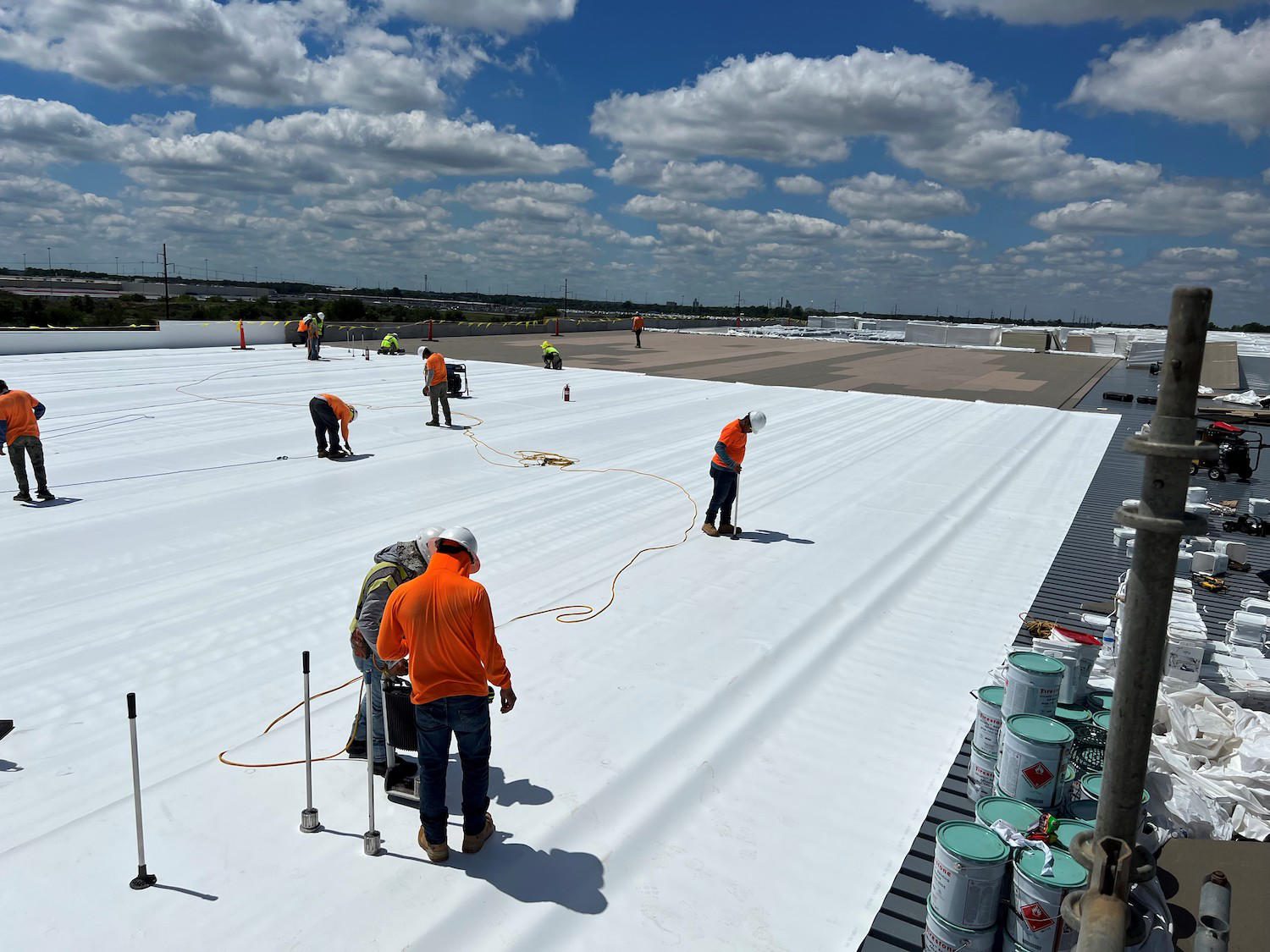
A bid thirty percent under the others is usually missing something. Often it's the wet insulation: the low bidder priced a recover over a roof that cores would have shown was soaked. Sometimes it's thinner membrane. Sixty mil and forty-five mil look identical from the parking lot.
Pressure to sign today. An offer to cover your insurance deductible. No physical office within driving distance. Any one of those deserves a hard second look, and the deductible offer can put you in a bad spot with your own carrier.
Ask how they handle surprises. Every tear-off finds something — rotted wood nailers, a rusted deck, a drain buried under three old roofs. A good bid carries unit prices for deck and nailer replacement, so you aren't negotiating while a crew stands around waiting.
Then ask for workmanship coverage in writing. Manufacturer warranties cover material, but most early leaks come from installation: a missed weld, a short flashing. We've been family-run since 1947, and every job we do carries a lifetime workmanship warranty. Ask every bidder what theirs says. A written RFP makes that comparison a lot easier.

Related: the commercial roof warranty guide — what the paperwork actually covers once the roof's on.
Three is common. Beyond that the comparison gets harder, not easier, unless every bidder prices the same written scope.
A material deposit is normal on a big job, since membrane and insulation get ordered for your project. Paying most of the contract before work starts isn't.
A certified contractor can offer the manufacturer's longer system warranties, and those installs get inspected by the manufacturer. An uncertified installer can usually offer only a material warranty.
Yes. Ask for lien waivers from the contractor and the major suppliers with each payment, so a supplier can't file a mechanic's lien on your building.
We're an Owens Corning Platinum Preferred contractor, BBB A+ rated, a Roofing Contractor magazine Top 100 company, and third-generation family-run since 1947.
Get a written scope you can hold every bidder to. A dispatcher will call to schedule.
Commercial leaks do not wait for business hours. A live dispatcher answers around the clock and we get crews moving the same night.