
Penetration inventory
Every curb, pipe boot, pitch pan and conduit support gets logged with a photo and a condition note, so the next trade doesn't add leak point number forty blind.
Commercial roof inspectionA data center roof has one job everything else depends on: keep water off equipment that can't take a drop. John Beal Roofing scopes these roofs around the mechanical load, the generator yard and the white space below, uses torch-free systems over live equipment, and closes every section the same shift it's opened. Free inspections. Call (314) 429-6000.
Most data halls around St. Louis weren't built as data halls. They're converted warehouses and office buildings in Earth City, Maryland Heights and out along the Page Avenue corridor, carrying chillers and condensers on dunnage the original designer never planned for. The roof shows that first. Curbs get added. Conduit runs across the membrane on wood blocks. Somebody cuts in a pitch pan in February and fills it with whatever sealant was on the truck.
We treat the roof as part of your uptime plan. That means a written map of every penetration, a work schedule your facilities and IT leads sign off on, and one rule we don't bend. No section gets opened unless it can be closed and watertight before the crew leaves.
Every curb, pipe boot, pitch pan and conduit support gets logged with a photo and a condition note, so the next trade doesn't add leak point number forty blind.
Commercial roof inspectionHot-air welded TPO or PVC and low-odor adhesives. No open flame above a hall, and nothing that gets pulled into the air handlers.
Diesel soot and heat stain and cook the membrane near the stacks. We plan walk pads, heat-rated flashing and a cleaning interval for that corner of the roof.
New units on an old deck get checked against the structure before they're set. When an engineer needs to sign off, we'll say so in writing.
A thermal scan and cores tell us if water's already in the assembly. Recovering over wet board traps it right above your equipment.
Infrared moisture scanningWe work inside your access rules: sign-in, escorts, staging limits, and the doors nobody on our crew touches.
24/7 emergency response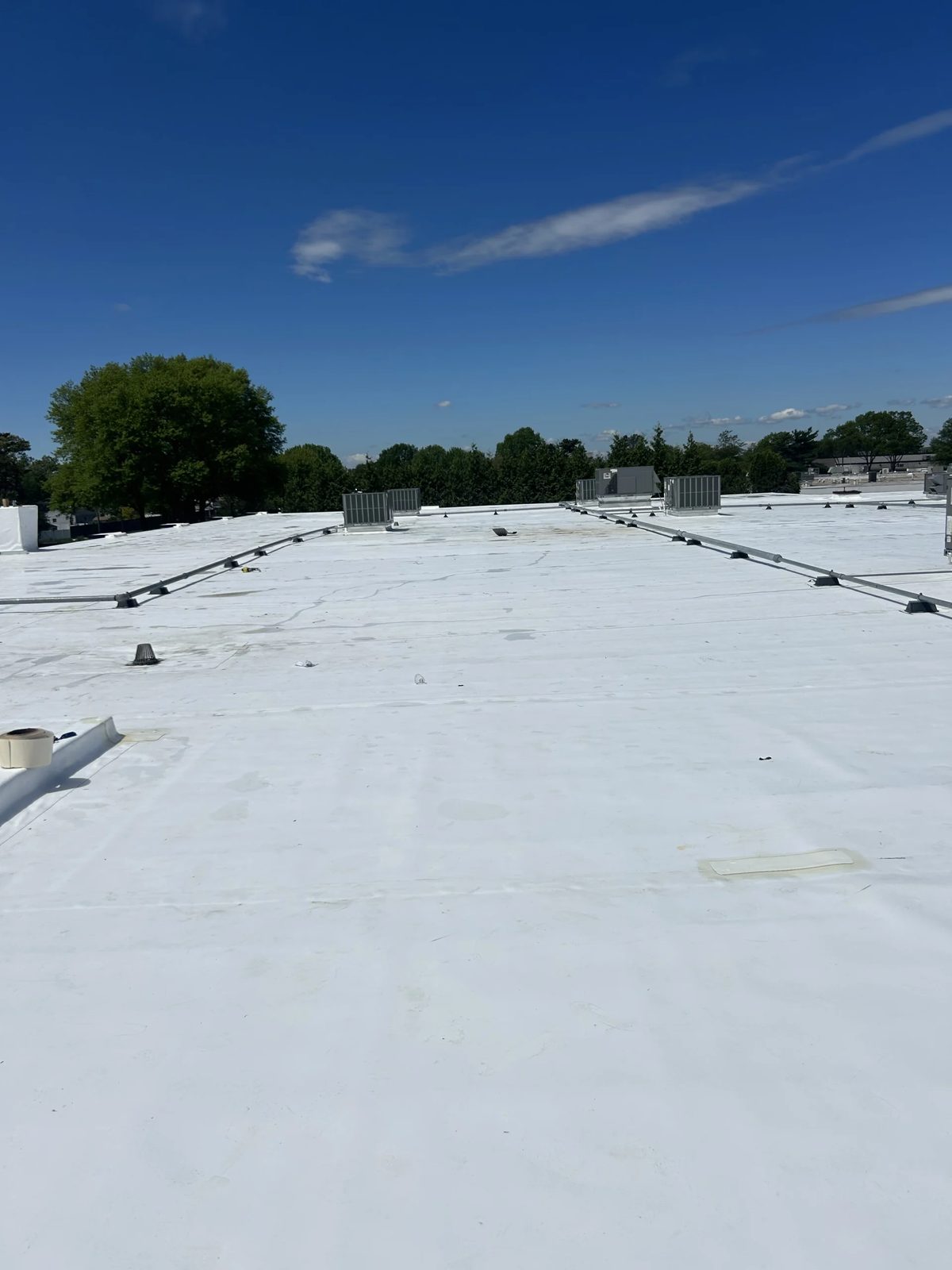
We start with the area right above the white space and work outward in small sections. Small means what we can strip, re-insulate, membrane and flash in one shift with time to spare. If the forecast turns, we don't open. That's the whole policy.
Before anything gets cut, our foreman walks the floor below with your facilities lead. We mark hot aisles, CRAC units and anything sitting under a drip tray, and we agree on who gets a phone call if a sensor trips. Fastening into a steel deck can shake loose rust and debris, so where that matters we coordinate covers or a work window.
Membrane choice comes down to what the roof sees. White TPO is the usual answer on a building that already runs hot. Where kitchen grease or chemical exhaust lands on the roof, PVC holds up better. Our TPO vs EPDM vs PVC comparison covers the trade-offs.
Every evening the roof gets walked, the seams get probed, and you get photos. Missouri storms build fast on a summer afternoon. We'd rather give up an hour of production than gamble on a pop-up cell at four o'clock.
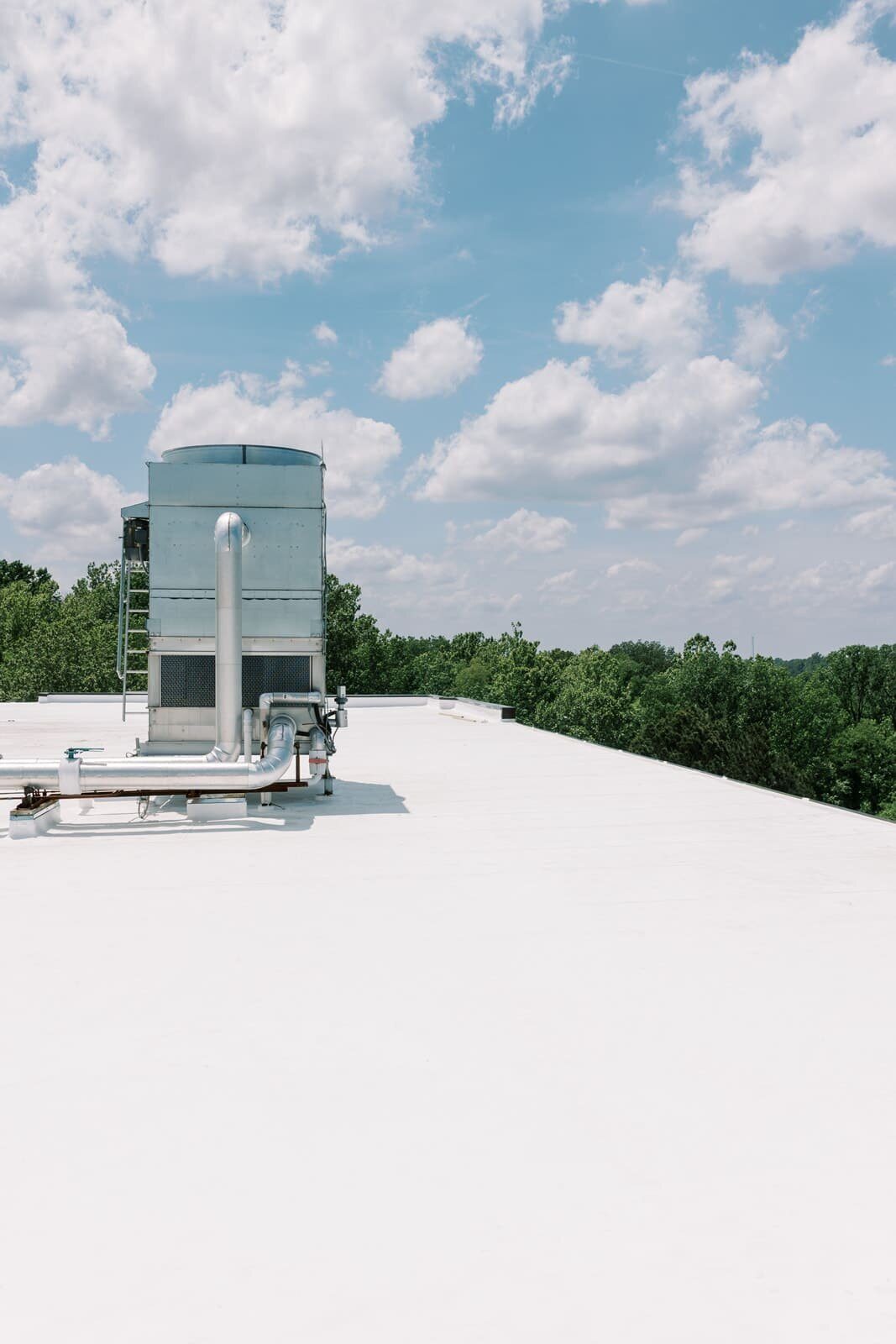
Edge metal deserves its own line in any data center scope. Perimeter and corner zones take the highest wind uplift, and a peeled edge over a server room is a very bad night. We fasten those zones to the wind design, not to the field spacing, and we check the coping and gravel stop on every visit.
Yes, that's the normal case. We phase in small sections, close each one the same shift, use torch-free systems and coordinate each step with your facilities team so the load keeps running.
It depends on what's under the membrane. If cores or an infrared scan show wet insulation, a recover just seals water in over your equipment. A dry, single-layer roof can be a recover candidate.
Most get a white heat-welded single-ply, TPO or PVC, because the seams are welded instead of glued and it reflects heat off a building that already runs warm. The exhaust coming off the roof usually decides between the two.
A live person. Our line at (314) 429-6000 is answered 24/7, and we get a crew moving to stop the water and make the area temporarily watertight as soon as conditions allow.
Manufacturer coverage on the materials plus our lifetime workmanship warranty on qualifying work. We lay out what the manufacturer requires for its warranty before you sign anything.
Tell us about the facility and a dispatcher will call to schedule a walk.
Commercial leaks do not wait for business hours. A live dispatcher answers around the clock and we get crews moving the same night.