
Every penetration gets re-flashed
We don’t reuse old pitch pans. Conduit, dish mounts and alarm runs come up on new sleepers or get properly curbed and flashed, and pitch pockets get filled with two-part pourable sealer, not caulk.
Bank and credit union roofing in St. Louis is small-square, high-detail work. Branch roofs pack a lot of mechanical, conduit and canopy flashing into little area, and the network closet usually sits under the middle of it. John Beal Roofing badges its crews, phases loud work outside teller hours, protects the drive-thru lane and keeps the branch open. Free inspections. Call (314) 429-6000.
A branch roof rarely fails because the field membrane wore out. It fails at the penetrations. Between the RTUs, the alarm and camera conduit runs, the night-deposit chute, the vault vent and the satellite dish some vendor set on a sleeper block in 2009, a 4,000 square foot branch can carry more flashing detail per square than a 60,000 foot warehouse.
And the consequence of a leak is different here. Water in a distribution center wets a pallet. Water in a branch hits a network rack or a records room, and now you’ve got a vendor call, an incident report and a compliance question on top of a roof repair.
We don’t reuse old pitch pans. Conduit, dish mounts and alarm runs come up on new sleepers or get properly curbed and flashed, and pitch pockets get filled with two-part pourable sealer, not caulk.
Canopies are their own little roofs and they leak differently — usually at the fascia return or a clogged internal downspout. We price them as separate line items so you can see what they cost.
Names go to your branch manager before the truck shows up. Same crew all week, sign-in at the lobby, no roof access without notice to your security vendor.
Roof-mounted cameras and motion sensors get documented, disconnected with your vendor, and reset before we demobilize. Nobody trips a panel at eleven at night.
Commercial roof repairMost metro branches are brick with a parapet and a coping cap. Loose coping and open joints send water down the cavity and it surfaces inside as a wall stain nowhere near the roof.
Tear-off noise sits over a teller line. We can run the loud sections after close or on a Saturday and dry in before Monday opening.
24/7 emergency response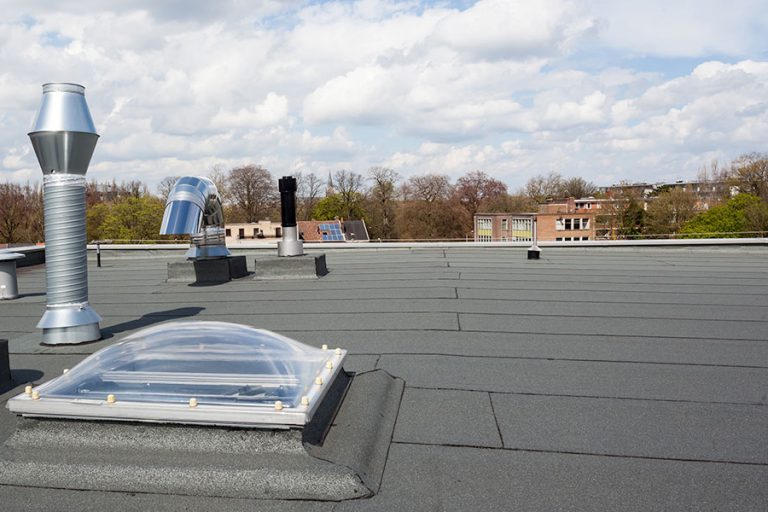
Ask any branch manager where they’d least like water and it’s the IT closet. Ask where the closet is and it’s almost always an interior room with no exterior wall — which means it’s under the middle of the roof, where the condensate lines and the biggest RTU also live.
So we start there. Before pricing anything we map the interior rooms against the roof plan, then look hard at what’s directly above the racks. Nine times out of ten there’s a condensate drain dumping onto the membrane instead of piped to a drain, and a curb with dried-out sealant on the upslope side.
During replacement, that section gets a temporary containment ceiling and it’s the first area we open and close in the same shift. No overnight exposure over the racks, ever, regardless of what the forecast says.
We also pipe condensate properly on the way out. It’s a small line on the estimate and it removes the single most common source of slow branch leaks in this metro.
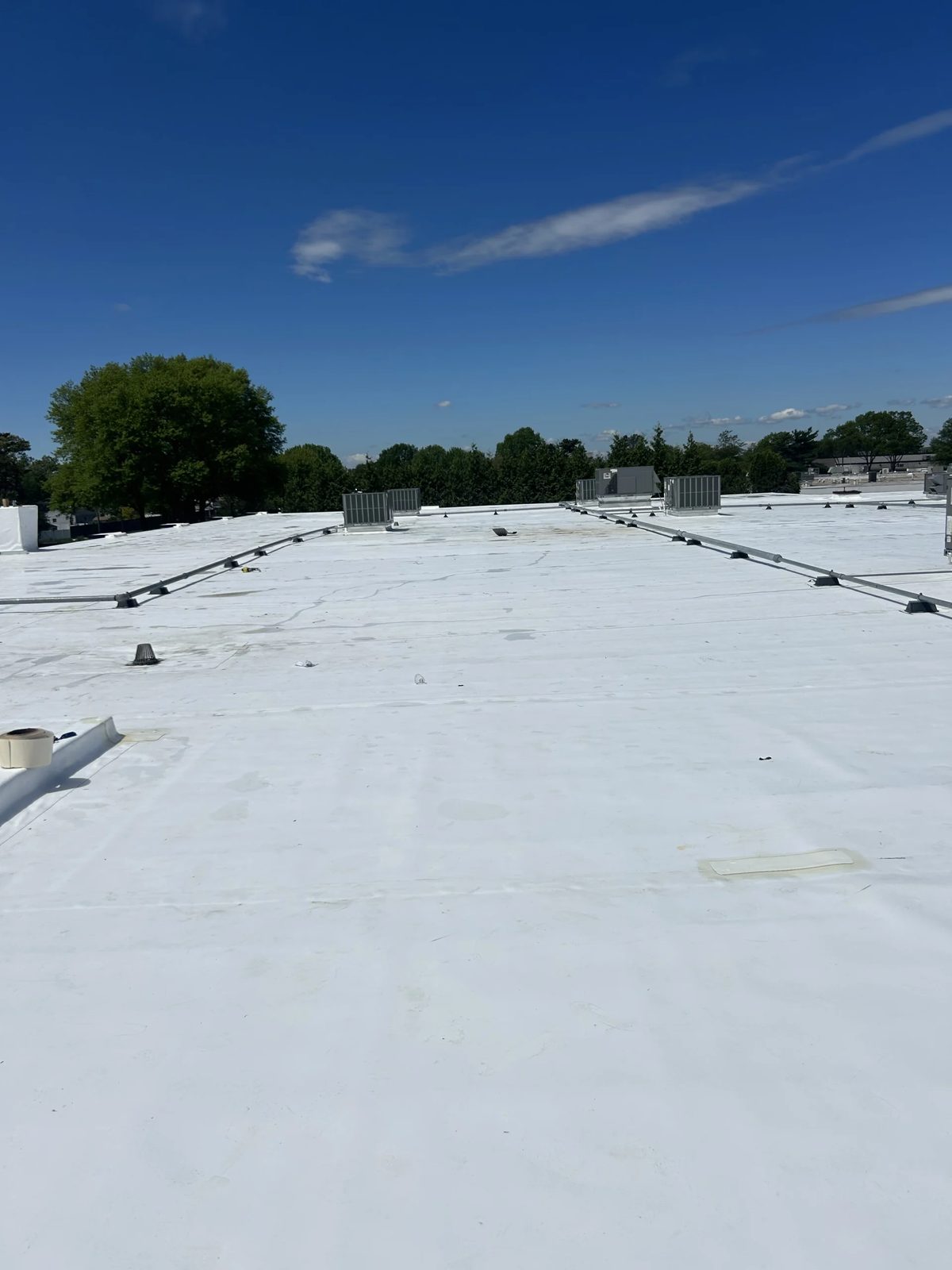
A branch roof takes the same hail a house does, but nobody walks it. Modified bitumen and older EPDM bruise where the hail hit and the fracture doesn’t open up for a year or two. We photograph and mark test squares after every metro hail event so there’s a dated record if a claim comes later. That documentation is what separates a paid claim from a denied one.
If you run eight or twelve branches across the metro and Metro East, don’t bid them one at a time as they fail. We’ll walk all of them, hand back a condition report and remaining-service-life number per address, then rank them so your capital plan has an order to it. Some branches get a repair and five more years. Some need to go this year. You decide which.
Branch facilities spending usually clears a committee, and committees compare bids that aren’t comparable. We line-item system, insulation thickness and R-value, tear-off or recover, deck repair allowance, canopy work and warranty term separately so three proposals can actually be read side by side.
Related: office building roofing, leak detection and commercial roof repair.
Yes. The lane closes only while we’re directly over it, usually a half day for the canopy, and we schedule that outside your busiest window. The lobby stays open the whole time.
We give you the crew list and dates ahead of time, and we coordinate any roof-mounted camera or sensor work directly with your vendor so nothing trips while we’re up there.
Only if we say so on its own line. Canopies are separate roofs with separate details, so we break them out rather than burying them in a square-foot number.
We only open what we can dry in the same shift, and the area over your network and records rooms gets closed first. A live dispatcher answers 24 hours a day if anything comes in after we’ve left.
Yes. We run crews out of Edwardsville as well as Maryland Heights, Chesterfield and Festus, so Metro East branches get the same response times.
Tell us about the property and a dispatcher will call to schedule. No cost, no obligation.
Commercial leaks do not wait for business hours. A live dispatcher answers around the clock and we get crews moving the same night.