
Building-by-building, not averaged
Each address gets its own condition report, its own remaining life and its own price. That's what makes a phased plan possible.
HOA roofingRoofs are usually the largest single component in an HOA or condo reserve study, and the number in the study is often a guess pulled off the original build date. John Beal Roofing inspects each building, gives your reserve specialist a per-building condition score, remaining useful life and a dated replacement cost, so the funding plan is built on what's up there now instead of an average. Free inspections. Call (314) 429-6000.
We sit in a lot of board meetings. The pattern is almost always the same: the reserve study says the roofs have nine years left, a board member has been chasing leaks on building six for two summers, and nobody can reconcile those two facts.
Both can be true. A reserve study is a financial document, and the roof line in it is only as good as the inspection behind it. If the study was done from the county's build year and a drive-by, it's an average of buildings that have not aged the same way at all.
Each address gets its own condition report, its own remaining life and its own price. That's what makes a phased plan possible.
HOA roofingNot just a number — what we saw that supports it. Granule loss, seam condition, fastener backout, deck feel underfoot.
Roof inspectionPriced on today's assembly and today's labor, dated, so your analyst can escalate it rather than inherit a stale figure.
Cost per square footEvery finding is photographed and labeled. Boards change, memories fade, the file doesn't.
Roof asset managementWhich buildings go first and why, so a ten-year plan spends money in the right sequence instead of alphabetically.
Capital planningWhat's still covered, what transferred, what lapsed. That changes the reserve number on some buildings quite a bit.
Warranty guide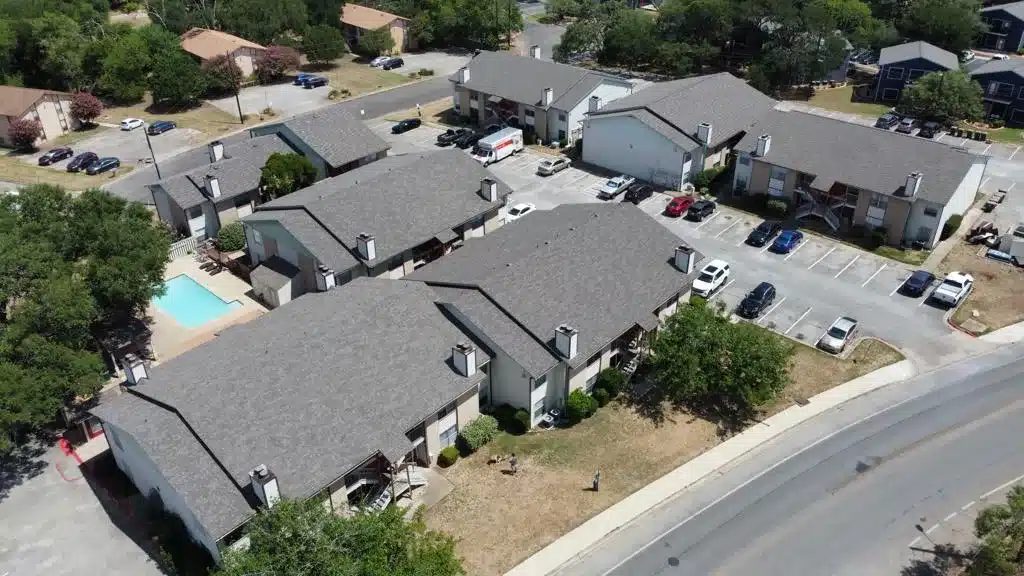
Somebody gets on every roof. That sounds obvious and it's the step that most often didn't happen. A drone gives us a fast overview and we still walk the decks, because a soft spot underfoot doesn't photograph.
Each building gets measured, not estimated from a site plan. Squares, penetration count, edge detail, drainage. Then condition: membrane or shingle wear, seam and flashing integrity, fastener condition, any place the deck feels wrong.
We pull the community's leak history if the board or manager has it. Five service calls on one address over three years is a data point the original study never had, and it usually moves that building up the list.
What comes back is a written report per address with photos, a remaining-life estimate and a dated replacement cost. Free, no obligation, and your reserve specialist is welcome to call us with questions about any line in it.
Nobody on a board wants to be the one who votes for a special assessment. The way you avoid it isn't optimism, it's an accurate replacement year on every building plus a funding plan that keeps up with what roofs actually cost now.
Two things wreck that. The first is a replacement cost that hasn't been refreshed in six or seven years. Material and labor have moved a lot, and a reserve balance sized to an old number funds maybe two-thirds of the job. The second is an inflated remaining life. Every year you carry a roof past its real end, you're spending money on repairs that buys you nothing on the asset.
There's a tipping point we can usually identify pretty clearly. When a building's annual repair spend starts running a meaningful share of what a section of new roof would cost, the repairs have stopped being maintenance. That's a defensible thing to put in front of owners, and it's a lot easier to pass with photos and dated numbers behind it.
The other lever is sequencing. A community with fourteen buildings almost never needs all fourteen at once. Group them by condition, do the worst first, and mobilize in batches — one mobilization across four buildings is cheaper per square than four separate trips. We'll lay that out so the board can see the savings on paper before it votes.
We work with boards, managers and reserve specialists across the metro and Metro East, on everything from eight-unit condo buildings in Maplewood to sprawling communities out in St. Charles County. Same process, different scale.

Related: condominium roofing in St. Louis and multi-family roofing — the same phased, board-approved approach carried into the work itself.
No. A reserve specialist writes the study. We supply the roof component data it's built on — condition, remaining life, measured quantities and current replacement cost per building.
Nothing. Inspections, photo reports and written scopes are free and carry no obligation.
Usually both, in a sense. The study may have averaged buildings or worked from the original build year. A per-building inspection sorts out which addresses are genuinely near the end and which have life left.
We can give you accurate numbers and a phasing order early enough for the funding plan to work. Whether an assessment is needed comes down to the reserve balance and how long the roofs were carried past their real life.
Yes. We'll walk the report through with the board or the management company and answer questions in the meeting, not by email after the vote.
Tell us how many buildings the association has and a dispatcher will call to schedule.
Commercial leaks do not wait for business hours. A live dispatcher answers around the clock and we get crews moving the same night.