Open now — 24/7 commercial storm response St. Louis Metro & Metro East (314) 429-6000
John Beal Roofing rectangle logo in yellow and black Commercial Roofing STLBy John Beal Roofing

Manufacturing Plant Roofing, at a glance

Manufacturing plant roofing in St. Louis has to survive process exhaust, carry heavy rooftop mechanical, obey plant hot-work rules, and go in without stopping production. John Beal Roofing scopes plant roofs bay by bay, matches the membrane to whatever your stacks are actually discharging, and phases tear-off into shutdown weeks. Free inspections. Call (314) 429-6000.

We’ve worked plant roofs from the Riverport industrial district out to Wentzville, down the Jefferson County corridor, and across the river into Granite City and Alton. Almost none of them are one roof. They’re an original 1960s bay with gravel built-up over a concrete deck, an early-80s addition on 22-gauge steel deck, and a newer high-bay running a mechanically attached membrane — all butted together at expansion joints and elevation changes nobody ever detailed properly.

That’s where the water gets in. Not the field of the membrane. The joints, the curbs, the abandoned stack somebody capped with a pitch pan and a tube of caulk back in 2011.

Plant-Specific Failures

What Actually Goes Wrong Up There

Process exhaust

Oil mist, solvent vapor and rendered fat coming out of a stack will eat a membrane that’s perfectly fine ten feet upwind. We look at what each stack discharges before we pick a sheet — PVC holds up to grease and plasticizer-hostile exhaust where TPO and EPDM won’t.

PVC membrane systems

Curbs, pans and stacks

A 200,000 square foot plant roof can carry sixty or more penetrations. Every curb is a separate flashing detail with its own service life, and most of them are older than the membrane they sit in. We report on them one at a time.

Commercial roof repair

Steel deck and purlins

Fasteners into rusted 22-gauge deck don’t hold. We pull test plates before we price an attachment pattern, and where the deck is gone over a leaking curb, that’s deck replacement, not a patch.

Vibration and uplift

Dust collectors, make-up air and big compressors shake a roof all day. Loose plates back out, seams work, and the perimeter is where uplift starts. Corners and edges get a tighter fastener pattern than the field.

Roof replacement scope

Condensation from inside

Wash-down bays, plating lines and kettle rooms push warm wet air straight up into a cold assembly. You get wet insulation with no hole in the roof at all. That needs vapor control, not another patch.

Wet insulation in a roof

Hot work and permits

Most plants won’t issue a torch permit anywhere near solvent storage, and they shouldn’t. We bid cold-applied and mechanically attached assemblies so the work doesn’t hinge on a permit your safety manager can’t sign.

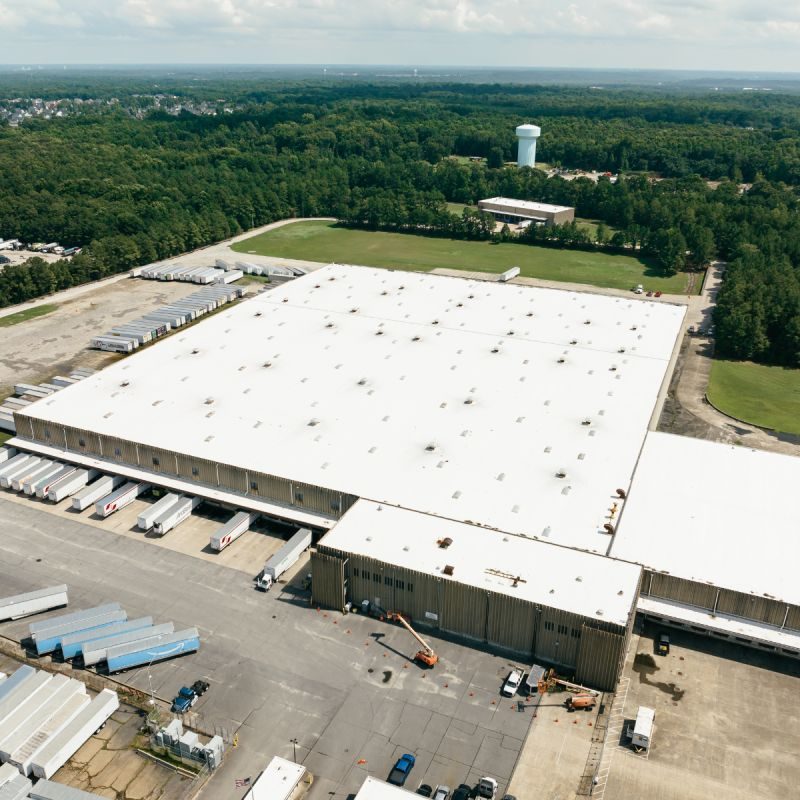
Aerial view of a large industrial plant membrane roof, commercial roofing St Louis project
Scheduling

Working Over A Line That Can’t Stop

The schedule comes from your plant, not from us. We ask for the shutdown calendar first — the July week, the Christmas week, whatever your maintenance group already owns — and we size the daily tear-off to what a crew can dry in before shift change.

Over a live line we work in dried-in sections. No deck stays open. Anything that has to come off gets a temporary membrane and a watertight tie-in the same day, even if that means a smaller footprint and another week on the schedule.

Crane picks and material staging get planned around truck traffic and rail. We’d rather load out at 5 a.m. than fight your shipping dock at ten.

Fall protection, lockout on rooftop units, badge-in, daily magnet sweep on the drive aisles. Your EHS group gets the same paperwork our crews carry.

Get A Free Evaluation

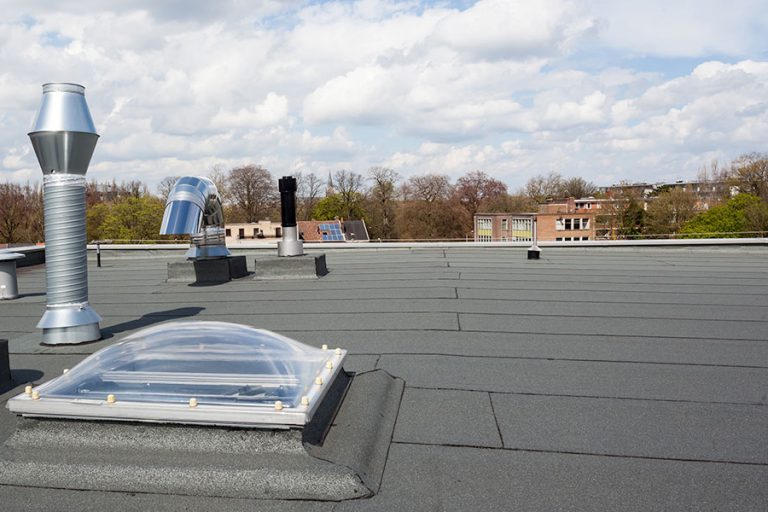
Rooftop mechanical curb flashing detail on a plant roof, commercial roofing St Louis crew work

Related: industrial roofing in St. Louis and warehouse roofing — the same crews, scoped for lighter process loads.

Common Questions

Can you re-roof a plant without shutting down production?

Usually, yes. We phase by bay and dry in every section before the crew leaves, so the line keeps running underneath. Tear-off over sensitive process areas gets moved into your shutdown week.

How do you keep debris out of the product?

Tear-off sections are tarped and the interior is protected below where it matters. Over open process or food-grade areas we go to a full containment deck rather than counting on housekeeping.

Our exhaust destroyed the last roof in eight years. What changes?

We identify each stack and its discharge, then pick membrane by chemical exposure instead of by price per square. Grease and solvent-heavy areas get PVC and sacrificial protection mats around the discharge.

Do you handle the insurance side after hail?

Yes. We document hail bruising and wind damage with photos and core samples and work the claim with your carrier and adjuster.

What warranty comes with the work?

Manufacturer coverage on the materials plus our own workmanship warranty. On qualifying work that workmanship warranty is a lifetime warranty, backed by a company that’s been in St. Louis since 1947.

Free Plant Roof Evaluation

Tell us about the property and a dispatcher will call to schedule. No cost, no obligation.

No cost, no obligation. Water coming in now? Call (314) 429-6000 — the line is answered 24/7.

Water Coming Through The Ceiling?

Commercial leaks do not wait for business hours. A live dispatcher answers around the clock and we get crews moving the same night.

(314) 429-6000 Free Evaluation