
Best suited to
older buildings where the existing system is sound in the field and the owner wants years, not a full capital project.
Built-up roofing is the classic layered asphalt-and-felt system, usually surfaced in gravel, and a great deal of older St. Louis commercial and institutional roof stock still carries it. John Beal Roofing repairs, restores and replaces BUR, and can tell an owner honestly which of the three the roof actually needs. Call (314) 429-6000.
older buildings where the existing system is sound in the field and the owner wants years, not a full capital project.
20 to 30 years, though most of what we open in this market is already past that.
Blisters, exposed felts where the gravel has migrated, and old patch work stacked over old patch work.
The tar-and-gravel roof is the oldest low-slope system in use, and a great many St. Louis buildings still carry one.
A built-up roof is what the name says: multiple plies of felt laid in hot asphalt, built into a monolithic mass and usually surfaced with gravel. The redundancy is real, the assemblies are heavy, and a well-built one can run decades beyond what anyone expected. When we assess one, the question is rarely whether it was built well. It is what has happened to it since.
Gravel is the complication. It shields the membrane from ultraviolet exposure and it also conceals everything beneath it, so finding a leak on a gravel-surfaced roof means moving stone to locate a defect that water reached from somewhere else entirely. Infrared survey or core cuts are usually faster than guessing.
Installation involves hot asphalt, meaning a kettle, fumes and a substantial logistical footprint on an occupied property. For many buildings that alone rules it out for new work, and the practical successor is a multi-ply modified bitumen system delivering similar redundancy without the kettle.
Weight is the other constraint. These assemblies are heavy, and adding a second roof over an existing built-up system is a structural question before it is a roofing question. Where we find two already stacked, tear-off is generally the only honest recommendation.
Where an existing built-up roof is structurally sound, dry underneath and simply weathered, it is often a strong candidate for restoration rather than replacement. That decision turns entirely on whether the insulation below is dry, which we establish with core cuts rather than assumption.
Blistering between plies is characteristic and not always urgent. A blister that has not broken the surface gets monitored; one that has is an entry point, and it gets cut open, dried and patched.
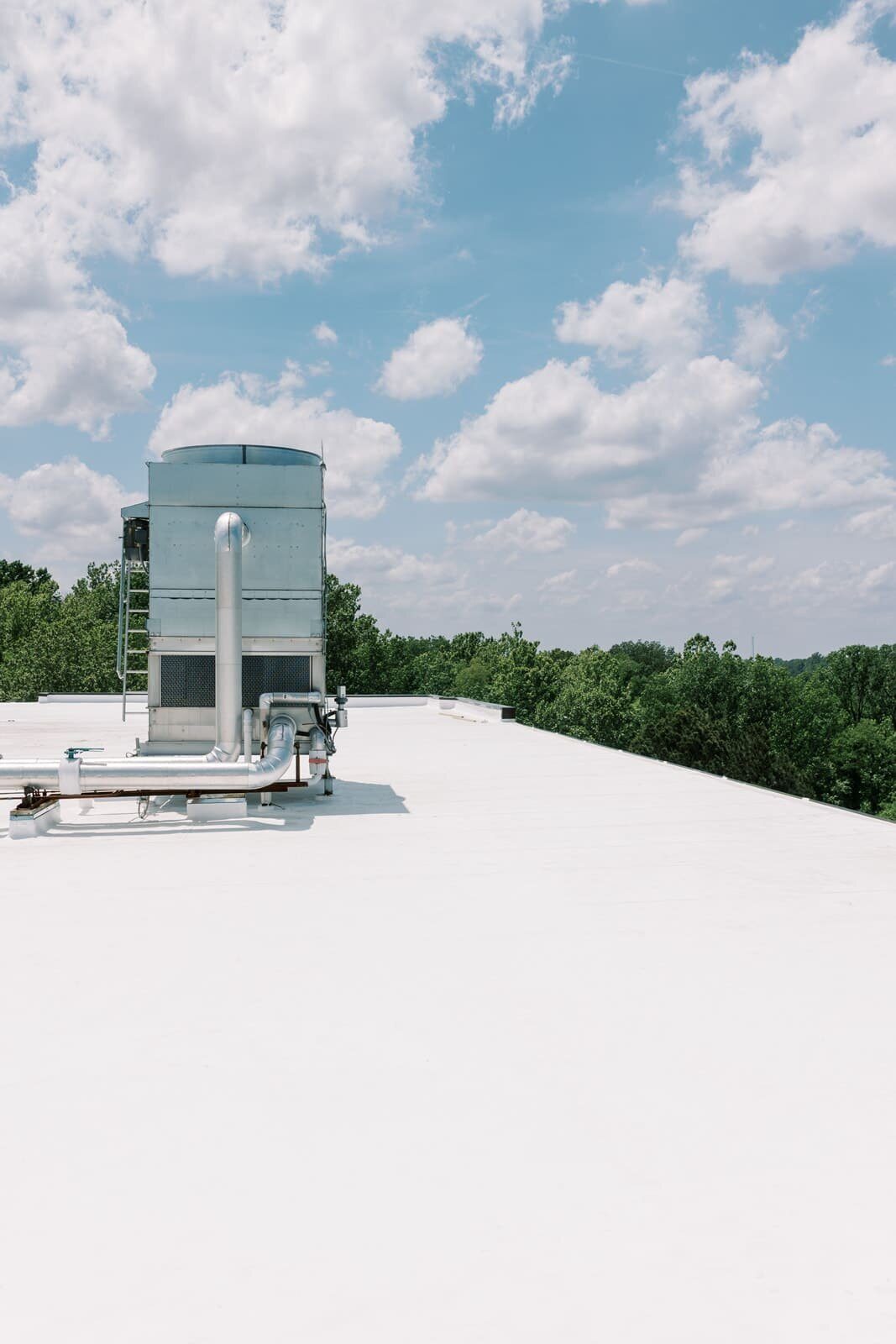
Membrane failures are almost never in the middle of the sheet. Failures begin where the details are, at curb flashing, pipe boots, wall terminations and drains.
So the time goes into the parts no one ever photographs. The field seam is minutes of work; the curb is an afternoon, and it decides whether you get twenty years.
We file the manufacturer warranty registration for your building, so the coverage is documented under your address.
Related: Ponding water: causes and fixes
These assemblies frequently exceed thirty years, and many in this region already have. The useful question on an existing built-up roof is rarely its age but whether the insulation beneath it is still dry.
Sometimes, and weight is the deciding factor. A built-up assembly is heavy, so adding a layer is a structural question first. Where two roofs are already stacked, tear-off is normally the only honest answer.
Yes. Very little new built-up roofing is installed today, so most of our work on these is assessment, repair and restoration, and that is done by our own crews rather than handed off.
Repairs are inexpensive where the defect can be located, and gravel surfacing is what makes locating it slow. Once a moisture survey shows widespread wet insulation, replacement is the only repair that actually holds.
Traditional hot-asphalt work involves a kettle, fumes and real logistics on an occupied property. That is a significant part of why most owners now restore these roofs or move to a modified bitumen system instead.
Tell us about the building and a dispatcher will call to schedule.
Commercial leaks do not wait for business hours. A live dispatcher answers around the clock and we get crews moving the same night.